Developing strong communication skills in childhood has become more important than ever. Whether a child is interacting with family, learning in school, or playing with friends, the ability to express thoughts clearly shapes their confidence, academic success, and emotional development. Today, many parents and educators are turning to early communication classes to build these skills from a young age.
In this blog, we’ll explore why early communication classes are essential for children, how they contribute to lifelong development, and why every parent should consider them. We’ll also look at real examples, industry trends, and simple explanations so both beginners and educators can understand the true value of this early start.
The Power of Communication in Early Childhood
Communication is much more than speaking. It includes listening, understanding, body language, eye contact, tone, storytelling, and even confidence in expressing emotions. Research shows that children who develop communication skills early tend to:
- Perform better academically
- Build stronger friendships
- Feel more confident
- Learn problem-solving more effectively
- Show better emotional regulation
Early childhood is a period of rapid brain development. The neural pathways for language and communication are formed during the ages of 0–7, which makes early communication classes a powerful investment.
What Are Early Communication Classes?
Many parents imagine communication classes as just speaking practice—but they are far more comprehensive. Early communication classes are structured programs designed to enhance a child’s listening skills, speaking ability, comprehension, vocabulary, social interaction, and confidence.
These classes often include:
- Group discussions
- Storytelling
- Listening games
- Vocabulary-building exercises
- Picture-based conversations
- Emotional expression activities
- Role play and pretend play
- Peer interaction tasks
- Public speaking basics
For young children, these sessions are play-based and interactive, so learning feels natural, fun, and effortless.
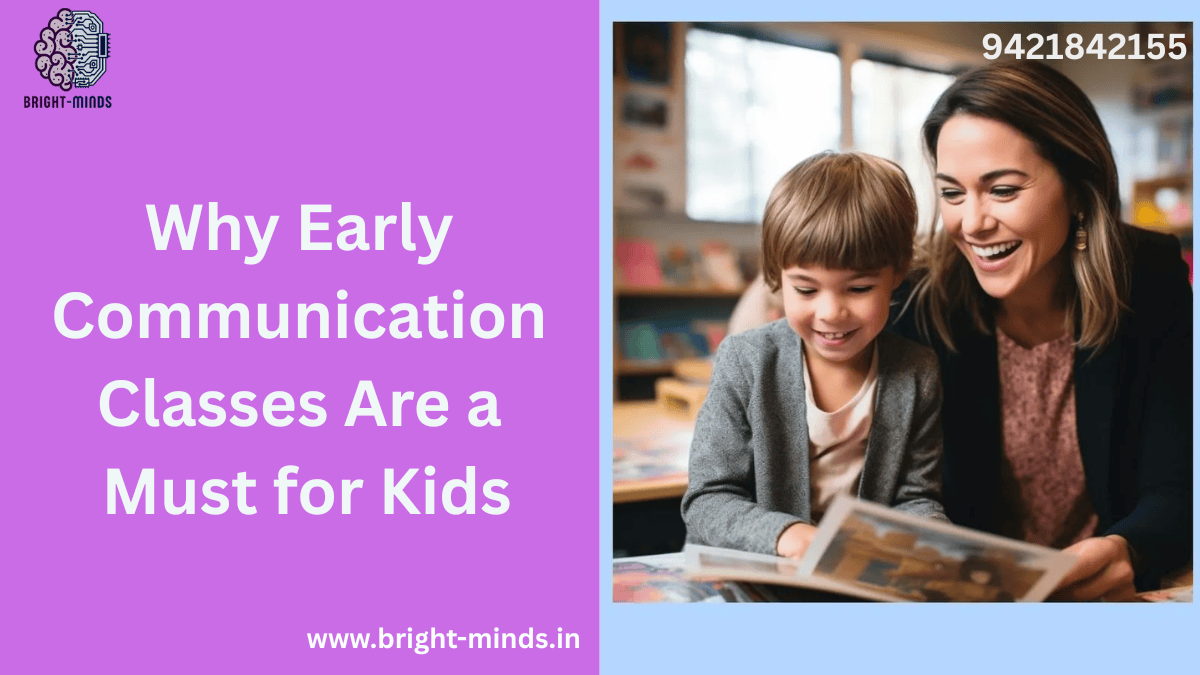
Why Early Communication Classes Are a Must for Kids
1. They Build Confidence and Reduce Shyness
Many children hesitate to speak, especially in new environments. Early communication classes provide safe and supportive spaces where kids learn to express themselves.
Shy children become more open.
Talkative children learn to structure their thoughts.
Quiet children learn to participate without fear.
2. They Improve Listening Skills
Communication is not only about talking. Early classes teach kids how to:
- Listen without interrupting
- Understand instructions
- Interpret tone and emotions
- Follow multi-step directions
These skills significantly help children thrive in school and at home.
3. They Strengthen Vocabulary and Language Understanding
The more words children know, the better they express themselves. Early communication classes expose kids to new words daily through:
- Stories
- Songs
- Pictures
- Conversations
- Activities
This makes speaking and understanding easier for them.
4. They Boost Academic Performance
Strong communication skills help kids:
- Understand concepts better
- Ask more questions
- Participate in class
- Complete written work with clarity
- Read with better comprehension
Studies show that early communication skills are directly linked to success in reading and writing.
5. They Improve Social Interaction
Kids learn how to:
- Share ideas
- Take turns
- Respect others’ thoughts
- Collaborate in groups
- Play using clear communication
Social communication is essential for teamwork in school—and later in workplaces.
6. They Support Emotional Development
Kids learn to identify and express emotions like:
- Happiness
- Sadness
- Anger
- Confusion
- Excitement
This emotional awareness helps them avoid tantrums, misunderstandings, and frustration.
7. They Prepare Kids for Real-World Situations
Communication classes teach essential life skills—talking confidently to teachers, speaking in public, explaining a problem, asking for help, or sharing ideas clearly.
These skills stay with children throughout life.
Real-World Example: How Communication Classes Transform Children
Imagine a child named Aarav. He is intelligent and observant but doesn’t speak much in class. He avoids reading aloud and dislikes group activities.
After joining early communication classes, Aarav slowly starts participating. He enjoys storytelling games and answering simple questions. His teachers notice that he raises his hand more often now. His parents see that he talks more at home.
Within a few months, Aarav becomes:
- More expressive
- More confident
- More social
- Better at reading and speaking
This transformation is common among children who receive early communication support.
Current Trends in Early Communication Learning
The world is changing fast, and so is the way children communicate. Here are some modern trends:
• Communication Through Play-Based Learning
Schools and institutes now focus on activities instead of rote learning.
• Digital Communication Skills
Kids today interact across screens—video calls, online classes, and digital tools. Communication classes also teach screen etiquette and clarity in digital speaking.
• Emotional Communication
Post-Covid, emotional intelligence and mental health awareness have increased. Communication classes now include emotional expression sessions.
• Multilingual Communication
Many families want children to speak English confidently while maintaining their mother tongue. Communication classes balance both.
• Confidence-Based Communication
Public speaking, storytelling competitions, and show-and-tell activities are booming in preschools.
These trends show that communication is no longer a “soft skill”—it is a core life skill.
Practical Use Cases of Early Communication Skills
In School
Children who communicate confidently:
- Perform better in oral exams
- Take part in activities
- Understand lessons easily
- Express doubts freely
At Home
Kids learn to:
- Share feelings
- Ask for help clearly
- Describe their day
- Follow instructions
In Social Situations
Communication skills help kids:
- Make friends
- Solve conflicts
- Play in groups
- Show leadership
In Future Workplaces
Communication is the No. 1 skill employers value. Building it early gives lifelong advantages.
How Parents Can Support Communication at Home
While communication classes help a lot, parents also play a big role. Here are simple activities:
- Read stories for 10 minutes daily
- Ask open-ended questions
- Play “describe the picture” games
- Encourage kids to talk during meals
- Limit screen time
- Practice show-and-tell at home
These small habits create big results.
Why Early Is Better Than Late
Children learn language naturally, but structured communication takes guidance. When kids start early:
- They grasp faster
- They develop better habits
- They feel more confident
- They avoid communication delays
- They become expressive and creative
The early learning window is precious—once missed, progress becomes slower. That’s why early communication classes are truly a must.
Conclusion: Give Your Child the Gift of Communication
Communication is the foundation of learning, relationships, and confidence. With early communication classes, children gain skills that shape their future—academically, socially, and emotionally.
If you want your child to speak confidently, express ideas clearly, and grow into a strong communicator, now is the right time to start.
Call to Action (CTA):
Interested in helping your child build strong communication skills? Explore our step-by-step guides, expert-led communication courses, and child development resources to get started today!
You may also like this:-