Choosing the right learning method for young children can feel confusing, especially when every school, teacher, and parent seems to have a different opinion. Two of the most commonly discussed approaches are phonics and rote learning. Understanding the difference between these methods is essential because early literacy forms the foundation for a child’s lifelong learning journey.
In this guide, we will explore phonics vs rote learning in simple terms, using real-life examples and practical insights. Whether you are a parent, teacher, school administrator, or corporate employee involved in education decisions, this article will help you make informed choices.
Understanding Phonics Learning
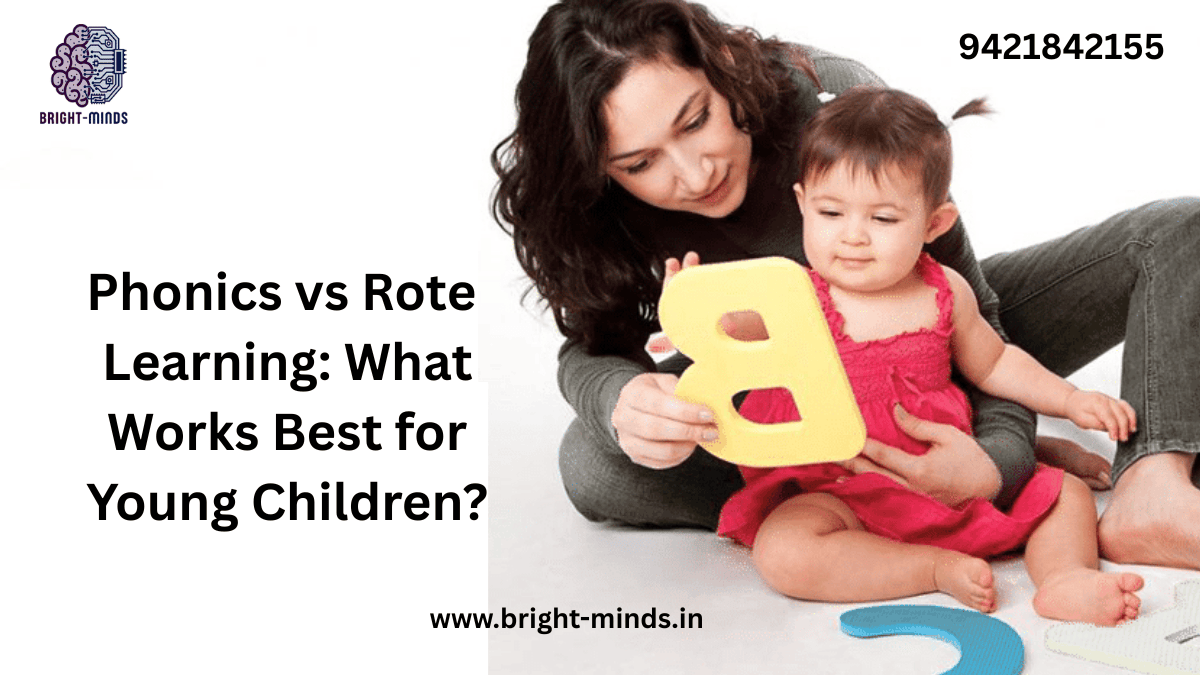
Phonics is a method of teaching children how sounds work in a language. Instead of memorizing entire words, children learn the relationship between letters and sounds. For example, they learn that the letter “B” makes a “buh” sound and that combining sounds helps form words like “bat” or “ball.”
Phonics focuses on decoding. When a child sees a new word, they can break it into sounds and read it independently. This skill builds confidence and promotes lifelong reading ability.
Real-world example:
A child who understands phonics can read the word “cat” even if they have never seen it before by blending the sounds “c-a-t.”
What Is Rote Learning?
Rote learning is based on repetition and memorization. Children learn by repeating words, sentences, or facts until they remember them. In this method, understanding is not always emphasized.
In early education, rote learning often means memorizing alphabets, sight words, poems, or spelling lists without knowing how or why they work.
Real-world example:
A child memorizes the word “cat” by seeing it repeatedly, but may struggle to read “bat” or “hat” if they have not memorized those words.
Phonics vs Rote Learning: Core Differences
The debate around phonics vs rote learning exists because both methods produce different outcomes.
Phonics develops reading logic.
Rote learning develops memory.
Phonics encourages problem-solving.
Rote learning encourages repetition.
Phonics helps children read new words independently.
Rote learning limits children to what they have memorized.
Phonics supports long-term literacy growth.
Rote learning may offer short-term academic performance.
Why Phonics Is Gaining Popularity Worldwide
Modern education systems across the world are shifting toward phonics-based instruction. Research shows that children who learn phonics develop better reading fluency, pronunciation, and comprehension.
Industry trends in early education now emphasize:
- Concept-based learning
- Child-centered classrooms
- Skill development over marks
- Long-term cognitive growth
Phonics aligns perfectly with these trends because it builds a strong foundation instead of surface-level knowledge.
The Limitations of Rote Learning in Early Childhood
While rote learning has been used for decades, it comes with limitations, especially for young children.
Children may score well in exams but struggle with real reading.
They may depend heavily on teachers and parents.
Creativity and curiosity often decline.
Fear of making mistakes increases.
In corporate education research, this is often referred to as “performance without understanding,” which does not support innovation or independent thinking.
Can Phonics and Rote Learning Work Together?
This is an important question. The answer is yes—but only when used wisely.
Rote learning can support phonics when:
- Memorizing basic letter shapes
- Learning simple sight words
- Practicing spellings after understanding sounds
However, rote learning should never replace phonics. Phonics should always be the core method, with memorization used as a supportive tool.
Practical Use Cases in Schools and Homes
For Parents:
Read aloud with your child and focus on sounds instead of forcing memorization. Encourage them to sound out words patiently.
For Teachers:
Use phonics games, storytelling, and sound blending activities. Avoid pressuring children to memorize long word lists.
For Schools and Training Centers:
Invest in phonics-based curriculum and teacher training. Parents today actively look for concept-driven learning environments.
For Corporate Employees in Education Sector:
Understanding phonics vs rote learning helps in curriculum design, ed-tech development, and parent communication strategies.
Phonics vs Rote Learning: What Research Says
Recent educational research confirms that phonics-based instruction improves:
- Reading accuracy
- Vocabulary growth
- Spelling skills
- Confidence in learners
Rote learning alone shows limited results beyond early recall stages. This is why modern education policies and NEP-style frameworks emphasize conceptual clarity.
Which Method Is Best for Young Children?
When comparing phonics vs rote learning, phonics clearly offers long-term benefits. It empowers children to become independent readers and thinkers.
Rote learning may help with short-term memory tasks, but it does not prepare children for real-world literacy challenges.
The best approach is:
Phonics first.
Understanding always.
Memorization only when needed.
Final Thoughts
Early education is not about how much a child remembers—it is about how well they understand. Phonics gives children the tools to explore language independently, while rote learning restricts growth when overused.
If you truly want your child or students to succeed in reading, communication, and lifelong learning, phonics-based education is the smarter choice.
Also Read:
https://bright-minds.in/unlocking-word-meaning-for-class-ukg-english-to-hindi/