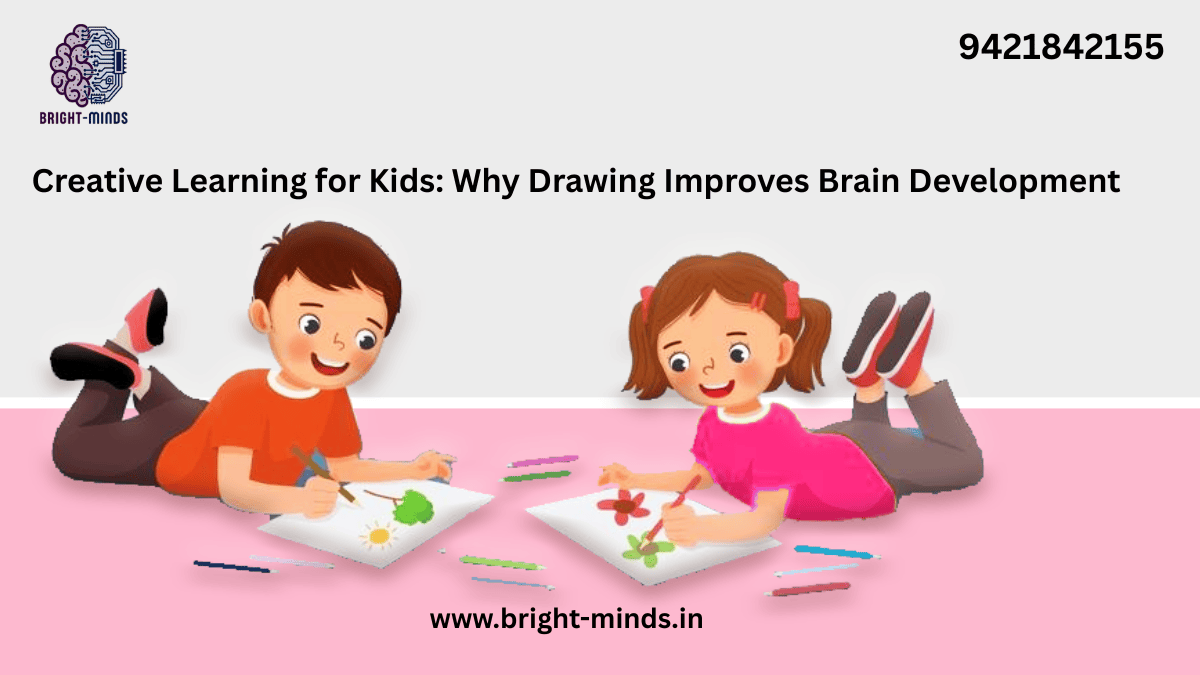
In today’s fast-changing world, learning is no longer limited to books, exams, and memorization. Parents, teachers, and education professionals are increasingly focusing on creative learning for kids—an approach that nurtures thinking, imagination, and emotional intelligence. Among all creative activities, drawing stands out as one of the most powerful tools for early brain development.
This article explains why drawing is more than just fun, how it shapes a child’s brain, and why creative learning for kids is becoming essential in modern education systems.
What Is Creative Learning for Kids?
Creative learning for kids is an approach that encourages children to explore ideas, express themselves, and learn through imagination rather than memorization. It includes activities like drawing, painting, storytelling, music, role play, and hands-on exploration.
Unlike traditional learning methods that focus only on results, creative learning emphasizes the process. Children learn how to think, not just what to think.
Drawing is one of the earliest and most natural forms of creative learning. Even before children can speak fluently, they express ideas through lines, shapes, and colors.
Why Drawing Matters in Early Childhood
Drawing activates multiple areas of a child’s brain at the same time. When children draw, they use:
- Fine motor skills to hold crayons or pencils
- Visual processing to understand shapes and space
- Cognitive skills to plan what they want to draw
- Emotional intelligence to express feelings
This combination makes drawing a powerful brain-building activity.
Real-life example:
When a child draws their family, they are not just creating art. They are recalling memories, organizing thoughts, understanding relationships, and expressing emotions—all at once.
How Drawing Improves Brain Development
Drawing strengthens neural connections in the brain. Each time a child draws, new pathways are formed between thinking, movement, and creativity.
Some key brain benefits include:
Improved concentration
Children who draw regularly learn to focus on tasks for longer periods.
Better problem-solving
Deciding what to draw, which colors to use, and how to fix mistakes improves decision-making.
Stronger memory
Drawing helps children remember ideas better than passive learning methods.
Enhanced language skills
Children often describe their drawings, which improves vocabulary and communication.
Creative Learning for Kids vs Traditional Learning
Traditional learning often focuses on worksheets, repetition, and memorization. While structure is important, too much rigidity can limit creativity.
Creative learning for kids, especially through drawing, allows freedom. There is no “right” or “wrong” drawing. This builds confidence and reduces fear of failure.
Children who experience creative learning:
- Ask more questions
- Express ideas confidently
- Show better emotional balance
- Enjoy learning instead of fearing it
Emotional and Social Benefits of Drawing
Drawing is a safe way for children to express emotions they cannot yet explain with words. Happy moments, fears, and even confusion often appear in their artwork.
For educators and parents, drawings provide insight into a child’s emotional world.
Social benefits include:
- Sharing drawings with peers
- Learning to appreciate others’ ideas
- Building empathy and patience
In corporate child education programs, drawing is often used as a tool to assess emotional well-being.
Industry Trends Supporting Creative Learning
Modern education frameworks and child development research strongly support creative learning for kids. Schools, ed-tech platforms, and learning centers are shifting toward activity-based learning models.
Key trends include:
- Art-integrated curriculum
- STEM combined with creativity (STEAM)
- Focus on 21st-century skills
- Emotional intelligence in early education
Drawing fits perfectly into these trends, making it a future-ready learning tool.
Practical Use Cases for Drawing-Based Learning
At Home
Parents can encourage drawing after storytelling or daily experiences. Asking simple questions like “What did you draw?” boosts thinking and communication.
In Schools
Teachers use drawing to explain concepts like animals, seasons, emotions, and even basic math.
In Learning Centers
Creative learning programs use guided drawing to improve attention span and brain coordination.
For Corporate Employees in Education
Understanding creative learning helps in curriculum planning, content creation, and parent engagement strategies.
Common Myths About Drawing and Learning
Myth: Drawing is only for artistic children
Truth: Every child benefits from drawing, regardless of artistic skill.
Myth: Drawing wastes study time
Truth: Drawing enhances learning efficiency and understanding.
Myth: Academic success does not need creativity
Truth: Creativity is linked to innovation, leadership, and adaptability.
How to Encourage Creative Learning for Kids
Give children open-ended drawing activities
Avoid judging or correcting their artwork
Provide simple materials like crayons and paper
Praise effort, not perfection
Connect drawings to real-life conversations
Small steps create powerful learning experiences.
Final Thoughts
Creative learning for kids is not a luxury—it is a necessity. Drawing plays a vital role in shaping brain development, emotional intelligence, and lifelong learning skills. Children who draw are not just creating pictures; they are building confidence, curiosity, and cognitive strength.
In a world that values innovation and problem-solving, creative learning lays the strongest foundation.
You may also like this:-