
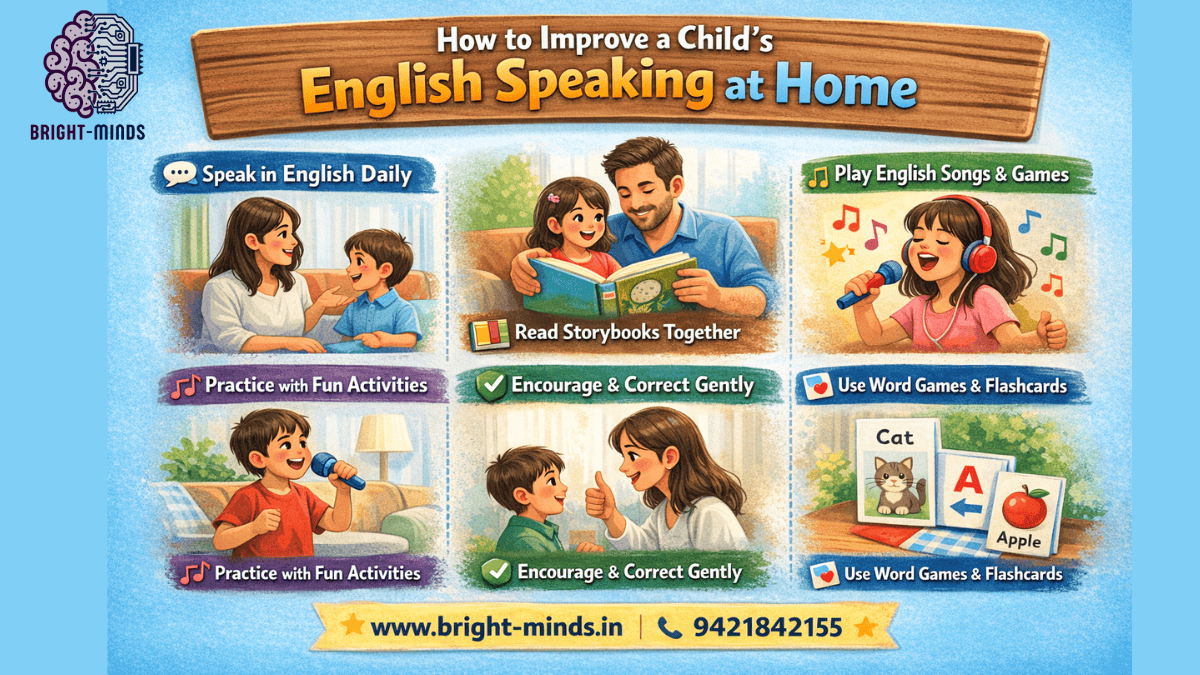
Many parents believe that English speaking skills can only improve through schools, tuition classes, or expensive courses. In reality, the strongest foundation for language learning begins at home. If you want to improve your child’s English speaking at home, you already have the most powerful tools: time, conversation, and encouragement.
Children learn languages best in safe, familiar environments. Home is where they feel confident to make mistakes, try new words, and express thoughts freely. With the right approach, parents can turn everyday moments into effective English-speaking practice without pressure or fear.
This guide is designed for beginners, parents, educators, and even working professionals who want simple, practical ways to help children speak English fluently and confidently at home.
Understanding How Children Learn to Speak English
Before trying techniques, it’s important to understand how children naturally learn language.
Children do not learn speaking by memorizing grammar rules first. They learn by:
• Listening repeatedly
• Copying sounds and words
• Practicing through interaction
• Receiving gentle correction
This means the goal is not perfection, but communication. When parents focus on fluency and confidence rather than mistakes, children progress faster.
Create an English-Friendly Home Environment
One of the easiest ways to improve a child’s English speaking at home is by making English part of daily life.
You don’t need to speak English all the time. Start small:
• Greet each other in English
• Use English for simple instructions
• Name objects around the house in English
For example:
“Please bring the water bottle.”
“Switch off the fan.”
“What are you doing now?”
This natural exposure helps children connect English with real-life situations.
Talk More, Correct Less
A common mistake parents make is correcting every sentence. This can reduce confidence and stop children from speaking.
Instead:
• Listen patiently
• Let the child finish speaking
• Correct gently by repeating the sentence correctly
Example:
Child: “He go school yesterday.”
Parent: “Yes, he went to school yesterday. What did he do there?”
This method improves speaking without embarrassment and encourages longer conversations.
Build a Daily English Speaking Routine
Consistency matters more than duration. Even 15 minutes daily can bring visible improvement.
Simple daily routine ideas:
• Morning: Talk about the day’s plan in English
• Afternoon: Describe activities while playing
• Night: Discuss what happened during the day
Routine creates habit, and habit builds fluency.
Use Storytelling to Improve Speaking Skills
Storytelling is one of the most powerful ways to improve a child’s English speaking at home.
Start with:
• Short stories
• Picture books
• Moral stories
Ask simple questions:
• Who is the character?
• What happened first?
• What did you like in the story?
Gradually encourage children to tell their own stories. Even imaginary stories boost vocabulary, sentence formation, and confidence.
Make English Speaking Fun with Games
Children learn faster when learning feels like play.
Effective speaking games include:
• Role play (shopkeeper, teacher, doctor)
• Guess the object
• Word chain games
• Describe and guess
Games remove fear and make English a natural part of enjoyment rather than a task.
Use Technology Smartly, Not Excessively
Modern children are surrounded by digital content. When used wisely, it can support English speaking development.
Good practices:
• English cartoons with subtitles
• Educational YouTube videos
• Audio stories and podcasts for kids
After watching, always ask questions in English:
“What did you understand?”
“Who was your favorite character?”
This converts passive watching into active speaking.
Encourage Thinking in English
A major breakthrough happens when children stop translating from their mother tongue and start thinking in English.
Help by:
• Using simple English sentences
• Encouraging description of surroundings
• Asking opinion-based questions
Questions like:
“What do you feel?”
“Why do you like this?”
“What will happen next?”
These develop thinking, not just repeating.
Read Aloud Together
Reading aloud improves pronunciation, sentence flow, and confidence.
Choose:
• Age-appropriate books
• Simple vocabulary
• Repetitive sentence patterns
Take turns reading. Let the child read even if pronunciation isn’t perfect. Over time, fluency improves naturally.
Be a Role Model for English Speaking
Children copy what they see and hear. If parents avoid speaking English, children will too.
You don’t need perfect English. Speak confidently with simple words. Showing effort teaches children that learning is a continuous process.
This mindset shift is especially important for working professionals and parents who feel hesitant about their own English.
Common Mistakes Parents Should Avoid
To effectively improve a child’s English speaking at home, avoid these mistakes:
• Forcing English all the time
• Comparing with other children
• Scolding for mistakes
• Expecting instant results
Language learning is gradual. Patience is key.
Current Trends in English Learning at Home
In recent years, learning English at home has evolved significantly.
Key trends include:
• Phonics-based speaking methods
• Activity-based learning
• Conversational English over grammar-heavy methods
• Parent-child interactive learning
These trends show that engagement matters more than textbooks.
How Working Parents Can Support English Speaking
Busy schedules should not stop progress.
Practical tips:
• Talk in English during meals
• Use voice notes in English
• Discuss office or school routines
Even short interactions contribute to fluency when done daily.
Measuring Progress Without Pressure
Instead of tests, observe:
• Increased sentence length
• Better pronunciation
• Willingness to speak
• Reduced hesitation
Celebrate small wins. Confidence grows with appreciation.
Final Thoughts: Small Steps, Big Results
To improve a child’s English speaking at home, you don’t need expensive courses or strict schedules. You need consistency, encouragement, and meaningful conversation.
When children feel safe, heard, and supported, English becomes a natural language rather than a subject.
Start today with one small change. Over time, those small moments will build strong communication skills that last a lifetime.
Also Read:
https://bright-minds.in/unlocking-word-meaning-for-class-ukg-english-to-hindi/