
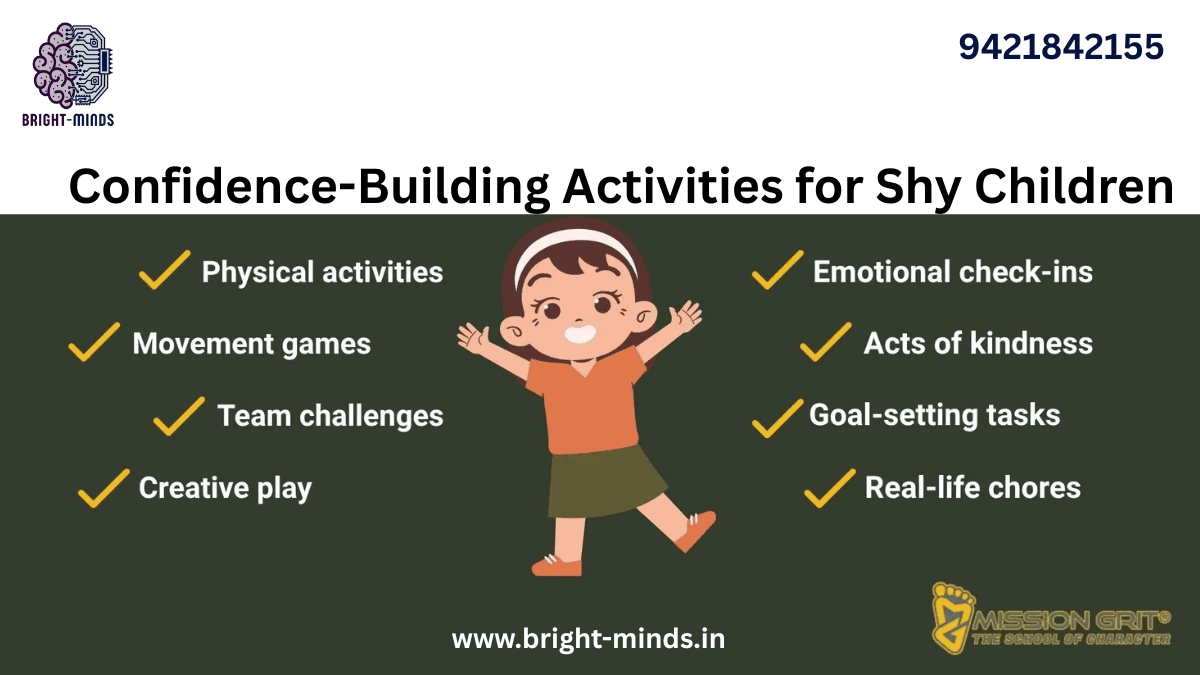
Shyness in children is more common than many parents and educators realize. Some children hesitate to speak in groups, avoid eye contact, or feel uncomfortable expressing their thoughts. This does not mean they lack ability or intelligence. Often, they simply need the right environment and encouragement to open up.
Confidence-building activities for shy children play a crucial role in helping them feel secure, valued, and capable. Whether at home, in school, or in daycare settings, these activities gradually nurture communication skills and self-belief. In today’s world—where teamwork, communication, and emotional intelligence are essential—building confidence early has become more important than ever.
This guide is designed for beginners, parents, teachers, and company employees working in education or child development. It explains practical, real-world methods that help shy children grow confidently at their own pace.
Why Confidence Matters in Early Childhood
Confidence is the foundation of a child’s emotional and social development. When children believe in themselves, they are more likely to try new things, ask questions, and interact positively with others.
For shy children, low confidence can sometimes lead to social withdrawal or fear of making mistakes. Over time, this may affect academic performance, friendships, and even future workplace communication. Confidence-building activities for shy children help prevent these challenges by encouraging gradual self-expression in a safe and supportive way.
Modern education trends emphasize holistic development, focusing not only on academics but also on emotional well-being. Schools and learning centers now actively include confidence-building exercises as part of early childhood programs.
Common Signs of Shyness in Children
Before introducing confidence-building activities, it’s important to recognize signs of shyness. These may include:
• Avoiding group play
• Speaking very softly or not at all
• Fear of performing in front of others
• Taking time to warm up in new situations
• Clinging to parents or teachers
Understanding these behaviors helps adults respond with empathy instead of pressure. The goal is not to change a child’s personality, but to help them feel comfortable being themselves.
Confidence-Building Activities for Shy Children at Home
The home is the safest place for children to practice confidence. Simple daily activities can make a big difference.
Role-Playing Everyday Situations
Role-play is one of the most effective confidence-building activities for shy children. Parents can act out simple scenarios like ordering food, greeting guests, or asking a question in class. This practice reduces anxiety when children face similar situations in real life.
Storytelling and Show-and-Tell
Encourage children to talk about their favorite toy, book, or experience. Start with family members as the audience. This gentle exposure builds speaking confidence without fear of judgment.
Positive Affirmation Time
Daily affirmations such as “I am brave” or “I can speak confidently” help reshape a child’s inner dialogue. Repetition builds belief, especially when parents model positive self-talk.
Confidence-Building Activities for Shy Children in School
Schools play a vital role in shaping confidence, especially during early years like LKG and UKG.
Group Games with Small Teams
Instead of large groups, teachers can start with small teams. Activities like passing the ball and sharing thoughts or collaborative drawing allow shy children to participate without feeling overwhelmed.
Circle Time Conversations
Circle time encourages turn-taking and listening. Teachers can ask open-ended questions and give shy children enough time to respond without pressure.
Creative Arts and Expression
Drawing, music, and drama are powerful confidence-building activities for shy children. These allow expression without relying solely on verbal communication, gradually leading to stronger self-confidence.
How Play-Based Learning Boosts Confidence
Play-based learning is a growing trend in early childhood education. It encourages children to explore, experiment, and express themselves naturally.
Through play, shy children feel less judged and more relaxed. Activities like pretend play, building blocks, and cooperative games teach problem-solving, communication, and teamwork. Over time, children gain confidence without even realizing it.
Educational companies and preschools increasingly integrate play-based confidence-building activities for shy children to create emotionally safe learning spaces.
The Role of Teachers and Caregivers
Teachers and caregivers are powerful influencers in a child’s confidence journey. Simple actions like maintaining eye contact, offering praise, and acknowledging effort go a long way.
Instead of correcting mistakes publicly, gentle guidance helps shy children feel secure. Celebrating small achievements builds trust and encourages participation.
Professional training programs for educators now emphasize emotional intelligence and child psychology, highlighting the importance of confidence-building activities for shy children in classrooms.
Using Routine and Structure to Build Confidence
Children feel confident when they know what to expect. Predictable routines reduce anxiety and help shy children feel more in control.
Morning greetings, daily responsibilities, and structured group tasks create familiarity. Over time, children begin to participate more willingly because they feel safe within the routine.
Technology and Confidence Building
In today’s digital age, technology can support confidence-building when used wisely. Educational apps that encourage speaking, storytelling, or interactive learning help shy children practice skills privately before applying them socially.
However, experts recommend balancing screen time with real-world interaction to ensure holistic development.
A five-year-old child who rarely spoke in class was gradually introduced to confidence-building activities for shy children through drawing and storytelling. Over three months, the child began participating in group discussions and confidently answering questions. The transformation was not sudden, but steady and sustainable—proving that patience and the right approach truly work.
Tips for Parents and Educators
• Be patient and consistent
• Avoid comparisons with other children
• Praise effort, not just results
• Create a judgment-free environment
• Celebrate small wins
These simple practices strengthen the impact of confidence-building activities for shy children.
Conclusion: Building Confidence Is a Journey
Confidence-building activities for shy children are not quick fixes—they are long-term investments in a child’s emotional well-being. With encouragement, structured activities, and a supportive environment, shy children can grow into confident communicators and independent thinkers.
Whether you are a parent, teacher, or education professional, your role matters. Start small, stay consistent, and watch confidence bloom naturally.
Call to Action
Want more expert-guided resources on child development and confidence building? Explore our learning guides, workshops, and structured courses designed to support children, parents, and educators on this rewarding journey.
You may also like this:-
Free Online Educational Games for Kids
Why Should Kids Play Online Math Games
You may also like this:-