Open any classroom or office today and you will see laptops, tablets, smart pens, and cloud-based documents everywhere. Children submit homework online, professionals take meeting notes in collaborative apps, and AI tools summarize conversations in seconds.
Yet one question keeps returning: Is writing by hand still important—or has typing completely taken over?
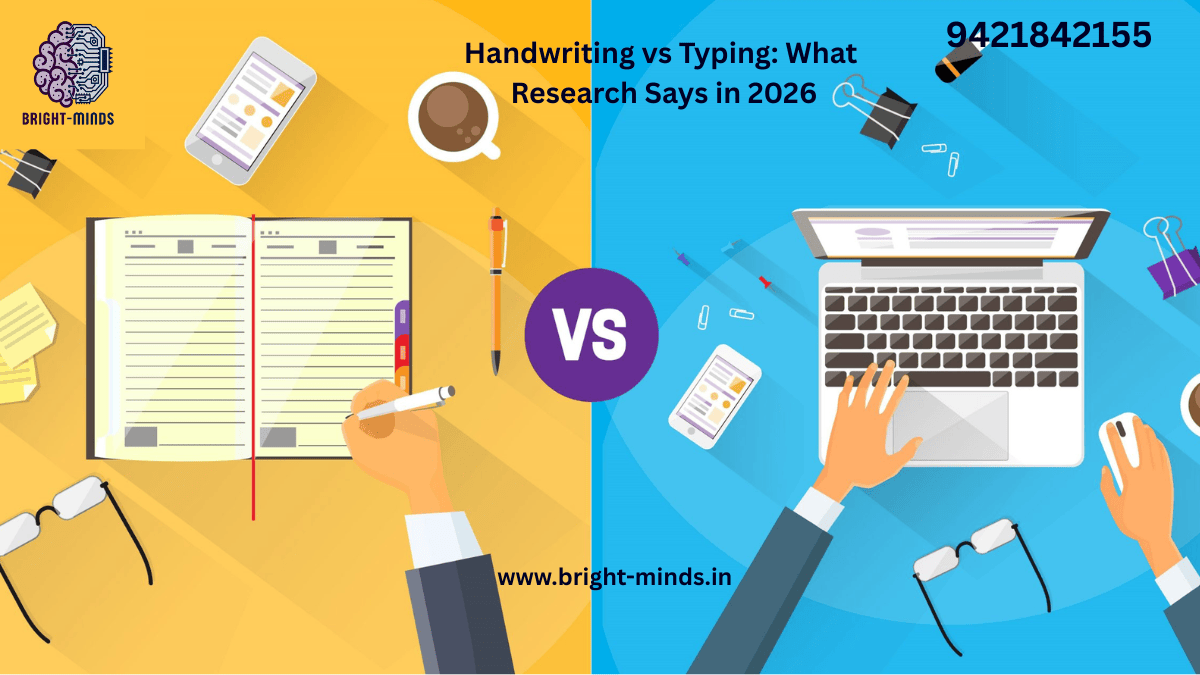
In 2026, the discussion is no longer about choosing one over the other. Instead, handwriting vs typing research focuses on how each method affects memory, creativity, comprehension, and productivity.
This guide explores what modern studies say, how schools and companies are adapting, and how beginners can make smarter choices about when to write by hand and when to type.
Understanding the Brain–Writing Connection
Before comparing tools, we must understand what happens in the brain when we write.
When you handwrite, your brain coordinates fine motor skills, visual recognition of letters, spatial planning, and language processing at the same time. This multi-sensory experience slows you down—but that slowdown can deepen thinking.
Typing, on the other hand, automates much of the movement. Pressing keys requires less shape-forming and motor planning, allowing people to record information quickly and edit easily.
Modern handwriting vs typing research shows that these physical differences influence how deeply information is processed.
What Recent Research in 2026 Suggests
Across education and workplace learning studies published in the mid-2020s, researchers continue to observe several patterns:
• Handwriting often improves concept understanding and recall
• Typing increases speed and volume of notes
• Hybrid digital pens combine benefits of both
• Students who summarize by hand remember more than those who transcribe word-for-word
• Professionals prefer typing for collaboration and documentation
Neuroscience tools such as EEG headsets and eye-tracking systems—now common in learning research—reveal higher neural engagement when people form letters manually compared to repetitive keyboard movements.
Why Handwriting Helps Memory
One consistent theme in handwriting vs typing research is that handwritten notes force selectivity.
Because writing by hand is slower, learners naturally paraphrase instead of copying everything. That mental filtering strengthens understanding.
Benefits linked to handwriting include:
• Better long-term recall
• Improved spelling and letter recognition in children
• Stronger idea organization
• Enhanced creative thinking
• Greater personal connection to material
For young learners especially, forming letters physically supports reading development and cognitive growth.
Where Typing Excels in the Modern World
Typing is not inferior—it simply serves different needs.
In both schools and offices, typing shines when:
• Speed matters
• Large volumes of information must be captured
• Documents need frequent editing
• Teams collaborate remotely
• Accessibility tools are required
• AI transcription systems are used
Typing also integrates with productivity software, search functions, and cloud backups, making it indispensable in corporate environments.
Classroom Applications in 2026
Educational institutions increasingly follow a balanced model.
Common classroom practices include:
• Early grades emphasizing handwriting foundations
• Middle school introducing structured keyboarding
• Digital notebooks with stylus input
• AI-assisted study tools that encourage summarizing
• Paper-based brainstorming followed by digital submission
Teachers now coach students to think first, type later—drafting ideas by hand before organizing them digitally.
Workplace Learning and Corporate Training
In companies, handwriting vs typing research influences training design more than you might expect.
Leadership workshops often include handwritten reflection exercises because they slow participants down and deepen insight. Meanwhile, typed documentation ensures scalability and knowledge sharing.
Forward-thinking organizations use:
• Printed worksheets for ideation
• Digital dashboards for performance tracking
• Tablet note-taking with stylus input
• AI meeting summaries paired with handwritten goal setting
The goal is cognitive engagement combined with operational efficiency.
The Rise of Hybrid Tools
Technology itself is responding to research findings.
In 2026, popular tools include:
• Smart notebooks that digitize handwriting
• Tablets with pressure-sensitive pens
• AI handwriting recognition
• Stylus-based brainstorming apps
• Paper-to-cloud scanners
These hybrids allow users to benefit from handwriting’s mental impact while enjoying digital storage and sharing.
Real-World Example: A Student and a Manager
Consider a university student preparing for exams. When they typed lectures word-for-word, their retention stayed low. After switching to handwritten summaries and later typing them into structured outlines, their scores improved noticeably.
Now look at a project manager. They brainstorm strategies in a notebook, then type final plans into shared workspaces for their team. Creativity first—efficiency second.
Both cases reflect the practical lessons of modern handwriting vs typing research.
Common Myths About Writing Methods
Myth: Typing always hurts learning.
Truth: Typing is excellent for drafting and collaboration.
Myth: Handwriting is outdated.
Truth: Research shows it remains cognitively powerful.
Myth: Children no longer need cursive.
Truth: Foundational writing skills still support literacy development.
How to Choose the Right Method
Instead of asking “Which is better?” ask:
• Is this for memorizing or recording?
• Is speed more important than understanding?
• Will I revise this later?
• Am I brainstorming or finalizing?
• Will others need to access this?
Use handwriting for deep thinking and initial learning. Use typing for production, sharing, and scaling.
Looking ahead, handwriting vs typing research will continue shaping:
• Curriculum standards
• Corporate training programs
• EdTech platforms
• Neuro-learning tools
• AI-powered note-taking systems
Rather than disappearing, handwriting is evolving—becoming part of a broader digital-human workflow where cognition and technology complement each other.
Conclusion: Balance Is the Smartest Strategy
In 2026, the verdict is clear: handwriting and typing are not enemies. They are partners.
Research shows that handwriting strengthens memory and thinking, while typing boosts efficiency and collaboration. When used strategically together, they create better learners and sharper professionals.
You may also like this:-