For decades, exam scores and report cards have dominated how we define success. Parents celebrate high grades, schools rank students by marks, and companies shortlist candidates based on academic performance.
But today’s world—shaped by automation, artificial intelligence, remote work, and constant change—demands something more human.
Employers increasingly ask: Can this person communicate clearly? Handle pressure? Collaborate with diverse teams? Adapt when plans change?
These questions point to one powerful skill set—emotional intelligence.
The conversation around emotional intelligence vs marks is growing louder in education systems and corporate boardrooms alike. This article explains what emotional intelligence really is, why it matters more than ever, and how learners and professionals can build it alongside academic achievement.
What Is Emotional Intelligence?
Emotional intelligence, often called EQ, is the ability to understand and manage your own emotions while recognizing and influencing the emotions of others.
Psychologists typically break EQ into five core components:
• Self-awareness – recognizing your feelings and triggers
• Self-regulation – controlling reactions and staying calm
• Motivation – maintaining focus and resilience
• Empathy – understanding others’ perspectives
• Social skills – communicating and building relationships
Marks measure what you know. Emotional intelligence shapes how you apply that knowledge in real life.
Why Marks Alone Are No Longer Enough
High grades reflect discipline, memory, and academic ability. These remain important—but they no longer guarantee success.
In modern workplaces, employees face:
• Cross-cultural teams
• Virtual collaboration
• Fast-changing technologies
• Customer-focused roles
• High-pressure deadlines
• Continuous reskilling
Technical knowledge gets you hired. Emotional intelligence helps you grow, lead, and stay relevant.
That is why the emotional intelligence vs marks debate is not about replacing academics—it is about expanding the definition of intelligence.
What Research and Industry Trends Show
Across industries, employers now rank soft skills among top hiring priorities.
Current trends include:
• Companies assessing EQ during interviews
• Leadership programs focusing on empathy and communication
• Schools introducing social-emotional learning curricula
• HR teams measuring collaboration and adaptability
• Coaching platforms using emotional analytics
Studies throughout the 2020s consistently link higher emotional intelligence with:
• Better leadership performance
• Lower workplace stress
• Stronger teamwork
• Higher job satisfaction
• Improved conflict resolution
These patterns explain why organizations invest heavily in emotional development programs.
How Emotional Intelligence Shapes Student Success
In schools and colleges, emotional intelligence affects learning in subtle but powerful ways.
Students with strong EQ often:
• Ask questions without fear
• Handle exam pressure calmly
• Accept feedback constructively
• Collaborate during group projects
• Stay motivated after failure
Imagine two students with similar marks. One panics under pressure and avoids teamwork. The other communicates clearly, stays resilient, and supports classmates. Over time, the second student often progresses faster—not because of superior grades, but because of stronger emotional skills.
The Workplace Perspective: EQ in Action
In professional environments, emotional intelligence plays out daily.
Examples include:
• A manager calming a tense meeting
• A sales executive reading customer emotions
• An engineer accepting critical feedback
• A team member resolving conflict respectfully
• A leader motivating others during uncertainty
These real-world moments rarely show up on transcripts—but they determine career trajectories.
Many companies now include EQ training in onboarding, leadership pipelines, and wellness initiatives.
Real-World Case: Grades vs Growth
Consider two new hires with similar academic records.
The first avoids communication, struggles with feedback, and reacts defensively to stress.
The second listens actively, asks thoughtful questions, and adapts quickly.
Within months, managers often favor the second employee for leadership opportunities—not because of marks, but because emotional intelligence makes teamwork smoother and productivity higher.
This everyday scenario illustrates why emotional intelligence vs marks is no longer an abstract theory—it is a workplace reality.
Common Myths About Emotional Intelligence
Myth: EQ is fixed at birth.
Truth: Emotional intelligence can be learned and strengthened.
Myth: High EQ means being emotional all the time.
Truth: It means managing emotions effectively, not suppressing or exaggerating them.
Myth: Marks do not matter at all.
Truth: Academic knowledge remains essential—EQ complements it.
How to Build Emotional Intelligence in Daily Life
The good news? Anyone can develop emotional intelligence with practice.
Here are practical methods for students and professionals.
Practice Self-Reflection
• Journal daily feelings
• Review emotional reactions
• Identify stress triggers
• Ask for feedback
Strengthen Communication Skills
• Listen without interrupting
• Paraphrase others’ points
• Ask open-ended questions
• Maintain eye contact
• Deep breathing
• Mindfulness
• Physical exercise
• Time management
• Digital detox breaks
Develop Empathy
• Consider others’ viewpoints
• Volunteer
• Work in diverse teams
• Read emotional cues
Embrace Constructive Feedback
• Separate criticism from identity
• Ask clarifying questions
• Apply suggestions
• Thank mentors
How Schools and Companies Are Teaching EQ
Across the globe, institutions are embedding emotional learning into everyday systems.
Examples include:
• Classroom discussions on feelings
• Role-play conflict scenarios
• Peer mentoring programs
• Corporate coaching sessions
• Leadership simulations
• Wellness platforms
EdTech companies increasingly design AI-driven tools that analyze communication patterns and suggest emotional improvement strategies, blending technology with human-centered development.
The Long-Term Impact of Emotional Intelligence
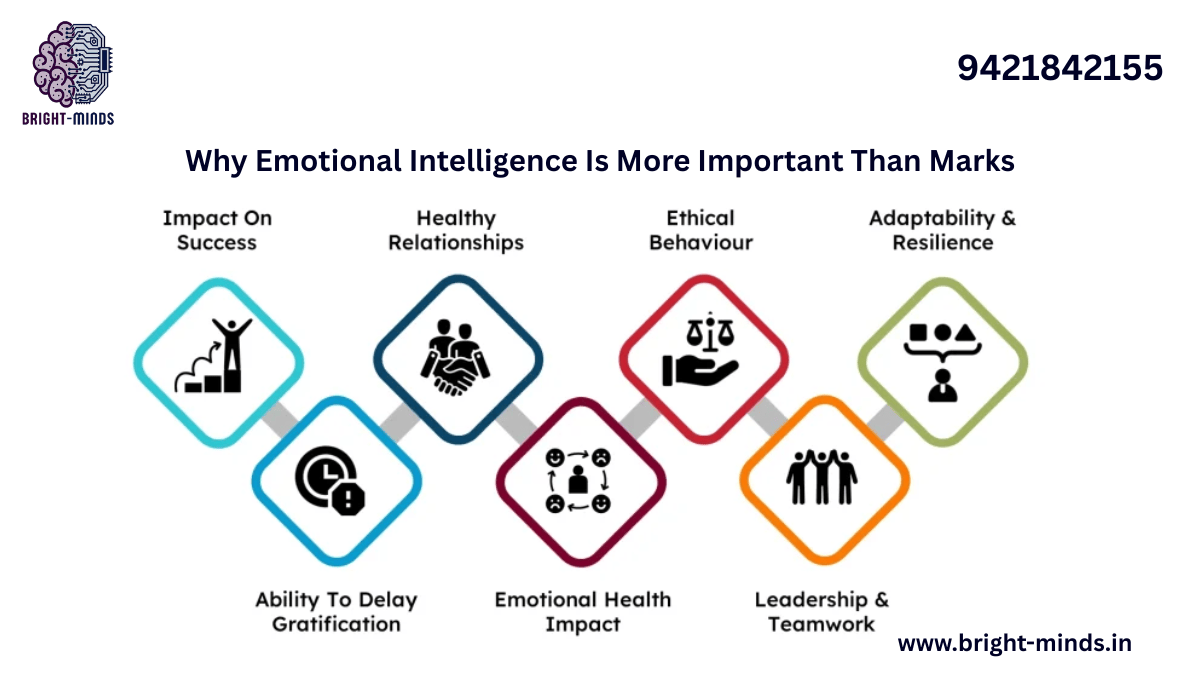
When emotional intelligence grows, the benefits ripple outward:
• Stronger personal relationships
• Better leadership potential
• Higher resilience
• Career longevity
• Ethical decision-making
• Positive workplace culture
Marks may open doors. Emotional intelligence determines how far you walk through them.
Conclusion: Redefining Achievement for the Future
In today’s fast-changing world, success depends not only on what you know—but on how you connect, adapt, and lead.
The debate around emotional intelligence vs marks highlights a simple truth: academic excellence and emotional skills must go hand in hand.
By nurturing empathy, communication, resilience, and self-awareness alongside studies and professional training, we prepare individuals not just for exams—but for life.
You may also like this:-