Learning to read is one of the most exciting milestones in a child’s life. Yet for many parents and educators, teaching phonics can feel confusing, outdated, or overwhelming. Worksheets pile up, attention spans shrink, and children lose interest quickly.
That’s where modern phonics activities at home come in.
Today’s phonics learning is interactive, playful, technology-supported, and rooted in everyday experiences. Whether you’re a parent guiding a preschooler, a tutor supporting early readers, or a company employee working in education services or content development, understanding these updated methods can make literacy instruction more effective—and enjoyable.
Let’s explore what modern phonics really means, why it works so well, and how you can apply practical activities right from your living room.
What Is Phonics—and Why Does It Matter?
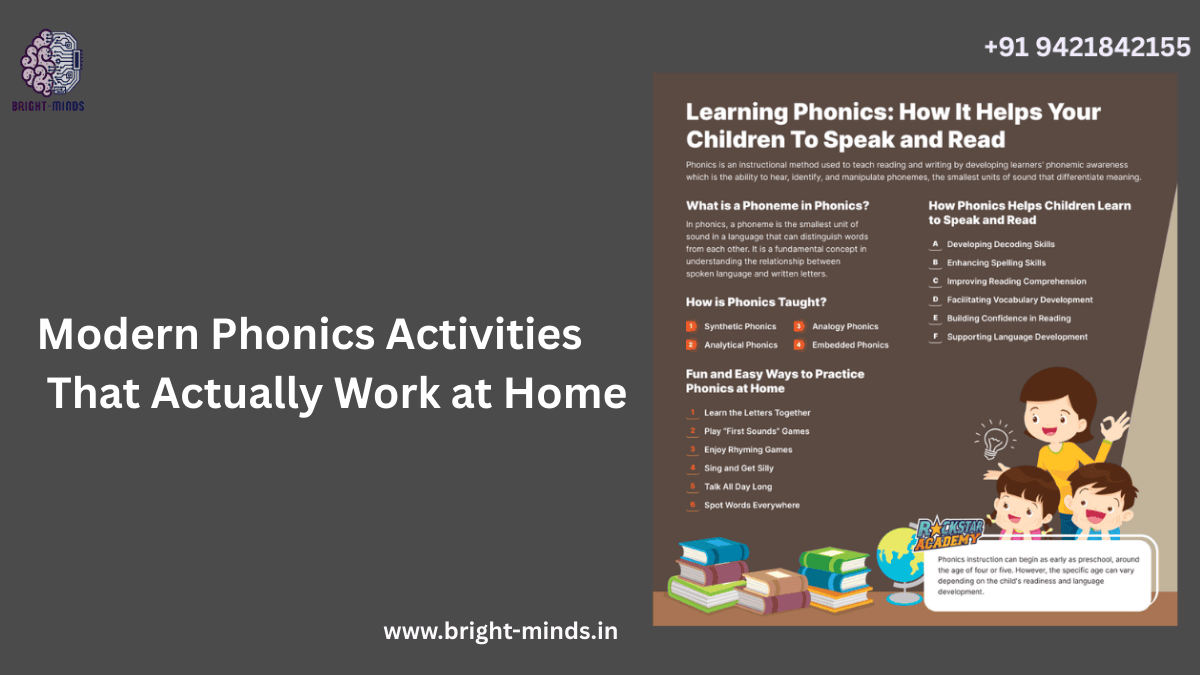
Phonics is the method of teaching reading by connecting letters and groups of letters with the sounds they represent. For example:
• The letter “b” makes the /b/ sound
• “sh” makes the /ʃ/ sound
• “cat” blends /c/ /a/ /t/
Strong phonics skills help children:
• Decode new words
• Improve spelling
• Gain reading confidence
• Become fluent readers faster
Modern approaches still focus on these fundamentals—but deliver them in far more engaging ways than traditional drills.
What Makes Phonics “Modern” Today?
Traditional phonics often relied heavily on worksheets and repetition. While repetition still matters, current learning science emphasizes:
• Multi-sensory experiences (seeing, hearing, touching, moving)
• Short, playful sessions
• Real-world connections
• Digital tools and gamification
• Personalized pacing
• Parent-child interaction
Modern phonics activities at home combine education with entertainment—turning daily routines into learning moments.
Why Home-Based Phonics Is So Powerful
Children learn best in familiar environments. At home, they feel safe to experiment, make mistakes, and ask questions.
Home phonics practice allows:
• Daily exposure in short bursts
• Customized activities for your child
• Relaxed learning without pressure
• Stronger parent-child bonding
• Immediate feedback
For education companies and learning platforms, this trend has sparked a growing market for home-learning kits, phonics apps, online courses, and parent-training programs.
Core Principles for Effective Modern Phonics at Home
Before jumping into activities, keep these foundations in mind:
- Keep sessions short (10–15 minutes)
- Focus on sounds before spelling
- Celebrate effort, not perfection
- Repeat skills across different games
- Use everyday language and objects
- Follow your child’s interest
Consistency beats intensity.
Activity 1: Sound Hunts Around the House
Turn your home into a phonics playground.
Choose one sound, like /m/. Walk around and hunt for objects:
• Mug
• Mirror
• Mat
• Milk
Say each word slowly, emphasizing the starting sound.
Why it works:
Children link spoken language to physical objects, strengthening memory.
Industry trend insight:
Many modern literacy programs use “environmental print”—labels, signs, and household items—to teach early reading.
Activity 2: Phonics Through Movement
Children love to move, so use it.
Assign actions to sounds:
• Jump for /j/
• Clap for /c/
• Stomp for /s/
Call out words and let your child perform the first sound’s action.
Why it works:
Movement activates multiple brain pathways, increasing retention.
Activity 3: Magnetic Letters and Word Building
Use fridge magnets or letter tiles.
Start simple:
• Build “cat”
• Change it to “bat”
• Then “hat”
Talk through each sound change.
Why it works:
Children visually see how letters affect pronunciation.
Professional use case:
Ed-tech companies often model digital phonics games after this exact hands-on strategy.
Activity 4: Storytime With Sound Spotting
During bedtime stories, pause and ask:
“Can you hear a word that starts with /s/ on this page?”
Let your child shout it out.
Why it works:
Phonics becomes part of real reading—not separate drills.
Activity 5: Phonics Apps and Interactive Tools
Technology is shaping modern literacy.
Look for apps that include:
• Voice recognition
• Blending practice
• Adaptive levels
• Rewards and progress tracking
Limit screen time, but use it strategically.
Industry trend:
AI-powered reading apps now personalize lessons based on a child’s errors, mirroring one-on-one tutoring.
Activity 6: Everyday Conversations as Phonics Lessons
Cooking dinner?
Say:
“We’re making soup. Sss-soup. Can you hear that /s/?”
Driving?
Point out road signs and store names.
Why it works:
Children realize reading and sounds are everywhere.
Activity 7: DIY Phonics Games
Create simple home games:
• Flashcard races
• Sound bingo
• Word-matching cards
• Rhyming baskets
These low-cost ideas rival expensive kits when done consistently.
How Companies and Educators Apply These Methods
Modern phonics strategies now influence:
• Preschool curricula
• Online tutoring platforms
• Learning-toy design
• Teacher-training programs
• Parent workshops
• Corporate CSR education initiatives
For professionals in education technology or publishing, understanding home-based phonics trends helps shape products parents actually want: flexible, fun, research-driven, and digital-friendly.
Common Mistakes to Avoid
Even with great activities, watch out for:
• Teaching letter names before sounds
• Long, tiring sessions
• Correcting too harshly
• Moving too fast
• Comparing children
Progress in phonics is gradual—and that’s perfectly normal.
How to Know Your Approach Is Working
Look for signs such as:
• Sounding out unfamiliar words
• Recognizing patterns
• Playing word games independently
• Increased interest in books
• Attempting spelling during drawing
Celebrate these milestones—they matter.
The Future of Home Phonics Learning
Looking ahead, experts predict:
• AI-driven personalized reading coaches
• AR-based letter tracing
• Voice-interactive storybooks
• Parent dashboards tracking progress
• Hybrid learning kits (physical + digital)
These innovations make modern phonics activities at home even more effective and accessible.
Final Thoughts: Make Phonics a Daily Adventure
Teaching children to read doesn’t require a classroom full of charts or stacks of worksheets. With curiosity, creativity, and consistency, your home can become the best literacy lab imaginable.
By using modern phonics activities at home, you help children build strong foundations for lifelong reading—while turning learning into joyful moments shared together.
You may also like this:-