
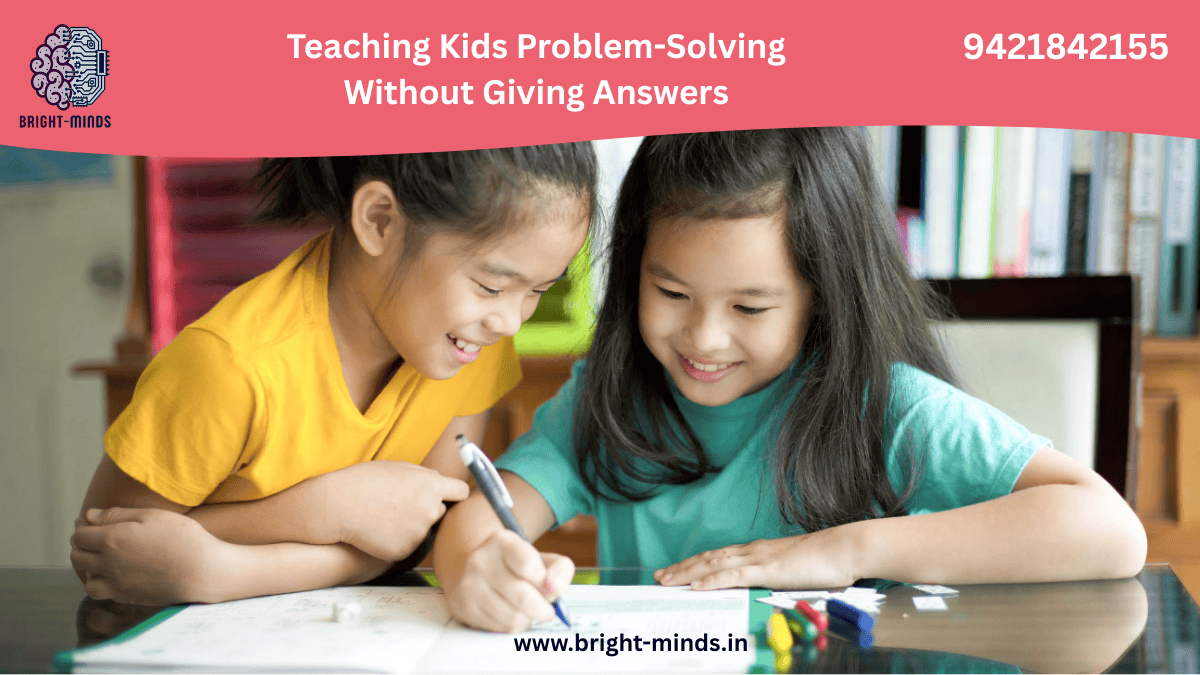
Teaching Kids Problem-Solving Without Giving Answers
Teaching children how to think is far more valuable than telling them what to think. In a world where information is always within reach, the real advantage comes from being able to analyze situations, weigh options, and make confident decisions. Problem solving is not a talent children are born with. It is a skill developed through everyday experiences, thoughtful guidance, and patient adults who resist the urge to jump in with solutions. When parents and educators focus on teaching kids problem solving without giving answers, they help build independence, resilience, and lifelong learning habits that extend far beyond the classroom.
Children encounter problems constantly. A toy will not work the way they expect. Homework feels confusing. A disagreement arises with a friend. These moments are opportunities. When adults immediately fix the issue or supply the correct answer, children miss the chance to struggle productively and grow. By stepping back and guiding rather than directing, adults send a powerful message that the child is capable of figuring things out.
Why Problem Solving Skills Matter in Childhood
Problem solving is closely connected to emotional intelligence, academic success, and social development. When children learn to work through challenges, they develop patience, persistence, and confidence in their abilities. They also learn that mistakes are part of learning rather than something to fear.
In school, students who can analyze problems and try multiple strategies often perform better in subjects like mathematics, science, and reading comprehension. Outside the classroom, these same skills help children navigate friendships, manage frustration, and make responsible choices.
Strong problem solvers tend to ask thoughtful questions, adapt when plans change, and approach new situations with curiosity instead of anxiety. These traits prepare children for adulthood, where clear cut answers are rare and flexibility is essential.
The Hidden Cost of Giving Answers Too Quickly
Adults naturally want to help. Watching a child struggle can feel uncomfortable, especially when the solution seems obvious. However, stepping in too quickly can have unintended consequences.
When children regularly receive answers, they may become dependent on adults for guidance. Over time, they can lose confidence in their own thinking and hesitate to attempt difficult tasks. They may also develop a fixed mindset, believing that intelligence is about being right rather than learning through effort.
Another cost is reduced creativity. When solutions are handed to children, they have little incentive to explore alternative ideas or experiment with new approaches. This can limit their ability to innovate and think outside the box later in life.
Teaching kids problem solving without giving answers does not mean leaving them alone or ignoring their frustration. It means offering support in a way that encourages thinking rather than replacing it.
Shifting From Answer Giver to Thinking Coach
To foster independence, adults must change their role from problem solver to thinking coach. A thinking coach creates a safe environment where children feel comfortable trying, failing, and trying again. This shift begins with patience and trust in the child’s abilities.
Instead of saying, That is wrong, try this, a thinking coach might ask, What have you tried so far or What do you think could work next. These questions invite reflection and keep ownership of the problem with the child.
It also helps to normalize struggle. Saying things like, This is tricky but you are working hard on it, reassures children that difficulty is part of the process. When children see adults remain calm and curious during challenges, they learn to respond the same way.
Asking the Right Questions
Questions are one of the most powerful tools for teaching problem solving. The right questions guide children’s thinking without revealing the answer.
Open Ended Questions That Spark Thinking
Open ended questions encourage exploration and deeper reasoning. Examples include:
What is the problem asking you to do
What information do you already have
What might happen if you try that idea
Is there another way to look at this
These prompts help children slow down, analyze the situation, and consider multiple strategies.
Reflective Questions to Build Awareness
Reflective questions encourage children to think about their own thinking. This process, often called metacognition, strengthens learning over time. Useful reflective prompts include:
Why do you think that worked
What would you do differently next time
Which part was the hardest and why
Over time, children begin asking themselves these questions automatically, making them more independent learners.
Creating a Safe Space for Trial and Error
Children are more willing to attempt challenging tasks when they know mistakes will not be punished or ridiculed. A supportive environment values effort and curiosity over perfection.
Praise should focus on strategies and persistence rather than intelligence. Saying, You kept trying different ideas until something worked, reinforces the behaviors associated with effective problem solving. Avoid labeling children as smart or talented for getting the right answer quickly, as this can create pressure to avoid difficult tasks.
Sharing stories about your own mistakes can also be powerful. When adults admit they struggled with something and learned from it, children see that errors are normal and useful.
Everyday Opportunities to Practice Problem Solving
Problem solving does not only happen during homework time. Daily life offers countless chances for children to think critically and make decisions.
At Home
In the kitchen, ask a child to help figure out how to double a recipe or substitute an ingredient that is missing. During cleanup, let them decide the best order to put things away. If siblings argue over a toy, guide them to propose solutions rather than choosing for them.
For example, instead of saying, Take turns for five minutes each, try asking, How can you both use this toy without fighting. Children may suggest setting a timer, playing together, or choosing a different activity while waiting.
At School
Teachers can encourage problem solving by allowing students to explain their reasoning, compare approaches, and learn from incorrect attempts. Group work is especially effective when students are encouraged to discuss strategies rather than simply share answers.
A math teacher might ask several students to show different ways to solve the same problem, highlighting that multiple paths can lead to a correct result.
During Play
Play is a natural setting for experimentation and creativity. Building with blocks, assembling puzzles, or inventing games all involve planning, testing, and revising ideas. Adults can support by commenting on what they see rather than directing. Statements like, You tried stacking the bigger blocks at the bottom, draw attention to strategies without judging them.
Using Scaffolding to Support Without Solving
Scaffolding is a teaching approach where adults provide just enough assistance to help a child progress, then gradually reduce support as the child becomes more capable.
For example, if a child is stuck on a reading comprehension question, instead of explaining the passage, you might guide them back to a key sentence and ask what it means in their own words. If they still struggle, offer a small hint rather than the full answer.
The goal is to keep the challenge within reach while ensuring the child does most of the thinking. Over time, the amount of help needed decreases, signaling growing independence.
Teaching a Simple Problem Solving Process
Children benefit from having a clear framework they can apply to many situations. A simple process might include:
Understanding the problem
Thinking of possible solutions
Trying one idea
Checking if it worked
Trying another if needed
Adults can model this process aloud. For instance, when assembling furniture, you might say, I am not sure where this piece goes. First I will look at the picture. Then I will try attaching it here. If that does not work, I will try another spot. Hearing this internal dialogue teaches children how experienced problem solvers think.
Managing Frustration and Big Emotions
Struggle often brings strong emotions, especially for young children. Teaching kids problem solving without giving answers also involves helping them cope with frustration.
Encourage children to pause and take a breath when they feel overwhelmed. Simple techniques like counting to ten or stepping away for a moment can reset their focus. Validate their feelings without removing the challenge. Saying, I see you are upset because this is hard, shows empathy while keeping responsibility with the child.
Once emotions settle, gently redirect attention back to the task with a guiding question or reminder of what has already been tried.
Real Life Example: Homework Without Hand Holding
Consider a child working on a word problem in math who keeps getting the wrong result. Instead of correcting them, a parent might say, Read the question again and tell me what it is asking in your own words. When the child explains, the parent can follow up with, Which numbers seem important here and Why did you choose that operation.
If the child realizes they misunderstood the question, they experience the satisfaction of fixing their own mistake. If not, the parent might suggest checking the steps one by one to see where things changed. This approach builds skills far more effectively than simply pointing out the correct calculation.
Real Life Example: Resolving Peer Conflict
Two children argue about who gets to go first in a game. Instead of deciding for them, an adult can say, You both want a turn first. What ideas do you have to solve this. At first, the children may shrug or repeat their demands. With patience, they often come up with solutions like flipping a coin or taking turns in the next round.
By guiding rather than dictating, adults teach negotiation, empathy, and fairness alongside problem solving.
Common Mistakes to Avoid
Even well meaning adults can slip into habits that undermine independence. Avoid rescuing children at the first sign of difficulty. Try not to ask leading questions that point directly to the answer. Also be cautious about overpraising quick success instead of thoughtful effort.
Another common mistake is turning every challenge into a lesson. Sometimes children just want to vent before tackling a problem. Listening first can make them more receptive to guidance later.
Building a Long Term Problem Solving Culture
Teaching problem solving is not a one time activity. It is a mindset woven into daily interactions. Families and schools that value curiosity, persistence, and reflection create environments where children feel empowered to think for themselves.
Over time, children raised this way often approach new challenges with confidence. They are more willing to attempt difficult tasks, collaborate with others, and adapt when things do not go as planned. These qualities serve them well in academics, relationships, and future careers.
Final Thoughts
Teaching kids problem solving without giving answers requires patience, trust, and a willingness to let children struggle just enough to learn. By asking thoughtful questions, creating a safe space for mistakes, and modeling reflective thinking, adults help children develop skills that last a lifetime. The goal is not to raise children who always get things right, but to raise thinkers who know how to face uncertainty with curiosity and resilience.
You may also like this:-