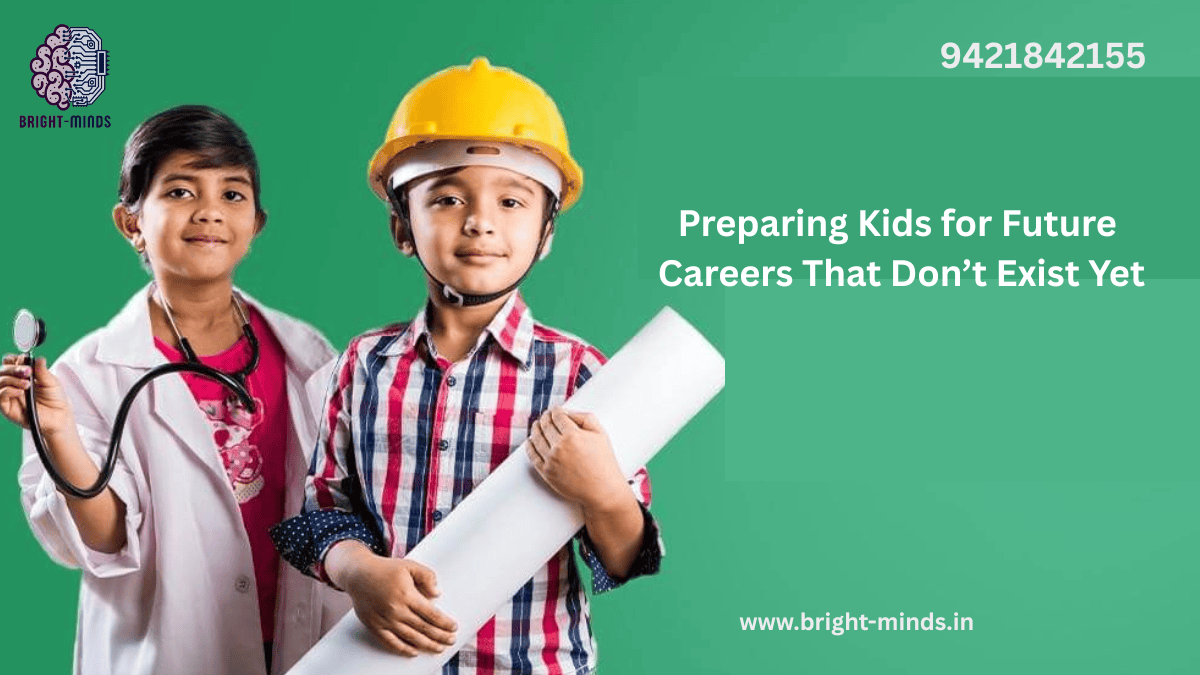
Preparing children for a world of work that is still being invented may sound intimidating, yet it is one of the most meaningful responsibilities parents and educators face today. Automation, artificial intelligence, biotechnology, climate innovation, immersive digital worlds, and space industries are reshaping society faster than traditional education systems can adapt. Many of the roles today’s children will eventually hold simply do not have names yet. Instead of trying to predict exact job titles, families can focus on building adaptable skills, resilient mindsets, ethical awareness, and lifelong curiosity. This approach ensures children remain confident learners who can thrive regardless of how the professional landscape changes.
Why Future Careers Are So Hard to Predict
In earlier generations, career paths often followed stable patterns. Doctors, engineers, teachers, accountants, and factory managers dominated employment charts for decades. Today, technological cycles move far more quickly. A programming language popular five years ago may now be obsolete. Entire sectors such as app development, data science, and renewable energy engineering barely existed twenty years ago. The same acceleration will continue, driven by advances in artificial intelligence, robotics, climate science, genetics, and global connectivity.
Economic shifts also influence work in unpredictable ways. Remote collaboration has created distributed teams across continents. Gig platforms have changed how people earn income. Governments and industries are rewriting regulations to keep up with new tools. These forces combine to make forecasting specific occupations nearly impossible. What remains predictable is the need for adaptable human abilities such as problem solving, creativity, collaboration, empathy, and ethical judgment.
The Core Skills Every Child Will Need
Rather than focusing on narrow technical training too early, parents and teachers can emphasize foundational competencies that transfer across industries.
Critical Thinking and Problem Solving
Children who learn how to analyze situations, ask thoughtful questions, and test solutions gain an advantage in any profession. Encourage them to break large challenges into smaller parts, compare multiple approaches, and reflect on outcomes. Simple activities like puzzle solving, building with blocks, debating everyday decisions, or planning a family trip can sharpen these abilities. In school settings, project based learning where students design experiments or community initiatives teaches them to navigate ambiguity with confidence.
Creativity and Innovation
Future careers will reward those who can imagine new possibilities and connect ideas across disciplines. Artistic expression through drawing, music, storytelling, drama, or dance strengthens creative muscles that later translate into product design, marketing strategy, scientific discovery, or social entrepreneurship. Allow children time for unstructured play where they invent games, build imaginary worlds, or repurpose everyday objects into new creations. Innovation often grows from curiosity rather than strict instructions.
Emotional Intelligence and Empathy
As automation handles routine tasks, human centered roles will expand. Professionals who understand emotions, communicate clearly, resolve conflicts, and lead ethically will remain invaluable. Children develop emotional intelligence through everyday interactions. Encourage them to label feelings, listen actively, apologize when necessary, and consider other viewpoints. Group sports, collaborative projects, volunteering, and family discussions about fairness or kindness all build social awareness that translates into workplace leadership later in life.
Digital Literacy and Adaptability
Technology will remain embedded in nearly every career. Digital literacy goes beyond using devices. It includes understanding online safety, evaluating information sources, protecting privacy, learning new software quickly, and recognizing how algorithms influence decisions. Introduce coding basics through age appropriate games, explore design tools, or analyze how apps collect data. Just as important is adaptability, the willingness to relearn skills repeatedly as tools evolve.
Ethical Reasoning and Responsibility
Future professionals will confront questions about artificial intelligence bias, environmental impact, genetic data, and data ownership. Teaching children to think ethically prepares them to navigate complex decisions with integrity. Discuss real world scenarios such as how social media affects mental health or why sustainability matters. Encourage them to weigh consequences, respect diversity, and consider long term effects rather than short term gains.
Encouraging a Growth Mindset at Home
A growth mindset is the belief that abilities develop through effort, practice, and learning rather than being fixed traits. Children with this outlook approach challenges as opportunities rather than threats. Parents can model this attitude by sharing their own learning journeys, mistakes, and improvements. Praise effort, strategy, and persistence instead of only results. When a child struggles with math homework or fails at a new sport, frame the experience as a step toward mastery rather than a sign of limitation.
Reading biographies of inventors, explorers, scientists, and social reformers also reinforces resilience. Stories of people who faced rejection before succeeding teach children that progress rarely follows a straight line. Encourage journaling or reflection after setbacks so children can identify what they learned and how they will try again.
Blending Academic Learning With Real World Exploration
Traditional subjects remain essential, yet they become more powerful when connected to real life contexts. Mathematics comes alive through budgeting for a project or measuring ingredients while cooking. Science grows engaging when children garden, build simple circuits, or track weather patterns. Language skills strengthen when children write letters, blog about hobbies, or present research to family members.
Field trips, museum visits, science fairs, and maker spaces expose children to emerging industries and tools. If possible, introduce them to professionals in diverse roles such as renewable energy technicians, app designers, biomedical researchers, urban planners, or social workers. These encounters expand their sense of what is possible and show how classroom learning translates into meaningful work.
Teaching Children How to Learn, Not Just What to Learn
In a rapidly changing economy, the ability to learn quickly matters more than memorizing facts. Help children develop research skills by showing them how to ask good questions, compare sources, and verify information. Encourage independent projects where they choose a topic, gather data, and present conclusions. Online courses, tutorials, podcasts, and digital libraries can supplement formal education and demonstrate that learning continues throughout life.
Time management and self direction are also critical. Teach children how to set goals, plan steps, prioritize tasks, and evaluate progress. Simple tools like weekly planners or reflection charts build habits that later support professional development and career transitions.
Preparing for Careers in Emerging Fields
While no one can predict every future role, several broad domains are likely to expand. Understanding these areas helps families provide exposure without locking children into rigid paths.
Technology and Artificial Intelligence
Artificial intelligence engineers, data ethicists, automation supervisors, virtual environment designers, and cybersecurity specialists represent just a few possible directions. Encourage interest through robotics kits, logic games, basic programming platforms, or analyzing how recommendation systems work on streaming services. Balance technical skills with discussions about privacy, fairness, and human oversight.
Sustainability and Climate Solutions
Climate change will require innovators in renewable energy, sustainable agriculture, environmental policy, circular economy design, and urban resilience planning. Gardening projects, recycling initiatives, energy audits at home, or participation in clean up drives can spark awareness. Children can also explore how scientific research informs public decisions about conservation and infrastructure.
Health and Biotechnology
Advances in genetics, telemedicine, wearable health devices, and personalized treatment will reshape healthcare. Activities such as learning about nutrition, studying how vaccines work, exploring anatomy models, or interviewing medical professionals introduce children to the intersection of science, technology, and compassion.
Creative and Immersive Industries
Virtual reality architects, digital storytellers, game designers, interactive educators, and experience curators may define entertainment and training sectors. Encourage multimedia projects where children design simple games, produce short videos, compose music digitally, or build virtual spaces. These pursuits combine technical fluency with narrative and artistic skill.
Social Innovation and Global Collaboration
Future challenges will demand leaders who can coordinate across cultures, design inclusive systems, and address inequality. Programs that involve community service, debate clubs, cultural exchanges, or student entrepreneurship competitions nurture civic responsibility and cross cultural communication.
Balancing Structure With Freedom
Children benefit from both guidance and autonomy. Over scheduling every hour with formal classes can stifle curiosity, while too little structure may leave skills underdeveloped. Aim for a balance that includes core academics, extracurricular interests, free play, and family time. Observe what excites your child and provide resources that deepen those interests without forcing a predetermined career narrative.
Allow room for experimentation. A child fascinated by dinosaurs one year may pivot to astronomy the next and robotics after that. These shifts reflect healthy exploration rather than indecision. The goal is to cultivate versatility and confidence rather than premature specialization.
Supporting Mental Wellbeing in a Fast Changing World
Preparing for uncertain futures can create pressure if adults frame success too narrowly. Emphasize wellbeing alongside achievement. Teach stress management techniques such as breathing exercises, physical activity, creative outlets, and healthy sleep routines. Encourage open conversations about worries or fears regarding school performance or social expectations.
Mindfulness practices and gratitude journaling help children stay grounded. Strong family relationships, supportive friendships, and trusted mentors provide emotional stability that allows children to take intellectual risks and pursue ambitious goals.
How Schools and Communities Can Contribute
Educational institutions play a critical role in future readiness by integrating interdisciplinary projects, technology literacy, entrepreneurship programs, and social emotional learning into curricula. Partnerships with local businesses, research centers, and nonprofits expose students to real world challenges and mentors. Communities can offer coding clubs, environmental initiatives, art collectives, science competitions, and career exploration workshops that supplement classroom instruction.
Parents can collaborate with teachers to advocate for flexible learning models that prioritize inquiry, creativity, and collaboration. Volunteering in school programs or organizing guest speaker sessions strengthens these networks and broadens children’s horizons.
Practical Daily Habits That Build Future Ready Kids
Small everyday actions accumulate into powerful preparation. Encourage reading across genres including fiction, science, history, and biographies. Discuss news stories at dinner and ask children how they might solve the problems described. Invite them to help plan household projects, compare prices while shopping, or design a family event. Celebrate curiosity by exploring new hobbies together such as photography, coding, cooking international recipes, or learning a new language.
Model lifelong learning by taking courses yourself, reading regularly, and sharing new skills you acquire. Children absorb attitudes toward change from watching adults navigate uncertainty with optimism and determination.
Measuring Success Beyond Job Titles
Ultimately, preparing children for future careers that do not yet exist is less about predicting industries and more about nurturing adaptable, ethical, confident human beings. Success can be measured by a child’s willingness to learn, collaborate, innovate, and contribute positively to society. When children grow up believing they can reinvent themselves, acquire new abilities, and make thoughtful decisions, they carry a toolkit that remains valuable no matter how the world of work evolves.
By focusing on core skills, emotional resilience, curiosity, ethical reasoning, and lifelong learning habits, families empower children to shape the future rather than simply react to it. The careers awaiting them may be unknown today, yet with the right preparation, they will be ready to create opportunities that previous generations could only imagine.
You may also like this:-