
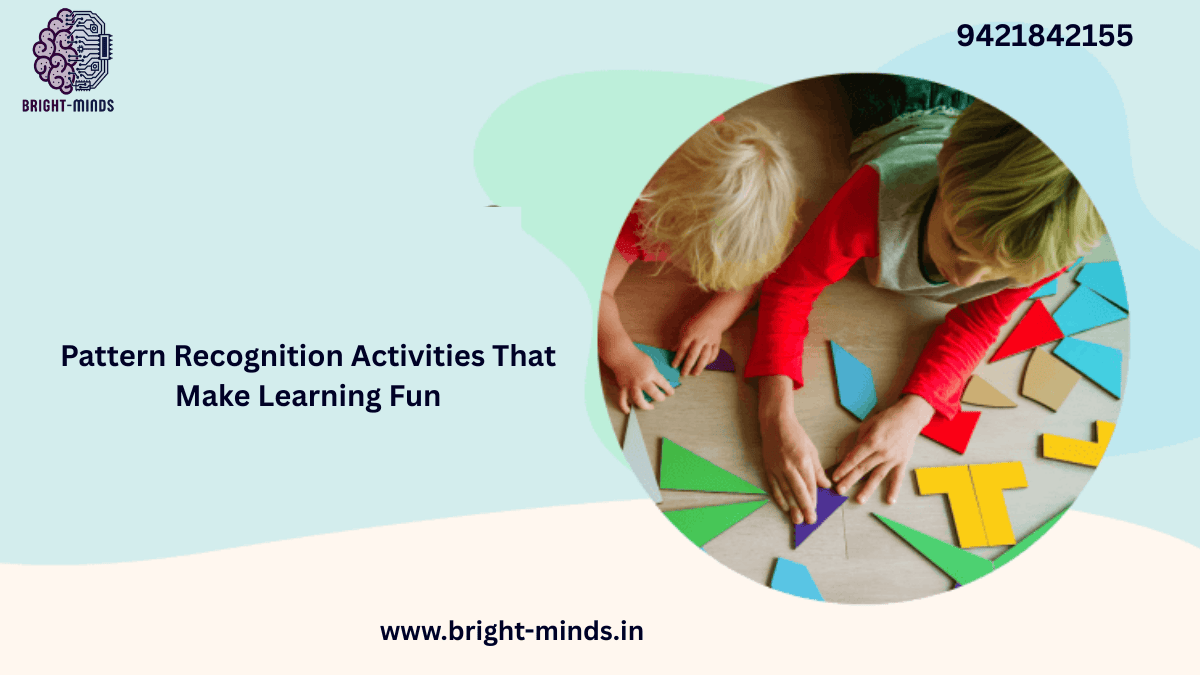
Pattern Recognition Activities That Make Learning Fun
Pattern recognition is one of the most essential cognitive skills children develop during their early learning years. It forms the foundation for logical thinking, problem solving, reading, and mathematics. When children learn to recognize patterns, they begin to understand how the world around them works. From identifying shapes and colors to recognizing repeating sequences, pattern recognition helps young learners make meaningful connections in everyday life. The best way to nurture this skill is through engaging and playful activities that make learning enjoyable rather than overwhelming. Pattern recognition activities that make learning fun not only strengthen cognitive abilities but also boost confidence, curiosity, and creativity in children.
Why Pattern Recognition Is Important for Early Learning
Pattern recognition is closely connected to several key developmental areas. It supports mathematical reasoning, language development, and critical thinking. When children notice patterns, they begin to predict what comes next, which strengthens their analytical abilities. For example, when a child sees the sequence red blue red blue, they quickly learn to anticipate the next color. This simple activity builds the groundwork for understanding mathematical sequences and algebraic thinking later in life. Pattern recognition also improves memory and attention. Children learn to observe details carefully and compare similarities and differences. These skills are vital for reading comprehension, spelling, and even music. When learning feels like a game rather than a task, children naturally stay engaged longer and absorb concepts more effectively.
How Play Based Learning Improves Pattern Recognition
Play based learning is one of the most effective ways to teach pattern recognition. Activities that involve movement, creativity, and hands on interaction help children understand patterns intuitively. Instead of memorizing sequences from a worksheet, children explore patterns through play, art, storytelling, and games. This approach encourages curiosity and experimentation. For instance, building a tower using alternating colored blocks allows children to visually see patterns forming in front of them. Singing songs with repetitive rhythms also helps children recognize patterns in sound. When learning is playful and interactive, children develop stronger connections with the concept and retain it longer.
Simple Pattern Recognition Activities for Preschoolers
Young children learn best through simple and visually engaging activities. These activities help them notice patterns without feeling pressured.
Color Pattern Games
Using colored objects is one of the easiest ways to introduce pattern recognition. You can use beads, buttons, blocks, or even colored paper. Create simple sequences such as red blue red blue and ask the child to continue the pattern. This activity strengthens observation skills and improves concentration. A fun variation is to let children create their own color patterns and challenge others to complete them. This encourages creativity while reinforcing the concept.
Shape Pattern Sorting
Shapes offer another exciting way to explore patterns. Cut out shapes such as circles, triangles, and squares from colored paper. Arrange them in repeating patterns like circle triangle circle triangle. Ask children to identify what comes next. This activity combines visual learning with logical thinking. It also helps children become familiar with basic geometric shapes.
Clap and Tap Patterns
Patterns are not limited to visual activities. They can also be taught through sound and movement. Clap twice and tap the table once, then repeat the sequence. Ask children to copy the pattern. This type of activity improves listening skills and coordination. Musical pattern games are particularly effective because children naturally enjoy rhythm and repetition.
Creative Pattern Recognition Activities for Kindergarten
As children grow, pattern activities can become slightly more complex and creative. These activities help deepen understanding while keeping the learning experience exciting.
Pattern Building with Blocks
Building blocks are a fantastic educational tool. Encourage children to create patterns using different colored blocks or shapes. For example, they can build towers using two red blocks followed by one blue block repeatedly. This activity helps children visualize patterns and understand repetition. It also improves fine motor skills and spatial awareness.
Nature Based Pattern Hunt
Nature is full of beautiful patterns waiting to be discovered. Take children on a short walk outdoors and ask them to look for patterns in leaves, flowers, tree bark, or even sidewalk tiles. For example, the veins of a leaf often follow a recognizable pattern. This activity helps children connect classroom learning with the real world. It also encourages observation and curiosity about nature.
Sticker Pattern Art
Give children a sheet of stickers in different colors or shapes. Ask them to create repeating patterns on a piece of paper. They can design borders, lines, or shapes using the stickers. This artistic activity combines creativity with logical thinking. Children enjoy the freedom to design their own patterns while practicing an important learning skill.
Pattern Recognition Activities for Elementary Students
Older children are ready for more challenging pattern recognition tasks that involve reasoning and problem solving.
Number Pattern Challenges
Introduce number patterns such as 2 4 6 8 and ask students to identify the rule behind the sequence. Once they understand the rule, they can extend the pattern. This activity builds strong mathematical reasoning and prepares children for advanced concepts like multiplication and algebra.
Pattern Puzzle Games
Puzzle games that involve completing sequences are excellent for developing critical thinking. Provide puzzles where children must identify missing elements in a pattern. For example, a sequence might include shapes, numbers, or pictures where one piece is missing. Children must analyze the pattern to determine the correct answer.
Coding Inspired Pattern Activities
Basic coding exercises are essentially pattern recognition in action. Simple coding games where children arrange commands in a sequence help them understand patterns in logic and instructions. For example, creating a repeating movement pattern for a character in a coding game teaches sequencing and prediction skills.
Fun Pattern Recognition Activities at Home
Parents can easily incorporate pattern recognition activities into daily routines. Learning does not always need structured lessons. Everyday moments provide excellent opportunities for teaching patterns.
Kitchen Pattern Fun
Cooking and baking offer natural pattern learning opportunities. Children can create patterns using fruits, cookies, or sandwich ingredients. For example, they might arrange slices of strawberry, banana, strawberry, banana on a plate. This activity turns snack time into a learning experience.
Clothing Pattern Games
Ask children to notice patterns in clothing such as stripes, polka dots, or repeating designs. You can challenge them to find matching patterns around the house. This simple game improves observation skills and encourages curiosity.
Toy Sorting Patterns
Children often enjoy organizing their toys. Encourage them to arrange toys in patterns based on color, size, or type. For example, they might line up cars in a red blue red blue sequence. This playful activity strengthens classification and pattern recognition simultaneously.
Digital Tools That Support Pattern Recognition
Educational apps and interactive games can also support pattern learning. Many learning platforms offer pattern matching games that gradually increase in difficulty. These tools provide instant feedback and encourage independent learning. However, screen time should complement hands on activities rather than replace them. Physical interaction with objects helps children understand patterns more deeply.
Tips for Teaching Pattern Recognition Effectively
Teaching pattern recognition becomes easier when activities are designed with children’s interests in mind. Here are several helpful strategies.
Start with Simple Patterns
Begin with easy repeating patterns using only two elements. Once children understand the concept, gradually introduce more complex sequences involving three or more elements.
Use Everyday Objects
You do not need expensive learning materials. Household items such as spoons, buttons, crayons, and toys work perfectly for pattern activities.
Encourage Children to Create Patterns
Instead of always asking children to complete patterns, invite them to invent their own. Creating patterns strengthens understanding and boosts creativity.
Ask Open Ended Questions
Questions like what comes next or why do you think this is the pattern encourage children to think critically and explain their reasoning.
Celebrate Small Successes
Positive reinforcement motivates children to keep learning. Praise their efforts and curiosity rather than focusing only on correct answers.
Signs That Children Are Developing Pattern Recognition Skills
Parents and teachers can observe several indicators that a child is strengthening pattern recognition abilities. Children may begin predicting what comes next in stories or songs. They might organize objects in repeating arrangements without being asked. Another sign is the ability to notice patterns in numbers, shapes, or sounds. When these behaviors appear, it shows that children are developing strong analytical thinking skills.
How Pattern Recognition Supports Future Learning
Pattern recognition is more than a simple classroom skill. It forms the basis for advanced learning in many fields. Mathematics relies heavily on patterns in numbers and formulas. Language learning also involves recognizing patterns in grammar and sentence structure. Even science and technology depend on pattern analysis. By developing this skill early, children gain a powerful tool that supports lifelong learning.
You may also like this:-