The Science Behind Fast Learning in Children Backed by Research
Children seem to learn new things at a speed that often surprises adults. A new language, a musical tune, a complex game, or advanced academic concepts can be absorbed much faster during childhood than later in life. This is not just a coincidence or a matter of curiosity. Science shows that a child’s brain is biologically designed for rapid learning. Understanding how this works can help parents, teachers, and educators create environments that unlock a child’s full potential. When learning is aligned with how the brain naturally develops, children grasp concepts faster, retain information longer, and build stronger cognitive foundations.
How a Child’s Brain Is Designed for Fast Learning
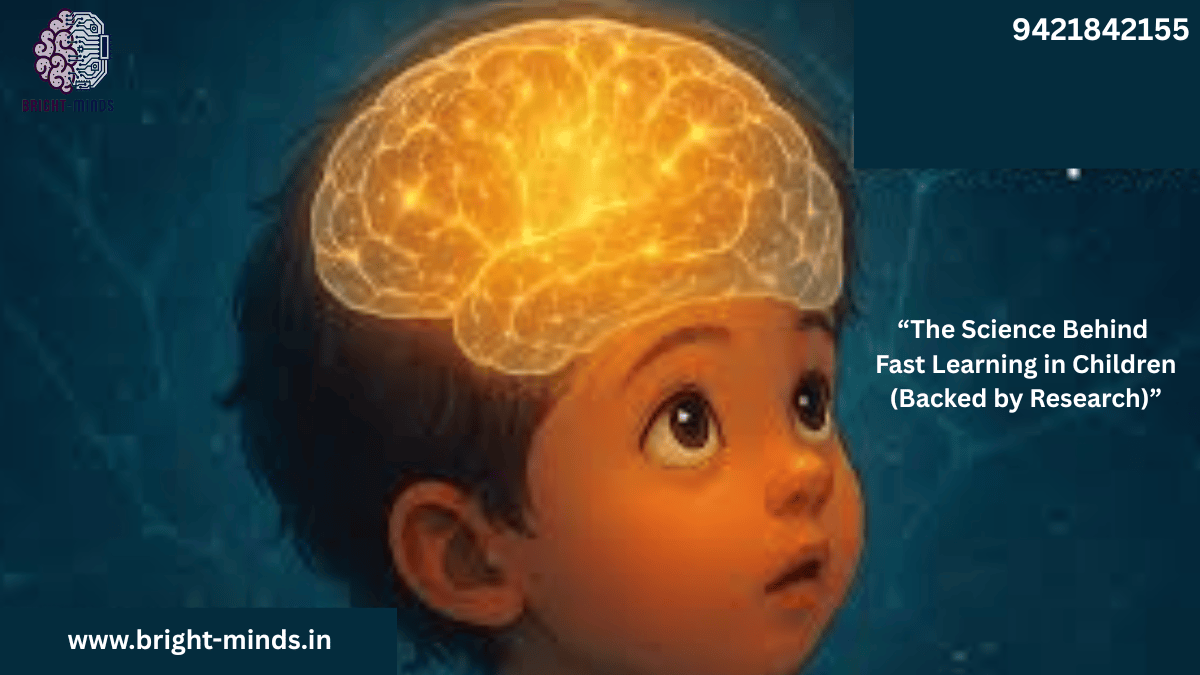
A child’s brain is highly flexible and adaptive. This ability is called neuroplasticity. Neuroplasticity allows the brain to form and reorganize neural connections quickly in response to learning and experiences. In early childhood, the brain builds millions of neural connections every second. These connections form the foundation for memory, thinking, creativity, and problem solving. Because the brain is still developing, it is more responsive to new information. Learning becomes easier because the brain is constantly wiring itself based on what the child sees, hears, and practices. This is why early exposure to reading, music, puzzles, and social interaction significantly improves intelligence and academic readiness.
Synaptic Growth and Stronger Memory Pathways
Neurons communicate through connections called synapses. The more a child practices a skill, the stronger these synapses become. Repetition strengthens memory pathways, allowing information to move faster inside the brain. For example, when a child practices multiplication daily, neural circuits related to numbers become more efficient. Eventually, the child recalls answers instantly without conscious effort. This process is known as myelination, where neural pathways become insulated and signals travel faster. Stronger pathways mean faster learning and better long term retention.
Sensitive Periods for Learning
Research shows that certain stages of childhood are sensitive periods for learning specific skills. During these windows, the brain is exceptionally ready to absorb certain types of information. Language learning is one of the strongest examples. Young children can pick up multiple languages naturally because their brains are tuned to recognize speech sounds and patterns. Similarly, early years are ideal for developing emotional intelligence, motor coordination, and creativity. When learning matches these sensitive periods, progress happens rapidly with less effort.
The Role of Attention and Curiosity
Children learn faster when they are genuinely interested. Curiosity activates the brain’s reward system, releasing dopamine, a chemical linked to motivation and memory. When dopamine levels rise, the brain becomes more focused and information is stored more effectively. This is why children remember topics they enjoy far better than subjects forced upon them. For example, a child fascinated by space can remember complex facts about planets, stars, and galaxies without difficulty. Interest turns learning into an enjoyable exploration rather than a stressful task.
Active Learning vs Passive Learning
Active learning involves participation, questioning, experimenting, and discussion. Passive learning involves simply listening or memorizing without engagement. Studies show that active learning improves understanding and retention because it stimulates multiple brain regions at once. When children build models, perform experiments, solve puzzles, or teach others, they process information deeply. This creates stronger memory links compared to passive reading or lectures. A simple classroom example is allowing students to conduct a science experiment rather than only watching a demonstration. The hands on experience strengthens comprehension and recall.
The Power of Play in Brain Development
Play is not just entertainment. It is a scientifically proven learning tool. During play, children develop problem solving skills, social intelligence, creativity, and emotional control. Free play encourages imagination and decision making. Structured play like puzzles and board games strengthens logic and strategy skills. Physical play improves coordination and brain oxygen levels, which enhance focus and thinking ability. For example, building blocks help children understand balance, shapes, and spatial awareness. Role playing games improve communication and empathy. Through play, learning happens naturally without pressure.
Emotional Safety and Learning Speed
A safe emotional environment is critical for fast learning. Stress releases cortisol, a hormone that disrupts memory formation and concentration. When children feel anxious or fearful, their brains shift into survival mode rather than learning mode. On the other hand, supportive relationships with parents and teachers create psychological safety. Encouragement and positive feedback boost confidence and brain performance. A child who feels safe asking questions and making mistakes learns faster than one who fears criticism.
Sleep and Memory Consolidation
Sleep plays a powerful role in learning. During deep sleep, the brain organizes and stores information gathered during the day. This process is called memory consolidation. Children need more sleep than adults because their brains process a larger volume of new information daily. Poor sleep weakens attention, memory, and problem solving ability. A well rested child can focus better, absorb lessons faster, and perform better academically. Establishing consistent sleep routines directly supports learning speed.
Nutrition and Brain Performance
The brain consumes a large portion of the body’s energy. Proper nutrition ensures optimal brain function. Nutrients like omega 3 fatty acids support neural development. Iron improves oxygen flow to the brain, enhancing concentration. Proteins help neurotransmitter production, which affects memory and mood. Hydration also impacts alertness and cognitive performance. Balanced meals improve attention span and learning efficiency. For example, children who eat healthy breakfasts perform better in school than those who skip meals.
The Importance of Repetition and Spaced Practice
Fast learning does not mean learning once and forgetting later. The brain strengthens knowledge through spaced repetition. Reviewing information at intervals improves long term retention. Short, frequent study sessions are more effective than long, exhausting sessions. This method reduces cognitive overload and reinforces memory pathways. For example, practicing vocabulary for fifteen minutes daily works better than studying for three hours once a week.
Multisensory Learning Boosts Understanding
Children learn better when multiple senses are involved. Seeing, hearing, touching, and doing create stronger neural connections. Multisensory learning engages different brain regions simultaneously, improving comprehension. For example, teaching letters through visual charts, phonics sounds, and hands on tracing improves literacy faster than reading alone. Science experiments, art projects, and interactive tools combine senses and deepen learning experiences.
Social Learning and Peer Interaction
Children learn effectively through observation and interaction. Watching peers solve problems provides new strategies and perspectives. Group learning encourages communication, teamwork, and confidence. Teaching others is one of the most powerful learning techniques because it forces deeper understanding. Study groups, classroom discussions, and collaborative projects accelerate learning through shared knowledge.
Growth Mindset and Learning Speed
A growth mindset is the belief that abilities can improve through effort. Children with this mindset embrace challenges and persist through difficulties. This attitude strengthens neural pathways because the brain grows through effort and problem solving. Praising effort instead of intelligence encourages resilience. When children believe they can improve, they practice more and learn faster.
Technology and Smart Learning Tools
Modern educational tools use brain science to enhance learning. Interactive apps, gamified lessons, and adaptive platforms adjust difficulty levels based on performance. These tools provide instant feedback and maintain engagement. When used wisely, technology personalizes learning and improves efficiency. However, balance is important. Screen time should support learning rather than replace real world interaction.
Practical Tips to Help Children Learn Faster
Parents and educators can apply simple science backed strategies to improve learning speed. Encourage curiosity by allowing children to explore their interests. Use active learning methods like projects and experiments. Maintain regular sleep schedules. Provide balanced nutrition. Create emotionally supportive environments. Use spaced repetition for revision. Include play based activities. Promote group learning. Praise effort and persistence. Limit distractions during study time. Small consistent improvements create significant long term results.
Real World Example of Fast Learning
Consider a child learning a new language. If the child listens to conversations daily, practices speaking, watches visual content, and interacts with fluent speakers, learning accelerates. Multiple senses are engaged. Social interaction builds confidence. Repetition strengthens memory. Curiosity sustains motivation. Emotional support reduces fear of mistakes. This combination of scientific principles leads to rapid progress.
Why Early Learning Matters Most
Early childhood lays the foundation for lifelong intelligence and skills. Strong neural networks built early make future learning easier. Children who develop reading, numeracy, communication, and emotional skills early adapt better academically and socially. Investing in early learning produces long term cognitive advantages.
You may also like this:-