
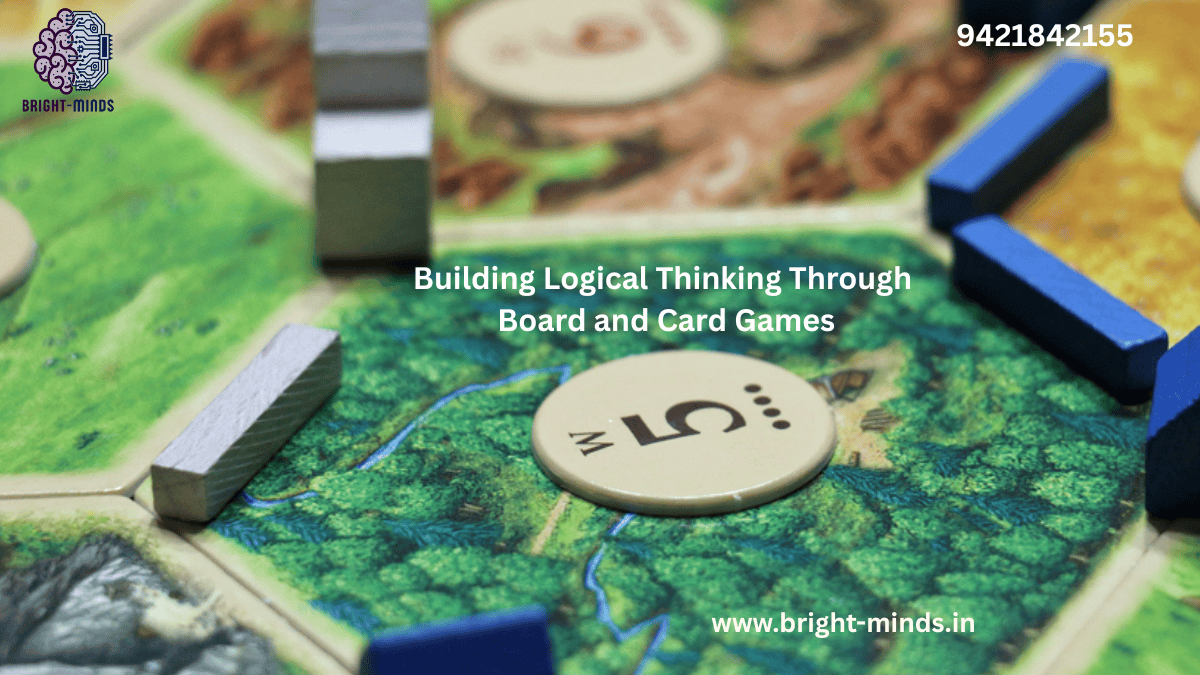
Building Logical Thinking Through Board and Card Games
In a world filled with screens and instant entertainment, parents and educators are constantly searching for meaningful ways to develop strong thinking skills in children. One of the most powerful yet underrated tools for cognitive development is surprisingly simple. Board and card games. These games are not just about fun or passing time. They are powerful instruments for building logical thinking, decision making ability, patience, and strategic planning. Whether played at home, in classrooms, or during family gatherings, board and card games quietly shape the way children analyze problems and make choices.
Logical thinking is the foundation of mathematics, coding, science, and even daily life decisions. When children learn to evaluate options, predict consequences, and adjust strategies, they strengthen neural pathways that support academic success and real world intelligence. The beauty of board and card games lies in their ability to teach these skills naturally without pressure or lectures.
Why Logical Thinking Matters in Early Development
Logical thinking helps children understand cause and effect. It teaches them that actions lead to outcomes. For example, if a child moves a piece carelessly in a strategy game and loses an advantage, they immediately experience the result of that decision. This feedback loop strengthens reasoning skills.
Strong logical thinking also improves academic performance. Children who can break down complex problems into smaller parts perform better in mathematics and science subjects. They become more confident learners because they know how to approach challenges step by step. In daily life, logical thinkers make better choices, manage time effectively, and resolve conflicts calmly.
Board and card games create a safe environment for practicing these essential skills. There is no fear of grades or failure. There is only learning through experience.
How Board Games Strengthen Strategic Thinking
Board games require planning. Players must think ahead, evaluate opponents’ moves, and anticipate possible outcomes. This constant mental activity sharpens cognitive abilities.
Planning and Forecasting Moves
In strategy based board games, players must plan several steps ahead. Consider a classic example like chess. A child quickly learns that every move affects the board structure. If they move a piece without thinking, they might expose a weakness. Over time, they start asking themselves important questions. What will happen next. What could my opponent do. How can I protect my position.
This habit of forecasting outcomes directly strengthens logical thinking. It trains the brain to consider consequences before acting.
Problem Solving Under Pressure
Board games often create time sensitive decisions. When multiple options are available, players must analyze quickly and choose wisely. This builds mental flexibility. Children learn that if one plan fails, they can try another strategy.
For example, in games that involve building or resource management, players must decide how to allocate limited assets. Should they invest now or save for later. Such decisions mirror real life financial and academic choices.
The Cognitive Benefits of Card Games
Card games are equally powerful when it comes to developing reasoning skills. Unlike many digital games that rely heavily on visuals, card games demand memory, observation, and logical deduction.
Memory and Pattern Recognition
Many card games require players to remember previously played cards. This improves working memory and pattern recognition. When children track patterns, they begin predicting probabilities. This strengthens mathematical thinking and analytical skills.
For instance, in simple matching games, children observe suits, numbers, or colors. As complexity increases, they begin forming strategies based on probability. They calculate risk without even realizing they are practicing advanced reasoning.
Decision Making with Limited Information
Card games often hide certain information from players. This forces children to make decisions based on partial knowledge. Learning to evaluate risks with incomplete data is a critical logical skill.
Imagine a child deciding whether to play a high value card now or save it for a later round. They must weigh immediate benefit against future advantage. This strengthens foresight and long term planning ability.
Real Life Example of Logical Growth Through Games
Consider a seven year old child who regularly plays board games with family. At first, the child may focus only on winning. They make impulsive moves. But after repeated experiences of losing due to poor planning, they begin thinking ahead. They pause before making decisions. They observe patterns. They adapt strategy based on opponent behavior.
Within months, parents notice changes beyond the game table. The child approaches homework more systematically. They break down math problems step by step. They show patience in difficult tasks. This transformation happens because board and card games create a habit of structured thinking.
Building Logical Thinking in Classrooms
Educators can integrate board and card games into learning environments effectively. Instead of traditional worksheets alone, teachers can use game based activities to reinforce lessons.
For example, mathematics teachers can use number based card games to teach addition and multiplication. Language teachers can use word building board games to improve vocabulary while strengthening pattern recognition.
When games are aligned with academic goals, students engage more actively. They learn without feeling pressured. Logical thinking develops naturally as they aim to improve performance.
Actionable Tips for Parents
Choose Age Appropriate Games
Select games that match your child’s developmental level. Very complex games may cause frustration, while overly simple games may not challenge reasoning skills. Gradually increase difficulty as the child grows.
Encourage Reflection After Playing
After a game session, ask simple questions. What worked well. What would you do differently next time. Why did that move lead to a loss. These reflections strengthen analytical thinking.
Focus on Learning Over Winning
Avoid emphasizing victory. Instead, highlight smart decisions and good strategies. When children value logical thinking more than winning, they develop deeper cognitive skills.
Schedule Regular Game Time
Consistency matters. Weekly family game sessions build habits. Even thirty minutes per week can create noticeable improvement in reasoning ability.
Developing Emotional Intelligence Alongside Logic
Board and card games also teach patience and emotional regulation. Losing gracefully and handling competition builds resilience. Logical thinking is closely linked to emotional control. When children manage frustration calmly, they think more clearly.
Games teach that mistakes are opportunities to learn. This growth mindset encourages children to analyze errors instead of avoiding challenges.
How Games Prepare Children for Future Careers
Logical thinking is essential in modern careers such as engineering, programming, finance, and data analysis. Professionals in these fields constantly evaluate patterns and make strategic decisions.
Children who regularly engage in board and card games develop early exposure to structured reasoning. They become comfortable with complexity. They learn to evaluate multiple possibilities before choosing a path.
Even in non technical careers, logical reasoning improves communication and negotiation skills. It helps individuals present arguments clearly and solve problems efficiently.
Digital Games Versus Traditional Board Games
While digital games can offer cognitive benefits, traditional board and card games provide unique advantages. They encourage face to face interaction. They improve communication skills. They eliminate screen distraction and overstimulation.
Physical games require manual handling of pieces or cards, which enhances sensory engagement. This deeper involvement strengthens concentration and retention.
Families who balance digital and traditional play create a healthier cognitive environment for children.
Encouraging Independent Strategy Building
As children grow older, allow them to design their own variations of games. Ask them to create new rules or modify scoring systems. This encourages creative logic. When children invent strategies, they practice advanced reasoning skills.
For example, allow a child to design a simple board game for siblings. They must think about objectives, rules, fairness, and difficulty. This process itself is an exercise in logical structuring.
Long Term Impact of Game Based Learning
The impact of consistent game based learning extends into adulthood. Adults who grew up playing strategic games often demonstrate stronger analytical skills and decision making confidence. They approach challenges methodically. They evaluate risks thoughtfully.
Logical thinking is not developed overnight. It is built through repeated experiences that require reasoning and reflection. Board and card games provide exactly this environment in an enjoyable format.
You may also like this:-