Early education plays a crucial role in shaping a child’s future learning habits, confidence, and attitude toward education. Parents want the best for their children, yet many unknowingly make decisions that slow down natural learning growth. Understanding common learning mistakes parents make is the first step toward creating a strong foundation.
In today’s competitive world, pressure to perform starts early. However, learning is not a race—it’s a journey. When parents shift their focus from results to development, children thrive emotionally, socially, and academically.
Why Parents Often Make Learning Mistakes
Most parents act with good intentions. Mistakes usually happen because of:
• Lack of awareness about child development
• Comparison with other children
• Social pressure
• Outdated education beliefs
• Fear of children falling behind
Recognizing these causes helps parents correct their approach without guilt.
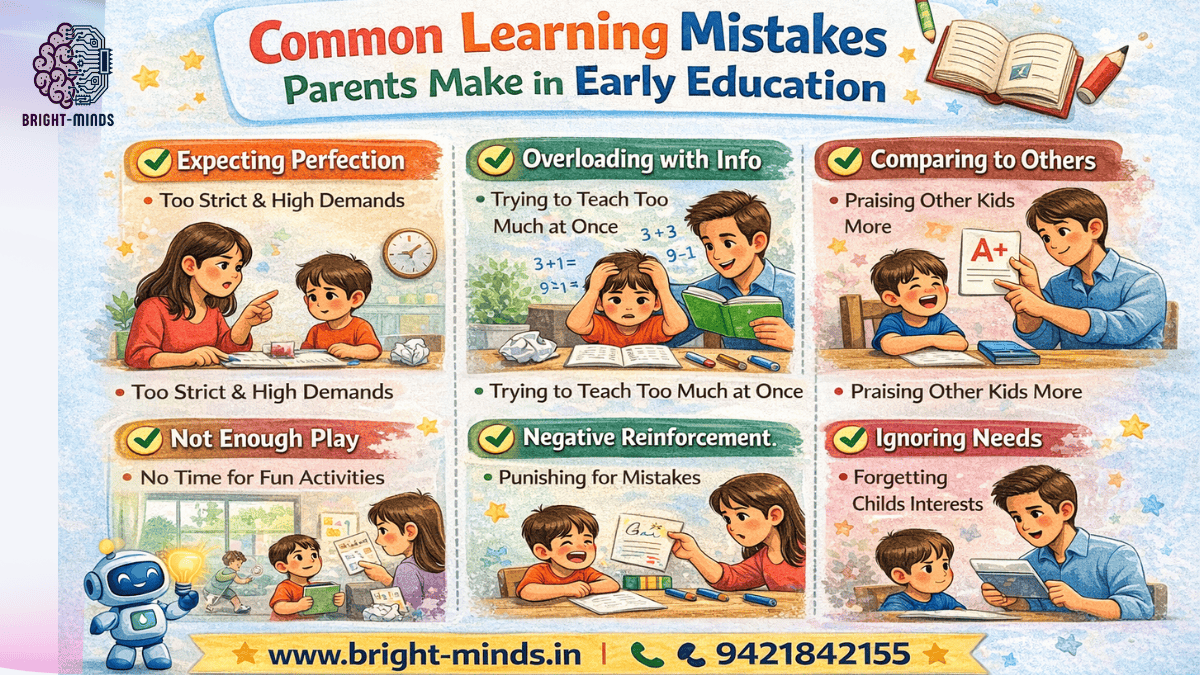
Mistake 1: Expecting Academic Perfection Too Early
One of the most common learning mistakes parents make is expecting children to read, write, and calculate perfectly at a very young age.
Early childhood is meant for:
• Exploration
• Play
• Language exposure
• Emotional development
Forcing academics too early can lead to stress, fear of learning, and loss of curiosity. Children need readiness before performance.
Mistake 2: Comparing Children with Others
Every child develops at a different pace. Comparison is harmful and demotivating.
Examples of harmful comparison:
• Comparing siblings
• Comparing classmates
• Comparing marks or skills
Instead of comparison, focus on progress. Celebrate improvement, no matter how small.
Mistake 3: Overloading Children with Classes
Many parents believe that more classes mean better learning. In reality, overloading causes burnout.
Too many classes result in:
• Reduced interest in learning
• Mental fatigue
• Less playtime
• Emotional stress
Balanced schedules with free play support better brain development and creativity.
Mistake 4: Ignoring Play-Based Learning
Play is not a waste of time. It is essential for learning.
Play helps children develop:
• Problem-solving skills
• Language skills
• Social behavior
• Creativity
Ignoring play-based learning is one of the major common learning mistakes parents make in early education.
Mistake 5: Focusing Only on Marks, Not Skills
Marks measure memory, not intelligence.
Real learning includes:
• Communication
• Logical thinking
• Emotional control
• Creativity
Children who build skills early perform better in academics later.
Mistake 6: Correcting Too Much, Encouraging Too Little
Constant correction reduces confidence. Children need encouragement more than criticism.
Better approach:
• Let children express freely
• Correct gently
• Appreciate effort
Confidence fuels learning more than fear.
Mistake 7: Using Screens as Learning Replacements
Digital tools can support learning but should not replace interaction.
Excessive screen use can cause:
• Reduced attention span
• Poor communication skills
• Limited imagination
Learning happens best through human connection and real-world experiences.
Mistake 8: Not Listening to the Child
Children communicate emotions through behavior.
Ignoring emotional needs leads to:
• Learning resistance
• Anxiety
• Behavioral issues
Listening builds trust, and trust supports learning.
Mistake 9: Using Fear-Based Discipline
Scolding, punishment, or threats may bring temporary obedience but harm learning long-term.
Fear-based learning:
• Blocks creativity
• Reduces confidence
• Creates learning anxiety
Positive discipline encourages responsibility and curiosity.
Mistake 10: Following One-Size-Fits-All Learning
Each child has a unique learning style:
• Visual
• Auditory
• Kinesthetic
Forcing one method on all children limits potential. Personalized learning works best.
Current Trends in Early Childhood Education
Modern education emphasizes:
• Activity-based learning
• Social-emotional development
• Skill-based education
• Parent-child collaboration
Understanding these trends helps parents avoid outdated learning mistakes.
How Working Parents Can Avoid These Mistakes
Busy schedules don’t mean ineffective parenting.
Simple solutions:
• Quality time over quantity
• Daily conversations
• Encouragement during routine activities
Even small interactions have a powerful impact.
How Organizations and Educators Can Support Parents
Schools and learning centers now educate parents alongside children by:
• Conducting parent workshops
• Sharing child progress holistically
• Promoting activity-based learning
Partnership between parents and educators creates better outcomes.
How to Fix Learning Mistakes Without Guilt
Mistakes are part of parenting. The goal is improvement, not perfection.
Steps to fix mistakes:
• Learn about child development
• Observe your child
• Adjust expectations
• Focus on growth
Positive change starts with awareness.
Conclusion: Right Guidance Creates Confident Learners
Understanding common learning mistakes parents make empowers families to support children better. Early education should build curiosity, confidence, and joy—not fear or pressure.
When parents shift their mindset from “results” to “development,” children grow into lifelong learners ready for future challenges.
you may be interested in this blog here:-
Numeracy Skills for Pre-Primary Building a Strong Foundation
Learning Geography with Maps: A Kid’s Adventure Around the World