
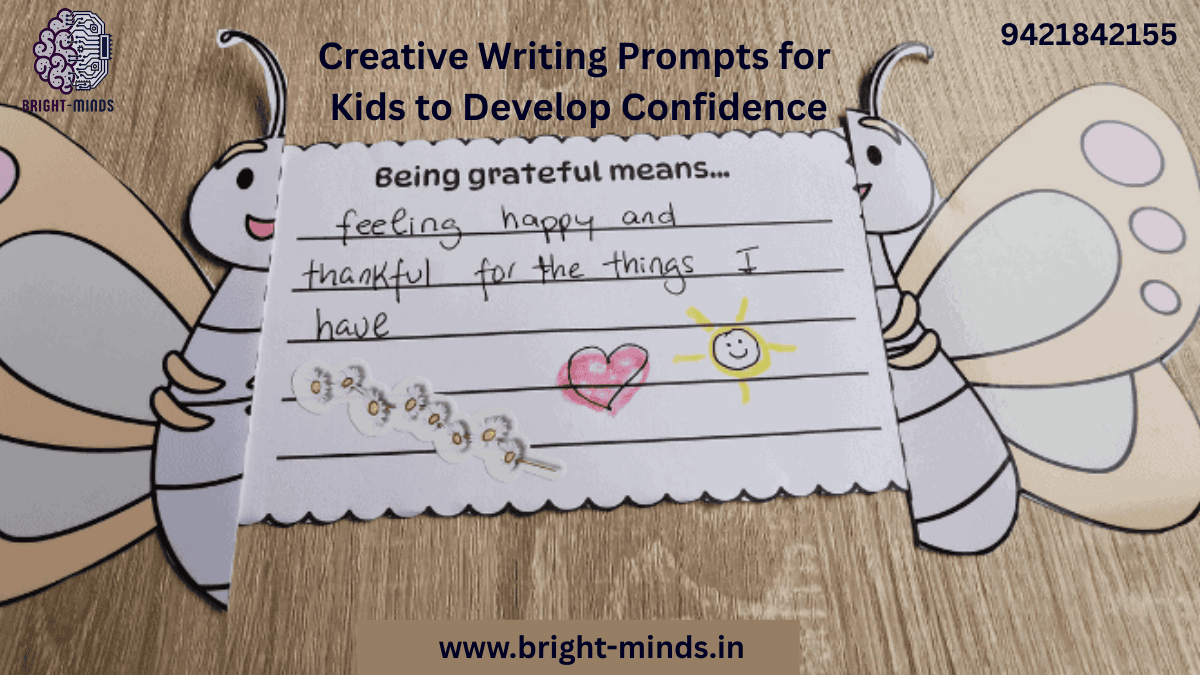
Creative Writing Prompts for Kids to Develop Confidence
Confidence is not something children are simply born with. It is built slowly through small wins, positive experiences, and opportunities to express themselves without fear. One of the most powerful and underrated tools to help children develop self belief is creative writing. When children put their thoughts on paper, they learn that their ideas matter. They discover their voice. They begin to trust their imagination. Creative writing prompts for kids offer a safe and structured way to unlock that inner confidence. In this guide, you will discover how writing strengthens confidence, how to introduce prompts effectively, and a wide range of engaging prompts that encourage bold thinking and self expression.
Why Creative Writing Builds Confidence in Children
Children often struggle with expressing emotions or sharing opinions openly. Writing gives them space to think without interruption. It removes the pressure of immediate responses and allows them to explore thoughts freely. When a child completes a story, no matter how simple, they experience a sense of accomplishment. That achievement reinforces belief in their abilities.
Writing also improves communication skills. As children learn to organize ideas clearly, they become more comfortable speaking up in class, sharing stories with friends, and participating in discussions. Over time, this repeated practice strengthens both written and verbal confidence.
Creative writing encourages problem solving and independent thinking. When a child creates characters and situations, they must decide how problems are solved. This decision making builds mental flexibility and resilience. These are qualities directly connected to strong self confidence.
How to Introduce Creative Writing Prompts Effectively
Many parents and teachers make the mistake of presenting writing as a task that must be perfect. Confidence grows when children feel safe to experiment. Instead of correcting every grammar mistake immediately, focus first on ideas. Praise creativity, imagination, and effort. Technical corrections can come later.
Create a comfortable writing environment. A quiet corner, colorful notebooks, or even a digital document can make writing feel special. Allow children to choose whether they want to write, draw, or combine both. Some children feel more confident starting with illustrations before adding words.
Set small achievable goals. Ask them to write five sentences instead of a full page. Once they complete it, celebrate the effort. Gradually increase the challenge as their comfort grows.
Creative Writing Prompts for Kids That Spark Self Belief
The right prompt can unlock powerful storytelling. Below are carefully designed creative writing prompts for kids that encourage courage, imagination, and personal growth.
Confidence Boosting Story Prompts
- Write about a time you tried something new and surprised yourself.
- Imagine you wake up with a superpower that helps others feel brave. What do you do first.
- Create a story about a shy character who discovers a hidden talent.
- If you were the leader of your class for one day, what changes would you make.
- Write a story about a mountain you must climb. What challenges do you face and how do you overcome them.
These prompts help children visualize success. When they imagine brave actions, their minds rehearse confidence. This mental practice translates into real life courage.
Imagination Driven Prompts
- A mysterious door appears in your room. Where does it lead.
- You find a talking animal who needs your help. What happens next.
- Invent a new planet where everyone has a unique ability. Describe yours.
- Write about a day when gravity stops working.
- Create a magical school where students learn unusual skills.
Imagination strengthens creative thinking. When children explore impossible scenarios, they develop flexibility in thinking and feel more capable of generating ideas independently.
Emotion Expression Prompts
- Write about a time you felt proud of yourself.
- Describe a moment when you felt nervous and how you handled it.
- If your feelings could talk, what would they say today.
- Write a letter to your future self.
- Describe your happiest memory in detail.
Emotional writing builds self awareness. When children understand their feelings, they gain control over them. This emotional intelligence is a foundation for lasting confidence.
Age Based Creative Writing Prompts
Different age groups respond to different types of challenges. Matching prompts to developmental stages increases success and engagement.
For Ages 5 to 7
Children in this stage enjoy simple and playful ideas.
- If your favorite toy came to life, what adventure would you go on.
- Write about your dream birthday party.
- Imagine you can talk to the sun. What does it say.
At this age, spelling and grammar are less important than enthusiasm. Encourage storytelling through pictures and short sentences.
For Ages 8 to 10
Children begin developing stronger narrative skills.
- Write a story about a hidden treasure in your neighborhood.
- If you could invent something to help people, what would it be.
- Describe a challenge at school and how you solved it.
These prompts encourage real world problem solving blended with imagination.
For Ages 11 to 14
Pre teens are ready for deeper reflection.
- Write about a mistake that taught you an important lesson.
- Imagine you start a movement to change something in your community.
- Describe your biggest dream and the steps you would take to achieve it.
These prompts encourage responsibility, leadership, and personal growth.
Turning Writing Into a Confidence Ritual
Consistency matters more than intensity. Instead of long weekly sessions, try short daily writing moments. Ten minutes each day can transform a hesitant child into an eager storyteller within months.
Create a confidence journal. After each writing session, ask the child to write one sentence about what they did well. This trains the brain to notice strengths.
Encourage sharing, but never force it. Some children gain confidence by reading their stories aloud. Others feel proud simply knowing they completed the task. Respect individual comfort levels.
Practical Tips for Parents and Teachers
Praise effort, not just talent. Instead of saying you are such a good writer, say I love how you described that scene. This reinforces growth mindset.
Avoid over correcting. Too many red marks can damage confidence. Focus on improvements gradually.
Model writing yourself. When children see adults writing stories or journaling, they understand that writing is a lifelong skill, not just homework.
Create opportunities for real audience engagement. Display stories on a board, compile them into a small booklet, or share them during family time. An audience increases pride and ownership.
Using Creative Writing to Overcome Fear of Failure
Many children hesitate to try because they fear making mistakes. Creative writing removes the concept of right or wrong answers. There is no single correct ending to a story. This freedom encourages risk taking.
Introduce fun challenges such as writing the silliest story possible. When laughter replaces pressure, confidence grows naturally.
You can also create collaborative stories. One child writes the beginning, another continues the middle, and someone else finishes it. Shared creativity reduces fear of judgment.
Real Life Example of Confidence Growth Through Writing
Consider a child who rarely speaks in class. When introduced to daily creative writing prompts for kids, the child begins writing short imaginative stories about superheroes. Over time, the stories become longer and more detailed. The teacher invites the child to read a paragraph aloud. The class listens attentively. The positive reaction reinforces self belief. Eventually, the child begins participating more in discussions because the fear of being heard decreases.
This transformation is not rare. Writing builds internal strength quietly and steadily.
Combining Writing With Other Creative Activities
Pair writing with drawing, drama, or storytelling sessions. After writing a story, children can act it out. Performance adds another layer of confidence.
You can also integrate technology. Allow children to type their stories and design simple covers. Seeing their work look professional increases pride and motivation.
Music can also inspire writing. Play instrumental music and ask children to write what the melody makes them imagine. This sensory approach deepens creative thinking.
Common Mistakes to Avoid
Do not compare children to one another. Confidence shrinks under comparison.
Do not turn every prompt into a graded assignment. Keep creative writing separate from strict academic evaluation when possible.
Do not rush the process. Some children need more time to feel comfortable expressing themselves. Patience is key.
Long Term Benefits of Creative Writing for Kids
Children who practice creative writing regularly often show stronger communication skills, higher emotional awareness, improved academic performance, and greater resilience. Confidence built through writing extends beyond language arts. It impacts presentations, friendships, leadership roles, and future career aspirations.
Creative writing prompts for kids are not just exercises. They are invitations to discover identity, imagination, and inner strength. Every story written is a small step toward believing in oneself.