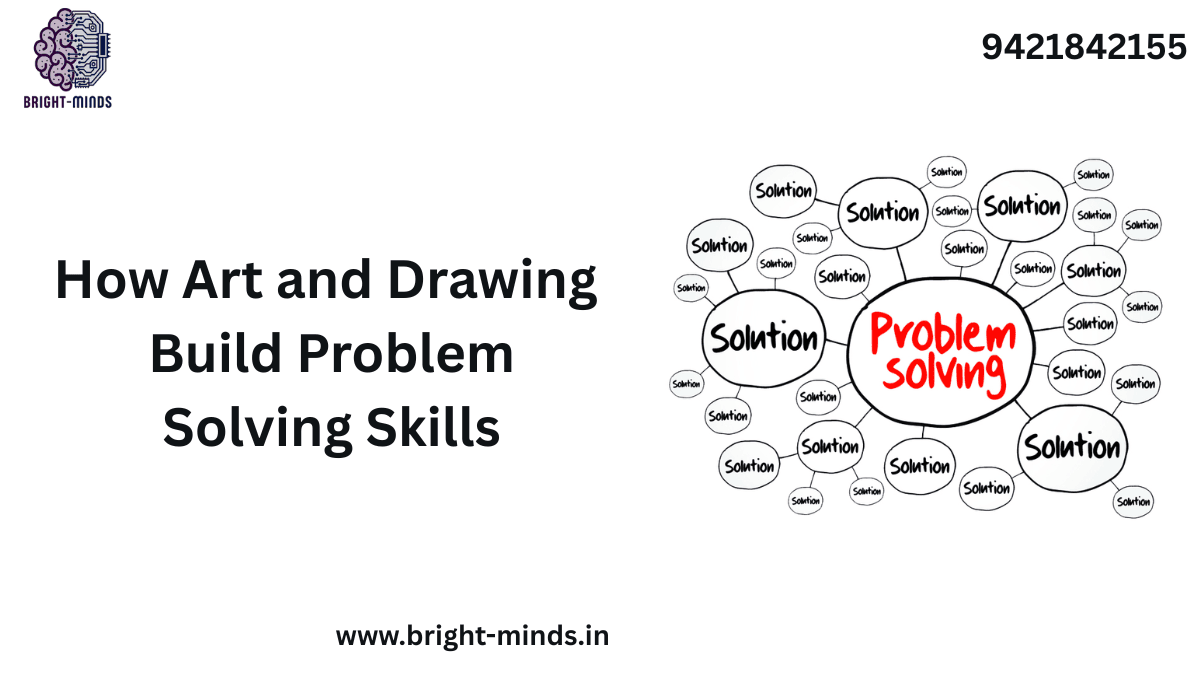
Art is often seen as a fun, expressive activity—but its impact goes far beyond creativity. When children draw, paint, or create simple doodles, they are actually strengthening core skills linked to problem-solving, focus, and cognitive development. Even adults use art for innovation, brainstorming, and improving thought processes.
This blog explores how art and drawing build problem-solving skills, why it matters for both beginners and professionals, and how these skills transfer to academic, professional, and everyday life situations.
Why Problem-Solving Matters Today
In today’s world—where technology evolves rapidly and workplaces demand creativity—problem-solving has become one of the most essential skills. Schools and companies now encourage out-of-the-box thinking, design reasoning, and brainstorming. Art naturally develops all these abilities.
When a child draws a picture, chooses colors, decides shapes, or imagines a scene, they are making decisions, analyzing possibilities, and adjusting ideas—all core parts of problem-solving.
The Connection Between Art, Drawing, and Problem-Solving
Art isn’t only about aesthetics. It is a thinking process. Every stroke, color, and detail involves mental effort. This is exactly why how art and drawing build problem-solving skills is becoming a trending topic in educational and corporate environments.
Here’s how the connection works:
- Art activates both creative (right-brain) and logical (left-brain) thinking.
- Artists learn to experiment and adapt.
- Drawing teaches children and adults to break big tasks into smaller steps.
- Mistakes turn into learning opportunities, teaching resilience.
In short, art trains the brain to think differently and solve problems without fear.
Art Encourages Creative Thinking
Creativity is the root of problem-solving. When a child draws something imaginary—like a magical house or a robot—they learn to think without boundaries. These imaginary scenarios are critical in building future skills such as innovation and conceptual thinking.
Real-world example:
Companies like Google, Apple, and IDEO use sketching and visual brainstorming to design products and generate creative solutions. Designers draw simple shapes to understand problems visually before creating real solutions.
This shows that drawing is not just for artists—it’s a universal thinking tool.
Art Helps Children Break Down Complex Problems
One of the biggest strengths of drawing is its step-by-step nature. A child may start with a circle, add lines, shape patterns, and slowly form a complete picture. This sequential approach teaches them how to break big tasks into manageable steps.
This skill transfers to:
- solving math problems
- planning school assignments
- managing time
- following instructions
- logical thinking
Adults use the same process when sketching wireframes, planning layouts, or mapping ideas for projects.
Drawing Strengthens Observation and Attention to Detail
Observation is a crucial part of effective problem-solving. Art requires children to look closely at shapes, colors, shadows, and perspectives.
This improves:
- memory
- attention span
- accuracy
- decision-making
A child who draws a flower notices its petals, patterns, and proportions. This type of attention helps them become better learners, thinkers, and problem-solvers in academics and daily tasks.
Professionals also rely on this skill—architects, engineers, designers, teachers, and even IT professionals sketch ideas to understand them more clearly.
Art Teaches Flexibility and Adaptability
Nothing in art is permanent—and this is one of the most powerful lessons. A child may start drawing one thing, make a mistake, and turn it into something new. This builds adaptability, which is essential for solving real-world problems.
Key benefit:
Art teaches children that mistakes are not failures—they are opportunities to think differently.
Adults use the same mindset in workplaces where plans change, clients request revisions, or teams need to quickly adjust strategies.
Drawing Builds Emotional Intelligence
Good problem-solving requires emotional stability and clear thinking. Art helps both children and adults:
- reduce stress
- express emotions
- build patience
- improve focus
- develop mindfulness
This emotional regulation helps them approach challenges calmly instead of panicking.
Companies are even incorporating art-based workshops to help employees improve mental flexibility, reduce burnout, and enhance decision-making.
Art Encourages Experimentation and Innovation
Experimenting with colors, textures, or different drawing tools teaches children to test new ideas. Innovation happens when people are not afraid to try, fail, and try again.
In drawing, experimentation is natural:
- Should I use this color?
- Will this shape look better?
- What happens if I mix two techniques?
This builds curiosity and encourages a growth mindset—key components of modern problem-solving.
The Role of Art in Today’s Education and Workplace
The importance of how art and drawing build problem-solving skills is more recognized today than ever before. Many schools have reintroduced art into their core curriculum, and global companies now value creative thinking as a top hiring skill.
Current trends include:
- Design thinking in education
- Visual learning methods
- Mind-mapping and sketch-noting
- Creative brainstorming workshops
- Gamified learning
- Corporate creativity labs
Art helps learners—from kindergarten students to CEOs—visualize problems, imagine solutions, and express ideas with clarity.
Practical Ways Parents and Teachers Can Use Art for Problem-Solving
Here are simple activities that boost decision-making, creativity, and analytical thinking:
1. Drawing Challenges
Ask children to draw using a theme like “underwater city” or “future robot.”
2. Finish-the-Picture Games
Give a half-drawn image and let kids imagine the rest. This builds creative thinking.
3. Story-based Drawing
Tell a small story and ask children to draw the ending. This develops imagination and reasoning.
4. Drawing from Real Objects
Sketching plants, toys, or household items improves observation skills.
5. Collaborative Art
Kids work in groups to make one picture—great for communication and teamwork.
Adults can use similar methods through brainstorming sketches, whiteboard drawing, or visual planning.
Conclusion
Understanding how art and drawing build problem-solving skills unlocks powerful learning and growth opportunities for both children and adults. Art is more than creativity—it is a training tool for the brain that strengthens focus, imagination, resilience, and innovation.
Whether you are a parent, educator, or professional, incorporating drawing into daily routines can help build confident thinkers who solve problems with ease and originality.