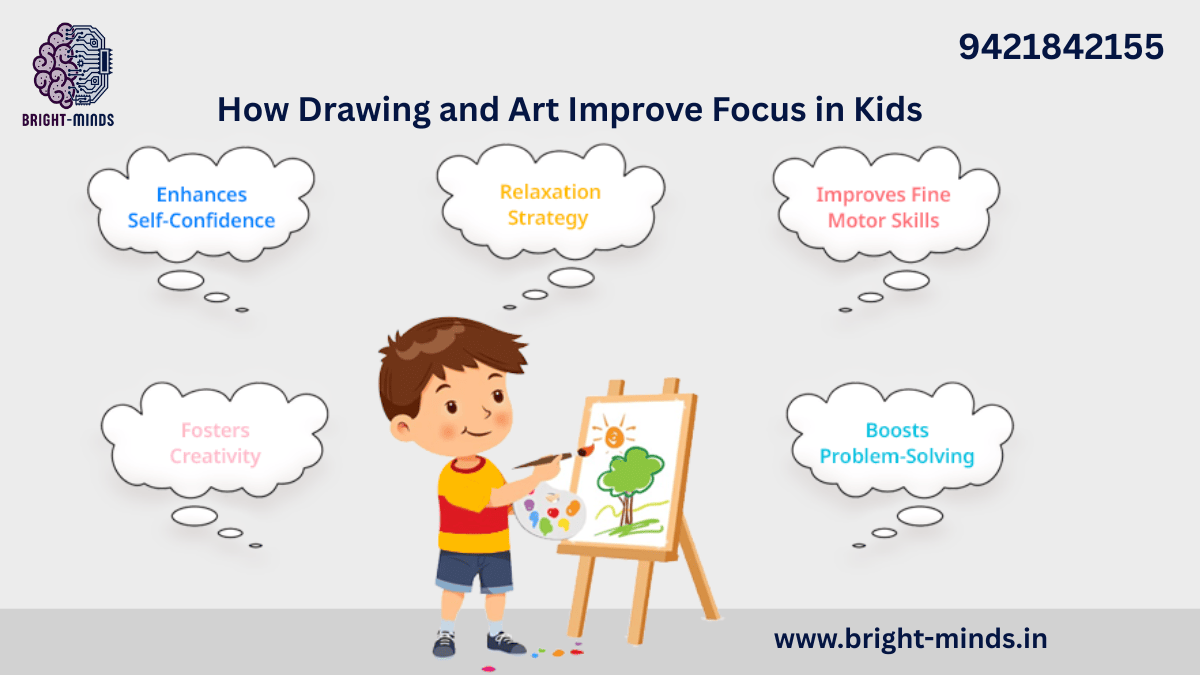
In today’s fast-paced digital world, children are surrounded by screens, notifications, and constant distractions. Parents, teachers, and even corporate learning professionals often ask the same question: How can we help children improve focus and concentration naturally? One powerful yet often underestimated answer lies in a simple activity—art.
Understanding how drawing and art improve focus in kids opens the door to better learning outcomes, emotional balance, and stronger cognitive skills. Art is not just about colors and creativity; it is a structured mental exercise that trains the brain to observe, concentrate, and express.
This article explores the science, real-world benefits, and practical ways drawing and art help children build focus—skills that benefit them not only in school but throughout life.
Understanding Focus in Kids
Focus is the ability to concentrate attention on a task while ignoring distractions. For children, focus plays a critical role in:
- Classroom learning
- Completing homework
- Listening and following instructions
- Problem-solving
- Emotional regulation
Many kids struggle with focus, not because they lack ability, but because their brains are still developing. Activities that gently train attention—without pressure—are the most effective. This is where art comes in.
Why Art Is More Than Just a Hobby
Art engages multiple areas of the brain at once. When a child draws or paints, they are:
- Observing shapes, lines, and colors
- Planning what to draw next
- Coordinating hand and eye movements
- Making decisions and corrections
- Staying engaged for extended periods
This combination makes art a natural focus-building activity. Research in child psychology and neuroscience shows that creative activities strengthen neural connections related to attention and executive function.
How Drawing and Art Improve Focus in Kids
Art Encourages Deep Concentration
When children draw, they often enter a state of deep focus, sometimes called “flow.” During this state:
- External distractions fade
- Time passes without notice
- The mind becomes calm yet alert
This sustained attention is exactly what children need to improve focus academically and emotionally.
Art Improves Hand-Eye Coordination
Drawing requires precise coordination between what the eyes see and what the hands do. This coordination strengthens neural pathways associated with attention control. Over time, kids become better at tasks that require precision and sustained effort, such as writing, reading, and problem-solving.
Art Builds Patience and Task Completion
Unlike instant digital entertainment, art takes time. Children learn that:
- Good results require effort
- Mistakes can be corrected
- Finishing a drawing brings satisfaction
This process trains the brain to stay focused until a task is completed—a skill essential for school exams, projects, and real-life responsibilities.
Art Reduces Stress and Mental Overload
Stress and anxiety are major enemies of focus. Art acts as a natural stress reliever. When children draw:
- The brain releases calming neurotransmitters
- Emotional tension is reduced
- Mental clutter clears
A calm mind can focus better. This is why art therapy is widely used in schools and child development programs.
Art Strengthens Memory and Observation Skills
To draw accurately, children must observe carefully—shapes, patterns, sizes, and details. This strengthens visual memory and attention to detail, which directly improves focus in reading comprehension, mathematics, and science learning.
Real-World Examples of Focus Improvement Through Art
Consider a child who struggles to sit through a 30-minute lesson. Introducing 15 minutes of drawing before study time often leads to:
- Improved sitting tolerance
- Better listening skills
- Increased task engagement
Schools that integrate art-based learning frequently report improved classroom behavior and higher attention spans, especially among younger learners.
Benefits of Art for Different Age Groups
Preschool and Kindergarten Kids
- Develop early focus skills
- Improve fine motor control
- Learn to follow simple instructions
Primary School Children
- Enhance academic concentration
- Improve handwriting and reading focus
- Build confidence and emotional expression
Older Kids and Pre-Teens
- Improve problem-solving focus
- Reduce academic stress
- Enhance creative thinking
Art in Modern Education and Corporate Learning
Interestingly, the principles behind how drawing and art improve focus in kids are now being applied in corporate training and employee development.
Modern learning trends include:
- Visual thinking workshops
- Mindfulness drawing sessions
- Design thinking using sketching
- Creative breaks to boost productivity
Companies understand that focus is a trainable skill, and art-based methods are among the most effective.
Simple Art Activities to Improve Focus at Home
Parents and educators don’t need expensive tools. Simple activities work best:
- Freehand drawing with pencils
- Coloring within patterns
- Copying simple shapes
- Drawing from observation (plants, toys)
- Story-based drawing sessions
The key is consistency, not perfection.
How Often Should Kids Practice Art?
Experts recommend:
- 15–30 minutes daily for young children
- 3–5 sessions per week for older kids
Short, regular sessions build focus more effectively than long, irregular ones.
Common Myths About Art and Focus
Myth 1: Art is only for creative kids
Truth: Art benefits every child’s brain, regardless of talent.
Myth 2: Art distracts from studies
Truth: Art improves concentration, making study time more effective.
Myth 3: Digital drawing is less effective
Truth: Both digital and traditional art improve focus when used mindfully.
Long-Term Impact of Art on Focus and Learning
Children who regularly engage in art activities often show:
- Better academic performance
- Improved emotional regulation
- Higher self-confidence
- Stronger problem-solving skills
These benefits extend into adulthood, shaping focused, resilient individuals.
Final Thoughts: Why Art Deserves a Place in Every Child’s Routine
Understanding how drawing and art improve focus in kids helps parents, teachers, and organizations make informed decisions about learning methods. Art is not an extra activity—it is a foundational tool for mental development.
By nurturing creativity, we nurture concentration. By encouraging art, we build focus, patience, and confidence that last a lifetime.