
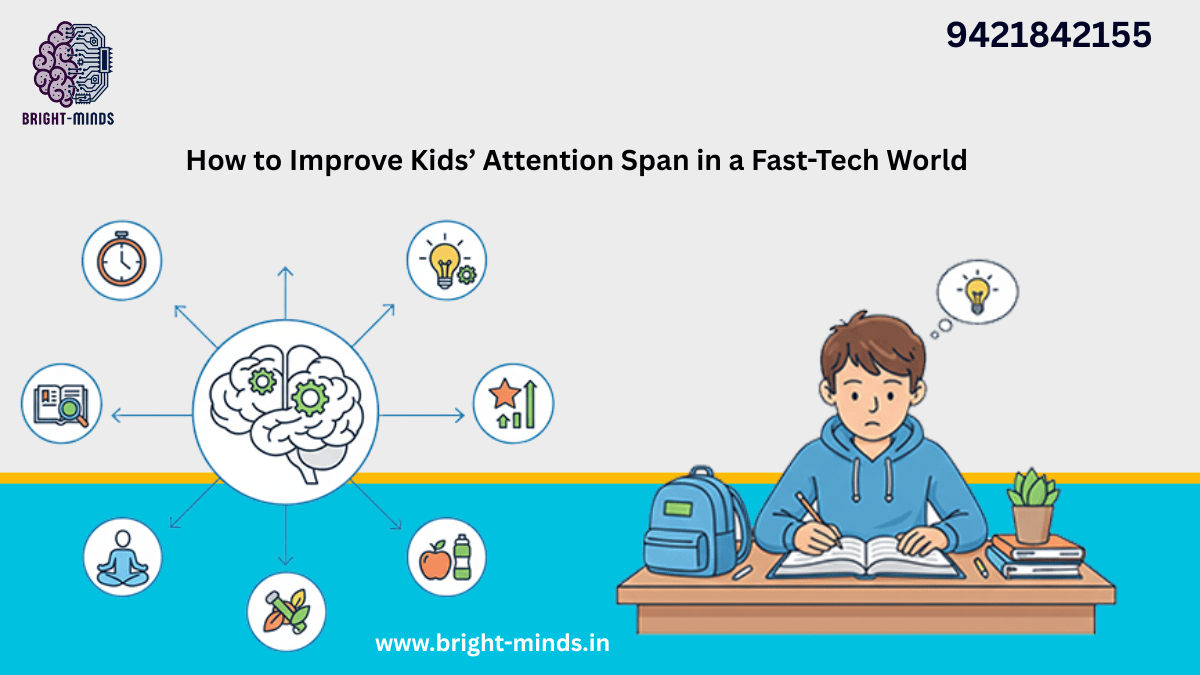
Tablets, smartphones, smart TVs, learning apps, online classes, and gaming consoles now surround children almost everywhere. While technology has brought powerful educational opportunities, it has also changed how young minds process information.
Many parents and teachers today ask the same question: How can we improve kids attention span when distractions are only a tap away?
Attention span refers to how long a child can focus on a task without getting mentally tired or distracted. In a fast-tech world full of notifications, autoplay videos, and quick entertainment, sustained focus is becoming harder for many children.
This guide explains how to improve kids attention span using science-backed strategies, simple routines, and practical everyday habits. Whether you are a parent, educator, HR professional designing family-friendly programs, or someone working in child-centric services, these techniques will help children grow calmer, sharper, and more resilient in the digital age.
Understanding Attention Span in Children
Before improving attention, it helps to understand what shapes it.
A child’s attention span is influenced by:
• Brain development and age
• Sleep quality
• Nutrition
• Physical movement
• Emotional health
• Screen exposure
• Learning environment
Young children naturally have shorter focus periods than teens, and that is normal. Problems arise when constant digital stimulation trains the brain to expect instant rewards. Quick videos, flashy animations, and endless scrolling can make slower activities like reading, homework, or creative play feel boring.
The goal is not to remove technology entirely—but to teach children how to use it in healthy, balanced ways.
How Technology Impacts Focus Today
Modern apps are designed to capture attention. Notifications, sound effects, reward systems, and infinite content loops activate the brain’s dopamine system, making children crave constant stimulation.
Some current industry trends include:
• Short-form video platforms dominating screen time
• Gamified learning apps
• AI-driven content recommendations
• Remote schooling and hybrid classrooms
• Digital homework platforms
These tools can educate—but without limits, they can reduce deep focus.
That is why learning how to improve kids attention span has become a critical life skill for families and schools alike.
Signs a Child May Be Struggling With Attention
Not every distracted moment is a problem. However, consistent patterns may signal the need for changes:
• Difficulty finishing tasks
• Constant switching between activities
• Avoiding reading or homework
• Emotional frustration during learning
• Forgetting instructions
• Restlessness during quiet activities
If these appear regularly, lifestyle adjustments can often make a big difference.
Practical Ways to Improve Kids Attention Span
Let’s explore proven, realistic strategies that fit into modern family life.
- Create Daily Screen Boundaries
Instead of unlimited access, build predictable screen schedules.
Helpful tips:
• Set tech-free zones like bedrooms and dining tables
• Avoid screens one hour before bedtime
• Use parental controls thoughtfully
• Balance educational and entertainment content
Children feel safer when rules are consistent rather than constantly changing.
- Encourage Deep Play and Creative Work
Unstructured play trains focus naturally.
Activities that strengthen concentration:
• Puzzles and board games
• Lego building
• Drawing or painting
• Music practice
• Craft projects
• Story writing
These require patience and problem-solving—two skills directly linked to longer attention spans.
- Break Tasks Into Focus Blocks
Large assignments can overwhelm children.
Use the “focus sprint” approach:
• 20–25 minutes of work
• 5-minute break
• Stretch or walk
• Drink water
• Resume
This mirrors productivity systems used by adults in corporate environments and works surprisingly well for children too.
- Build Strong Sleep Routines
Sleep is one of the most overlooked tools to improve kids attention span.
Children who sleep well:
• Process information faster
• Control impulses better
• Remember lessons longer
• Stay calmer
Maintain:
• Fixed bedtime schedules
• Low light in the evening
• No devices near pillows
• Quiet bedtime reading
- Feed the Brain Properly
Nutrition directly affects concentration.
Foods that support focus:
• Eggs and nuts for protein
• Whole grains for energy
• Fruits and vegetables for micronutrients
• Omega-3 rich foods like fish or seeds
• Plenty of water
Avoid too much sugar, which can cause energy spikes and crashes.
- Practice Mindfulness and Calm Moments
Mindfulness trains children to slow down and notice their thoughts.
Simple exercises:
• 60 seconds of deep breathing
• Listening quietly to surrounding sounds
• Guided child-friendly meditation apps
• Stretching or yoga
Even five minutes daily can strengthen self-regulation over time.
- Make Learning Interactive
Passive learning reduces engagement.
Instead:
• Ask open-ended questions
• Let kids explain concepts aloud
• Turn math into real-world problems
• Read stories together and discuss them
• Use physical objects for science experiments
Interactive learning keeps the brain active and alert.
- Encourage Outdoor Time and Physical Activity
Movement boosts blood flow to the brain and improves mood.
Great options:
• Cycling
• Running games
• Sports practice
• Nature walks
• Playground time
Studies consistently show that children focus better after physical activity.
- Be a Digital Role Model
Children copy adult behavior.
If parents or teachers constantly scroll phones, kids notice.
Model habits such as:
• Reading books
• Taking screen breaks
• Focusing during conversations
• Doing one task at a time
Your example silently teaches them how to manage attention.
How Schools and Companies Are Responding
Across education systems and corporate family-wellness programs, organizations are recognizing the importance of focus skills.
Current initiatives include:
• Digital literacy classes
• Screen-time awareness workshops
• Mindfulness in classrooms
• Physical activity breaks
• Parent education webinars
• AI-assisted but guided learning tools
Companies supporting working parents increasingly include child development resources as part of wellness benefits, making attention training a shared responsibility between home and workplace.
Real-World Example: A Simple Routine That Works
Consider an 8-year-old who spends three hours daily on short-form videos and struggles with homework.
After making small changes:
• Screen time limited to evenings
• Homework done in 25-minute blocks
• Outdoor play after school
• Bedtime reading instead of videos
Within weeks, the child becomes calmer, finishes work faster, and shows greater patience.
Small adjustments—consistently applied—often produce the biggest results.
Common Myths About Attention Span
Myth: Technology must be eliminated completely.
Truth: Balanced use with guidance is healthier and more realistic.
Myth: Short attention means laziness.
Truth: Environment and habits strongly influence focus.
Myth: Only young kids struggle.
Truth: Teens and even adults face digital overload too.
The Long-Term Benefits of Building Focus
When we improve kids attention span early, children gain:
• Better academic performance
• Emotional control
• Problem-solving skills
• Confidence
• Creativity
• Digital self-discipline
These abilities extend far beyond school into future careers and personal growth.
Conclusion: Teaching Focus Is a Gift for Life
In a world driven by algorithms, notifications, and instant entertainment, focus has become a superpower.
Learning how to improve kids attention span is not about fighting technology—it is about teaching children how to live wisely with it.
By creating balanced routines, encouraging offline creativity, modeling healthy habits, and supporting mindful learning, families and organizations can help children thrive both online and offline.