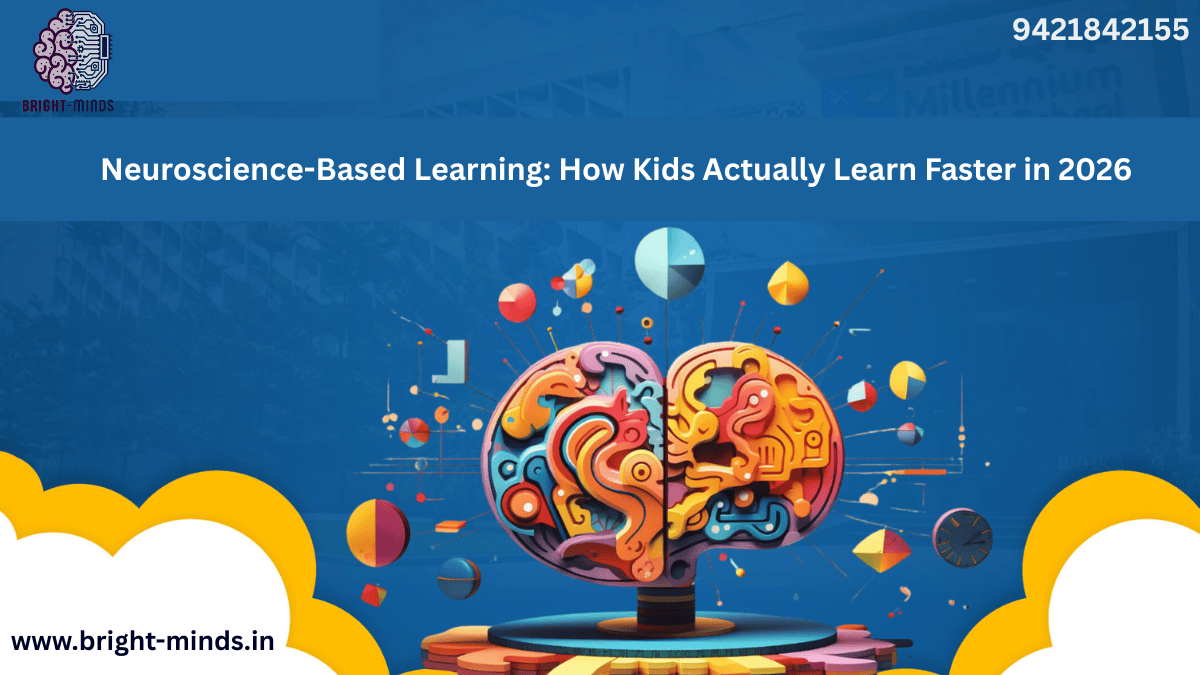
Neuroscience-Based Learning: How Kids Actually Learn Faster in 2026
Every parent and teacher wants children to learn faster, remember longer, and enjoy the process of gaining knowledge. In 2026, learning is no longer guided by guesswork or outdated study habits. Modern neuroscience has revealed how the brain truly absorbs, processes, and retains information. When teaching methods align with how the brain naturally works, children learn with less stress and greater confidence. Understanding neuroscience-based learning helps parents, educators, and institutions create smarter study environments that improve attention, memory, creativity, and problem solving skills.
What Is Neuroscience-Based Learning
Neuroscience-based learning is an approach that applies brain research to education. It focuses on how neural pathways form, how memory systems function, and how emotions influence learning speed. Instead of forcing children into rigid study patterns, this method adapts teaching to match brain biology. The brain learns best when it feels safe, curious, emotionally engaged, and mentally active. When these conditions are present, neural connections strengthen faster, leading to quicker understanding and longer retention.
Traditional learning often relies on repetition without engagement. Neuroscience shows that passive memorization activates fewer neural networks, making learning slow and forgettable. Active learning, multisensory experiences, and spaced practice stimulate multiple brain regions, improving cognitive performance.
How the Brain Learns Faster
Neuroplasticity Makes Learning Possible
Neuroplasticity is the brain’s ability to change and reorganize itself. Every time a child learns something new, connections between neurons strengthen. The more frequently a concept is practiced in meaningful ways, the stronger those neural pathways become. This is why children who engage in interactive learning grasp concepts faster than those who only read textbooks.
For example, a child learning fractions understands better when cutting a pizza into slices rather than solving abstract numbers on paper. Physical interaction reinforces neural pathways through visual and motor stimulation.
Emotion Drives Memory Formation
Brain research confirms that emotion and memory are deeply connected. Positive emotional experiences trigger neurotransmitters that enhance learning. When children feel encouraged, safe, and curious, their brains absorb information faster. Fear and pressure, on the other hand, activate stress responses that block learning.
A classroom that celebrates mistakes as learning opportunities helps children stay relaxed and confident. A child solving math problems without fear of being judged is more likely to experiment, think creatively, and remember concepts.
Attention Works in Short Cycles
Children cannot focus for long continuous hours. The brain works best in short attention cycles followed by breaks. Long study sessions reduce efficiency and increase mental fatigue. Short learning bursts improve concentration and retention.
A practical example is the 25 minute focus method. A child studies for 25 minutes and takes a 5 minute break. During the break, the brain processes information in the background, strengthening memory pathways.
Science Backed Techniques That Help Kids Learn Faster
Active Recall Strengthens Memory
Active recall involves retrieving information from memory instead of rereading notes. This forces the brain to strengthen neural connections. Simple techniques include self quizzes, flashcards, and teaching concepts to others.
If a student studies a science chapter, instead of rereading it, they can close the book and write everything they remember. This strengthens memory pathways more effectively than passive reading.
Spaced Repetition Improves Long Term Retention
Spacing study sessions over time helps the brain store information in long term memory. Revisiting concepts at increasing intervals reinforces learning.
For example, a child learns new vocabulary on Monday, revises on Wednesday, reviews again on Sunday, and once more after two weeks. This pattern significantly improves retention compared to cramming.
Multisensory Learning Activates More Brain Regions
Children learn faster when multiple senses are involved. Seeing, hearing, touching, and speaking activate different neural networks that reinforce each other.
Learning spelling by writing words in sand, saying them aloud, and using them in sentences is more effective than silent reading.
Movement Enhances Cognitive Function
Physical movement increases blood flow and oxygen to the brain, improving concentration and processing speed. Short activity breaks enhance learning performance.
Simple actions like stretching, jumping jacks, or a quick walk between study sessions refresh attention and improve mental clarity.
Sleep Consolidates Learning
During sleep, the brain organizes and stores memories. Children who sleep well retain more information and perform better academically.
A child studying late at night with reduced sleep may forget most of what they learned. Consistent sleep schedules improve memory consolidation and focus.
Practical Ways Parents Can Apply Brain Based Learning at Home
Parents play a crucial role in shaping learning habits. Simple changes at home can significantly improve how children learn.
Create a distraction free study space with natural light and minimal noise. A calm environment helps the brain focus better.
Encourage curiosity by allowing children to ask questions freely. Curiosity activates reward centers in the brain that boost learning motivation.
Use storytelling to teach concepts. Stories create emotional connections that strengthen memory retention.
Allow mistakes without criticism. When children feel safe to fail, they explore more and learn faster.
Limit screen overload. Excessive digital stimulation reduces attention span and memory performance.
Introduce learning through games and puzzles. Gamified learning keeps the brain engaged and motivated.
How Teachers Can Use Neuroscience in Classrooms
Modern classrooms benefit greatly from brain aligned teaching strategies.
Start lessons with curiosity triggers such as real world problems or interesting questions. This primes the brain for learning.
Break lessons into short modules instead of long lectures. Micro learning improves attention and comprehension.
Encourage group discussions. Social interaction activates cognitive networks that deepen understanding.
Use visual aids like mind maps and diagrams. Visual processing improves concept clarity.
Provide immediate feedback. Quick correction helps the brain adjust neural patterns effectively.
Integrate project based learning. Hands on activities strengthen problem solving and creativity.
The Role of Technology in Brain Friendly Learning
Technology in 2026 supports neuroscience based education through personalized and adaptive tools.
Adaptive learning platforms analyze performance and adjust difficulty levels automatically. This prevents boredom and overload.
Interactive simulations help students visualize complex subjects like science and mathematics.
Gamified apps reward progress, increasing dopamine release and motivation.
Virtual classrooms enable collaborative learning beyond geographical limits.
However, balance is essential. Digital learning should complement, not replace, human interaction and physical activities.
Real Life Example of Faster Learning Through Brain Based Methods
Consider two students preparing for exams. One relies on last minute cramming and passive reading. The other uses spaced repetition, active recall, short focus sessions, and proper sleep. The second student not only learns faster but also retains information longer and experiences less stress.
This demonstrates how aligning study habits with brain science improves academic performance and emotional well being.
Common Mistakes That Slow Down Learning
Multitasking reduces focus and memory formation. The brain performs better when handling one task at a time.
Long study marathons without breaks lead to burnout and poor retention.
Overemphasis on grades creates stress that blocks learning efficiency.
Ignoring physical health affects cognitive performance.
Passive learning methods like rereading without testing understanding waste time.
Future of Learning for Kids
Education in 2026 focuses on personalized, brain aligned learning experiences. Schools are shifting from rote memorization to skill based development. Emotional intelligence, creativity, and critical thinking are becoming core priorities.
Parents and educators who embrace neuroscience based learning give children a powerful advantage. Faster learning is not about pressure or longer study hours. It is about smarter strategies that match how the brain naturally functions.
You may also like this:-