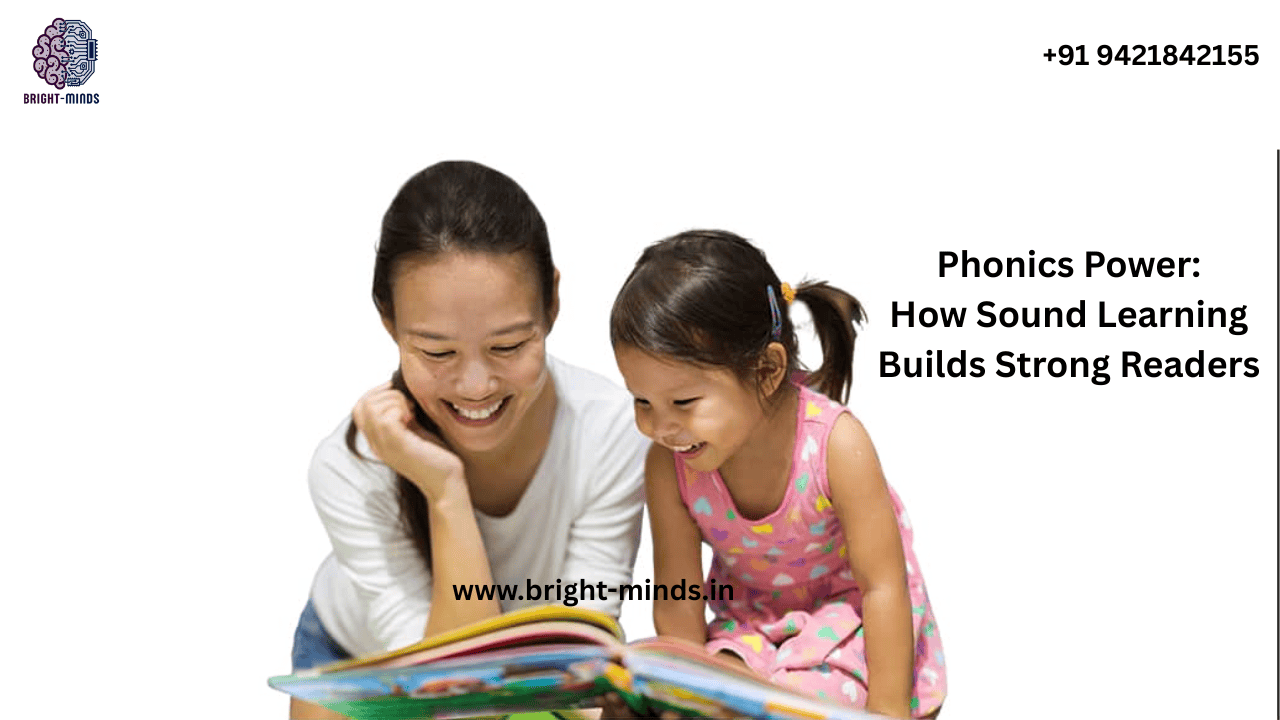
Phonics Power: How Sound Learning Builds Strong Readers
Every strong reader begins with a single sound. Before children can master spelling, fluency, or comprehension, they must first understand how letters and sounds connect. This connection—known as phonics—is the foundation of reading success. In today’s education landscape, Phonics Power has become a cornerstone for literacy programs worldwide, helping young learners transform random letters into meaningful words and confident communication. But what exactly gives phonics its power, and how does it help children become strong, independent readers?
The Science Behind Phonics Power
Phonics is more than just memorizing letters and sounds—it’s the process of decoding language. It teaches children how written letters represent spoken sounds, enabling them to “sound out” unfamiliar words. Research has consistently shown that systematic phonics instruction leads to faster reading development, better comprehension, and long-term literacy skills.
In simple terms, phonics bridges the gap between speech and writing. For example, when a child learns that the letter “B” makes a “buh” sound, they can blend it with other sounds to form words like “bat” or “bubble.” Over time, these small sound combinations create a strong mental map of language, allowing readers to recognize patterns and decode words effortlessly.
Why Phonics Matters in Early Learning
Building Blocks of Language
Language is built from sounds, and phonics helps children understand how those sounds work together. By learning to recognize sound patterns, children develop phonemic awareness—the ability to hear, identify, and manipulate sounds in words. This skill is crucial for reading fluency and accurate pronunciation.
Confidence in Reading and Writing
When children grasp phonics rules, reading becomes less intimidating. Instead of guessing words, they learn to decode them logically. This confidence extends to writing as well, as children use their phonics knowledge to spell words independently. Imagine a young learner writing “dog” by sounding out each letter—this independence builds pride and motivation to learn more.
Improved Vocabulary and Comprehension
Phonics not only helps children decode new words but also exposes them to a wider vocabulary. As they recognize more words through decoding, they can focus on understanding meaning rather than struggling with pronunciation. This shift from decoding to comprehension is what transforms a child from a beginner reader into an active, engaged learner.
The Journey from Sounds to Sentences
Phonics learning is typically introduced through stages, starting with simple sound-letter recognition and gradually moving toward complex word structures. For example, children first learn consonant-vowel-consonant (CVC) patterns like “cat,” “dog,” or “sun.” Once these foundations are strong, teachers introduce blends, digraphs, and silent letters, helping students tackle more advanced vocabulary.
Interactive activities such as rhyming games, sound hunts, and storytelling sessions make phonics engaging. When learning becomes fun, children retain knowledge faster and stay curious. Programs like Jolly Phonics, Hooked on Phonics, and Letterland have revolutionized early literacy education by combining movement, song, and storytelling with structured phonics lessons.
Integrating Phonics Power into Modern Classrooms
Today’s classrooms are evolving rapidly, and technology plays a vital role in making phonics more interactive and effective. Digital platforms now offer personalized phonics lessons that adapt to each child’s learning pace. Animated phonics stories, gamified reading apps, and voice recognition tools allow children to practice sounds while receiving instant feedback.
Teachers are also integrating phonics into cross-curricular activities—linking reading lessons with art, music, and science. For example, a phonics lesson on the sound “S” might include drawing snakes, singing “S” songs, and identifying “S” words in a storybook. This holistic approach reinforces phonics learning in natural, memorable ways.
Phonics Power and Parental Involvement
Parents play a critical role in reinforcing phonics at home. Simple daily activities—like reading bedtime stories, playing word-sound games, or pointing out letters on signboards—can significantly strengthen phonics understanding. Encouraging children to sound out words while reading together turns ordinary moments into valuable learning experiences.
Challenges in Phonics Learning and How to Overcome Them
While phonics instruction is powerful, it’s not without challenges. Every child learns differently—some may pick up sound patterns quickly, while others need more time and practice. A few common difficulties include confusion between similar sounds, limited exposure to reading materials, or inconsistent teaching methods.
To overcome these challenges, consistency and patience are key. Teachers and parents should focus on repetition and positive reinforcement. Using multisensory approaches—visual aids, songs, and physical letter manipulation—helps children connect abstract sounds to tangible concepts. Phonics should always be taught in a joyful and pressure-free environment that encourages curiosity rather than fear of mistakes.
Global Trends in Phonics Education
Phonics-based literacy programs are gaining momentum worldwide. Countries like the UK, USA, and Australia have incorporated phonics screening checks in early education to ensure foundational reading skills are in place. In India and other developing nations, phonics is now being introduced in primary schools to bridge early literacy gaps, especially in multilingual environments.
Modern educators are also combining phonics with whole-language approaches—where comprehension and meaning-making go hand in hand. This balance ensures that children not only learn how to read words but also understand and enjoy them. Moreover, with digital learning tools and AI-based tutoring, phonics lessons are becoming more accessible and adaptive to individual learning needs.
The Lifelong Benefits of Phonics Power
Phonics is not just for early readers—it lays the groundwork for all future literacy skills. Children who master phonics tend to read more fluently, comprehend texts faster, and perform better academically. Beyond academics, reading fluency enhances communication, critical thinking, and creativity—skills that remain relevant throughout life.
When learners develop strong phonetic skills, they can explore new languages, adapt to complex vocabulary, and express themselves clearly. Phonics Power, therefore, is more than just a reading strategy—it’s an investment in lifelong learning.
Inspiring a Love for Reading Through Sound Learning
The true magic of phonics lies in its ability to make reading joyful. When children experience the thrill of decoding their first word or finishing a story on their own, it sparks a lifelong love for reading. This love nurtures imagination, empathy, and curiosity—qualities that go beyond the classroom.
Educators and parents can harness this Phonics Power by creating a print-rich environment filled with books, word walls, and storytelling sessions. When children see reading as a fun, everyday activity rather than a school task, they naturally grow into confident, enthusiastic readers.
Take the Next Step Toward Reading Success
Are you ready to unlock your child’s reading potential? Explore our comprehensive phonics programs, expert guides, and interactive online resources designed to make sound learning effective and enjoyable. Empower your little learner to discover the Phonics Power that builds not just readers—but thinkers and dreamers.
You may also like this:-