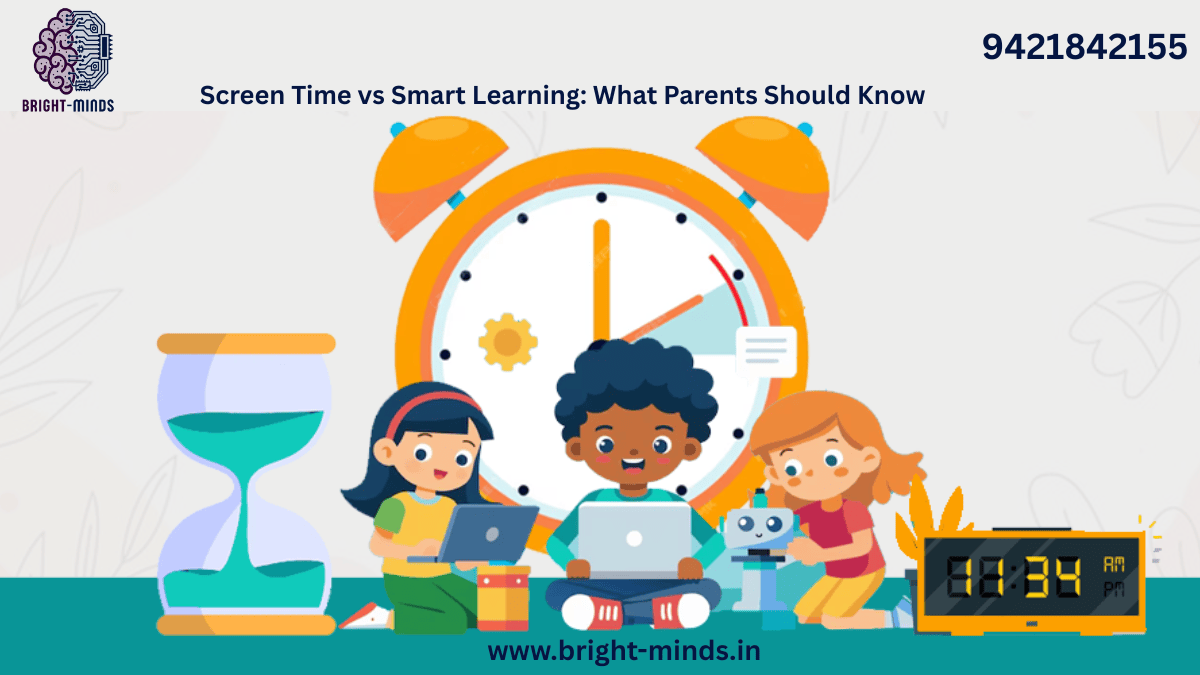
Screen Time vs Smart Learning: What Parents Should Know
Screens are everywhere today. From smartphones and tablets to smart TVs and laptops, children are growing up in a digital-first world. For many parents, this creates a daily dilemma: Is screen time harming my child, or can it be used for learning?
This is where the conversation around screen time vs smart learning becomes important. Not all screen usage is the same. Watching random videos for hours is very different from using digital tools designed to educate, engage, and build skills.
In this guide, we will clearly explain screen time vs smart learning, help parents understand the difference, and share practical ways to use technology wisely without guilt or fear.
Understanding Screen Time vs Smart Learning
At a basic level, screen time refers to the amount of time a child spends in front of a digital screen. Smart learning, on the other hand, refers to purposeful, guided, and educational use of digital devices.
Screen time vs smart learning is not about banning screens completely. It is about how, why, and for how long screens are used.
For example:
- Watching cartoons continuously is screen time
- Using a phonics app with guidance is smart learning
Recognizing this difference helps parents make informed decisions rather than reacting emotionally.
Why Screen Time Became a Concern for Parents
Many parents worry about screen exposure because of:
- Reduced physical activity
- Eye strain
- Poor attention span
- Delayed social skills
These concerns are valid, especially when screen usage is unstructured and excessive. Studies show that unmanaged screen time can impact sleep, focus, and behavior.
However, modern education research also shows that smart learning tools, when used correctly, can improve engagement, understanding, and creativity.
The problem is not screens. The problem is how screens are used.
What Is Smart Learning in Simple Terms
Smart learning uses digital technology to enhance learning outcomes. It combines:
- Educational content
- Interactive activities
- Child-friendly design
- Adult guidance
Smart learning apps and platforms focus on skills like reading, math, problem-solving, creativity, and communication.
In the screen time vs smart learning debate, smart learning always has a clear goal, while random screen time does not.
Key Differences Between Screen Time and Smart Learning
Understanding screen time vs smart learning becomes easier when we compare them.
Screen time is usually:
- Passive
- Entertainment-focused
- Long and unstructured
- Low interaction
Smart learning is:
- Active and engaging
- Skill-oriented
- Time-bound
- Interactive and guided
For example, a child playing a math puzzle game that adapts to their level is learning actively. A child endlessly scrolling videos is consuming passively.
How Smart Learning Supports Child Development
When used correctly, smart learning supports many early developmental areas.
Cognitive Development
Smart learning tools improve memory, reasoning, and problem-solving. Interactive games encourage children to think, not just watch.
Language and Communication
Many smart learning apps focus on phonics, vocabulary, and storytelling. This improves reading and speaking skills.
Confidence and Motivation
When children complete tasks and receive positive feedback, they feel confident and motivated to learn more.
This is why educators now see smart learning as a powerful complement to traditional teaching.
Industry Trends in Smart Learning
The education industry has changed rapidly in recent years. Key trends include:
- AI-powered personalized learning
- Gamified education
- Blended learning models
- Parent dashboards for progress tracking
Companies designing learning platforms now focus on outcomes, not just content. This shift has strengthened the role of smart learning in the screen time vs smart learning discussion.
How Much Screen Time Is Healthy
One of the most common parent questions is about limits.
Instead of counting minutes blindly, experts suggest focusing on:
- Content quality
- Child’s age
- Balance with offline activities
- Adult involvement
A short, focused smart learning session is far more valuable than long, unplanned screen exposure.
The screen time vs smart learning approach encourages quality over quantity.
Role of Parents in Smart Learning
Parents play a crucial role in turning screen time into smart learning.
Parents should:
- Choose age-appropriate apps
- Sit with children initially
- Ask questions about what they learned
- Set clear time boundaries
When parents are involved, digital learning becomes meaningful and safe.
Common Mistakes Parents Should Avoid
While managing screen time vs smart learning, parents often make these mistakes:
- Using screens only as babysitters
- Allowing unlimited access
- Ignoring emotional cues
- Comparing children’s progress
Every child learns differently. Smart learning works best when adapted to individual needs.
Smart Learning for School and Beyond
Smart learning is not limited to young children. It also benefits:
- School students through concept clarity
- Teachers through digital tools
- Learning companies through scalable training
In corporate education and training environments, smart learning improves engagement and retention. The same principle applies to children.
Creating a Healthy Screen Routine at Home
A balanced routine may include:
- Fixed smart learning time
- Outdoor play
- Reading physical books
- Family interaction
This balanced approach resolves the screen time vs smart learning conflict naturally.
The Bigger Picture
Technology is not going away. The real question is whether children will use it passively or productively.
When parents understand screen time vs smart learning, they shift from fear to informed control. Screens become tools, not threats.
Final Thoughts
Screen time vs smart learning is not about choosing one side. It is about making smarter choices. With the right guidance, screens can support learning, creativity, and confidence instead of harming development.
Parents who focus on purposeful digital learning prepare children for a future where technology and intelligence work together.
You may also like this:-