Phonics Learning for Kids in the AI Age
Why It Still Matters More Than Ever
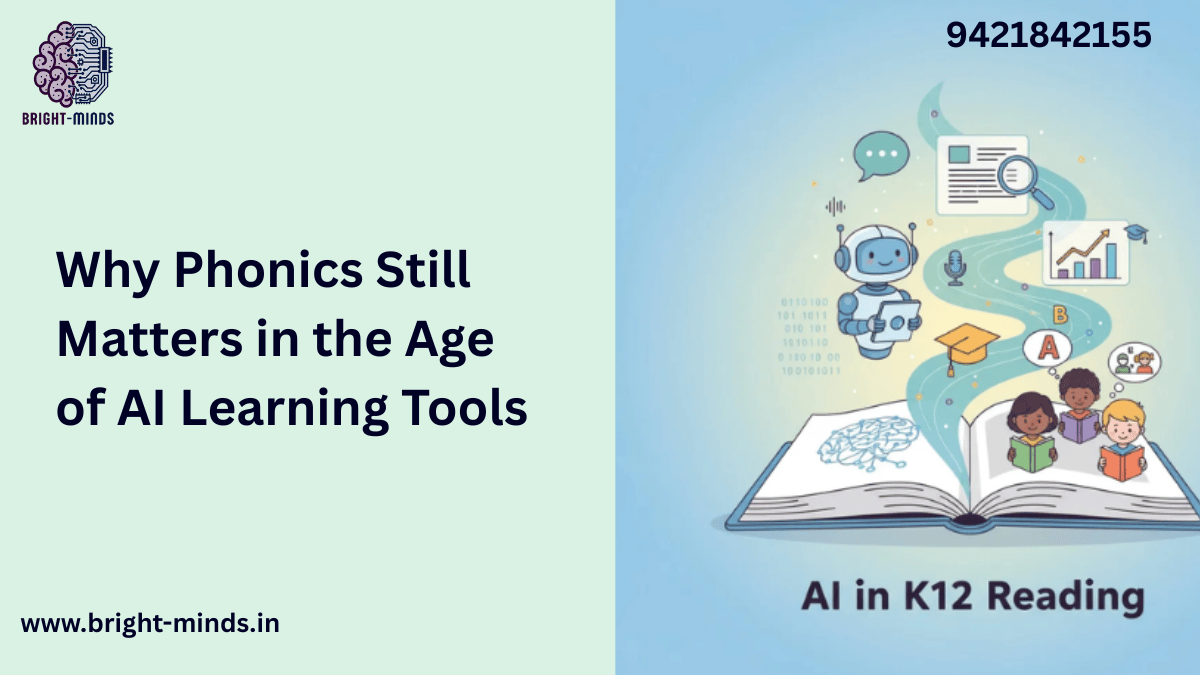
We live in a world where artificial intelligence can read, write, and even speak like humans. Children in 2026 are growing up with smart devices, AI tutors, and digital classrooms. Yet one foundational skill remains just as important as ever — phonics learning for kids.
No matter how advanced technology becomes, children still need to understand how sounds form words. Phonics is the bridge between letters and meaning. It is what allows children to read confidently, pronounce clearly, and learn independently.
This is why phonics is not being replaced by AI — it is being supported by it.
What Is Phonics Learning for Kids?
Phonics is the method of teaching children how letters and groups of letters make sounds. When children learn that “b” sounds like “buh” and “sh” sounds like “shh,” they begin to decode words instead of memorizing them.
Phonics helps children:
• Read new words
• Spell correctly
• Pronounce clearly
• Build vocabulary
• Gain reading confidence
Without phonics, children struggle to read unfamiliar words.
Why Phonics Still Matters in 2026
AI tools can read text aloud. They can even correct pronunciation. But children must understand sounds themselves to become independent readers.
Phonics learning for kids gives them control over language. It helps them read books, instructions, exams, and digital content without depending on machines.
Technology supports learning, but phonics builds the foundation.
How AI Is Enhancing Phonics
Modern AI tools now make phonics more powerful.
Children can use apps that:
• Speak sounds
• Show mouth movements
• Give instant feedback
• Track progress
This makes phonics learning for kids more interactive, accurate, and fun.
Phonics vs Memorization
Many children memorize words instead of understanding sounds. This works only for small words. When words become complex, memorization fails.
Phonics teaches patterns. Once a child understands sounds, they can read thousands of words.
Why Strong Reading Starts With Phonics
A child who understands phonics can:
• Read faster
• Understand better
• Learn independently
• Perform well in all subjects
Reading is the key to learning everything else.
Phonics and AI Tutors
AI tutors now use phonics to teach reading. They listen to children read and correct mistakes instantly.
This creates a powerful combination of human learning and machine support.
How Parents Can Support Phonics
Parents can help by:
• Reading aloud
• Practicing sounds
• Using phonics apps
• Encouraging daily reading
Phonics learning for kids grows stronger with practice.
How Schools Use Phonics Today
Schools now blend traditional phonics with digital tools. This ensures children get the best of both worlds.
The Future of Reading
By 2030, children will read in digital, global, and AI-driven environments. Phonics will remain the base that makes all this possible.
Final Thoughts
Technology changes fast, but language stays fundamental.
Phonics learning for kids is the foundation of reading, communication, and lifelong learning — even in the age of AI.
You may also like this:-