Why Active Learning Beats Passive Learning for Kids
Every child is naturally curious. They love to explore, ask questions, touch things, and figure out how the world works. Yet traditional learning methods often ask them to sit quietly, listen, and memorize. This creates a gap between how children naturally learn and how they are usually taught. Active learning bridges that gap. It transforms children from silent listeners into enthusiastic participants, helping them understand concepts deeply and remember lessons longer. In today’s fast changing world, where creativity, problem solving, and critical thinking matter more than rote memorization, active learning is not just helpful. It is essential.
What Is Active Learning?
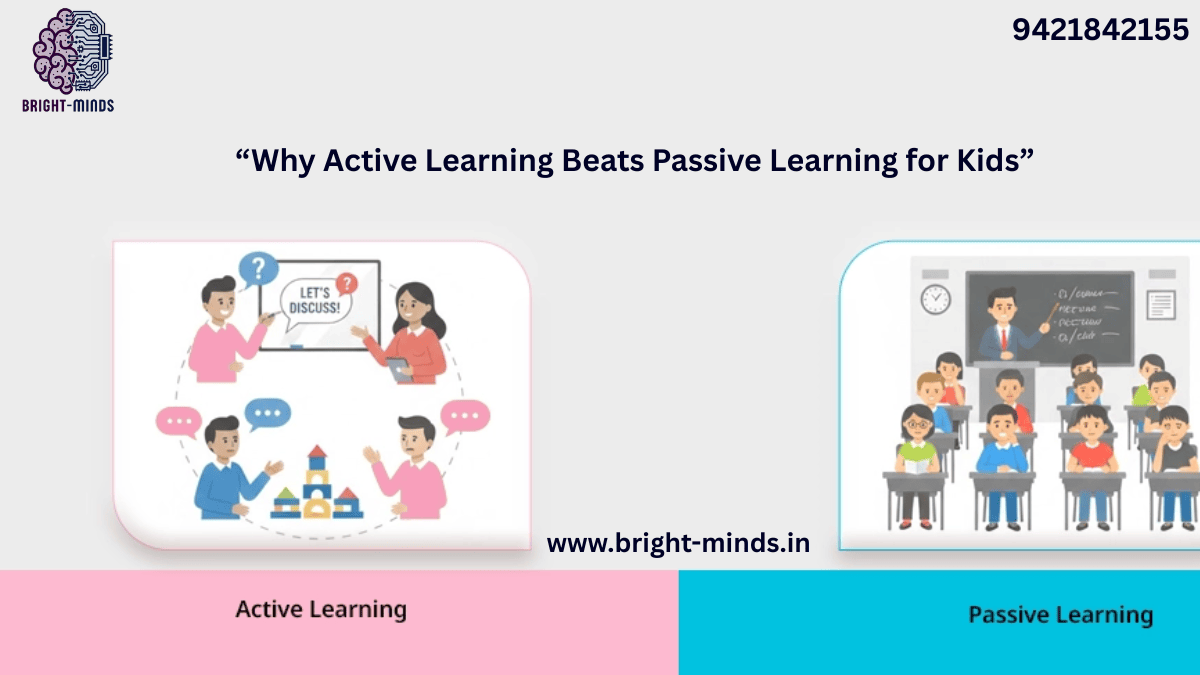
Active learning is a teaching approach where children engage directly with the learning process. Instead of only listening to explanations, they discuss ideas, solve problems, perform hands on tasks, ask questions, and apply concepts in real situations. Learning becomes something they do, not something that happens to them. For example, rather than reading about plants from a textbook, children might grow seeds, observe changes daily, and record their findings. This experience builds understanding far better than memorizing definitions.
What Is Passive Learning?
Passive learning is the traditional method where students receive information without much interaction. This includes listening to lectures, copying notes, reading textbooks quietly, or watching long explanations. While passive learning can deliver information quickly, it often leads to shallow understanding. Children may remember facts for exams but forget them soon after because they were not actively involved in the learning process.
Why Active Learning Works Better for Kids
Children learn best when they are mentally and physically involved. Their brains process information more effectively when multiple senses are used. Active learning stimulates thinking, questioning, and experimenting, which strengthens memory and comprehension. Instead of memorizing answers, kids learn how to find answers. This builds confidence and independence.
Better Memory Retention
When children actively participate, their brains create stronger neural connections. Activities like group discussions, experiments, storytelling, and role play make learning memorable. A child who acts out a historical event will remember it far longer than a child who simply reads about it.
Improved Understanding
Active learning focuses on understanding concepts instead of memorizing lines. When kids solve real problems or explain ideas in their own words, they truly grasp the topic. For example, solving math puzzles using real life scenarios like shopping helps children understand numbers better than repetitive worksheets.
Stronger Critical Thinking
Active learning encourages children to ask why and how. This builds analytical thinking and problem solving skills. Kids learn to evaluate information, form opinions, and make decisions. These skills are essential for academic success and real world challenges.
Higher Engagement and Motivation
Children get bored easily when learning feels repetitive. Active learning keeps them interested through interactive activities. Games, experiments, projects, and group tasks make lessons enjoyable. When kids enjoy learning, they stay focused longer and perform better.
Better Communication Skills
Group activities and discussions help children express ideas clearly and listen to others. They learn teamwork, empathy, and respectful communication. These social skills are as important as academic knowledge.
Real Life Examples of Active Learning
Active learning is already part of many successful classrooms and homes.
Science Through Experiments
Instead of reading about chemical reactions, children can mix safe household ingredients and observe results. Seeing a reaction happen in front of them makes the concept clear and exciting.
Math Through Daily Activities
Parents can involve kids in measuring ingredients while cooking or calculating expenses while shopping. These practical tasks teach math naturally and effectively.
Language Learning Through Storytelling
Children can create their own stories, perform skits, or participate in debates. This improves vocabulary, confidence, and creativity.
Social Studies Through Role Play
Students can act as historical leaders, participate in mock parliaments, or recreate important events. This builds deeper understanding of history and civics.
Passive Learning Limitations
Passive learning is not completely useless, but it has clear drawbacks.
Children often lose focus during long lectures.
Information is easily forgotten after exams.
Creativity and curiosity are reduced.
Students depend heavily on teachers instead of thinking independently.
Learning becomes exam oriented instead of knowledge oriented.
Active Learning at Home
Parents play a crucial role in encouraging active learning beyond school.
Ask Open Ended Questions
Instead of asking questions that have one word answers, ask children to explain their thinking. Questions like what do you think will happen next or why did this occur improve reasoning skills.
Encourage Hands On Projects
Simple projects like building models, gardening, craft work, or science kits make learning interactive and fun.
Turn Daily Life into Learning
Cooking teaches measurements. Travel teaches geography. Budget planning teaches math. Everyday experiences become powerful lessons.
Promote Reading with Discussion
After reading a story, discuss characters, plot twists, and lessons learned. This improves comprehension and critical thinking.
Active Learning in Classrooms
Modern schools are increasingly adopting interactive teaching methods.
Group Learning
Children work together to solve problems and complete tasks. Collaboration improves understanding and teamwork.
Project Based Learning
Students work on real world projects that require research, planning, and execution. This builds responsibility and creativity.
Gamified Learning
Educational games make learning enjoyable and competitive in a healthy way. Kids stay engaged while mastering concepts.
Technology Integration
Interactive apps, simulations, and digital tools allow children to explore subjects visually and practically.
The Science Behind Active Learning
Brain research shows that children remember more when they actively process information. Activities that involve movement, discussion, and experimentation stimulate multiple areas of the brain. This leads to better comprehension and long term retention. Learning becomes meaningful rather than mechanical.
Balancing Active and Passive Learning
Passive learning still has a place. Reading books, listening to explanations, and watching educational videos provide foundational knowledge. However, this information should be reinforced through active methods. For example, after learning a concept through reading, children can apply it through practice or projects.
Practical Tips for Parents and Teachers
Start Small
Introduce short interactive sessions instead of long lectures. Even ten minutes of active engagement makes a difference.
Encourage Curiosity
Let children ask questions freely. Curiosity drives deeper learning.
Use Real World Connections
Relate lessons to everyday life. Practical relevance increases interest.
Provide Safe Learning Spaces
Children should feel comfortable making mistakes. Learning grows through trial and error.
Celebrate Effort, Not Just Results
Appreciate participation and creativity. This builds confidence and motivation.
Long Term Benefits of Active Learning
Active learning shapes well rounded individuals.
Children develop confidence in expressing ideas.
Problem solving becomes natural.
Creativity and innovation increase.
Academic performance improves.
Lifelong learning habits are formed.
They become independent thinkers ready for future challenges.
Common Myths About Active Learning
Myth One Active Learning Is Noisy and Unstructured
Interactive classrooms may seem lively, but they are purpose driven. Meaningful discussions and activities enhance learning.
Myth Two Passive Learning Is More Efficient
Memorizing may seem faster, but understanding saves time in the long run.
Myth Three Only Older Kids Benefit
Even preschoolers learn better through play based and hands on activities.
How Schools and Parents Can Work Together
Consistent learning approaches at school and home maximize results. Teachers can guide parents with simple activities. Parents can reinforce classroom learning through practice and discussions. When children see learning as a continuous experience, they develop stronger skills.
Preparing Kids for the Future
The future demands creativity, adaptability, and problem solving. Active learning builds these skills naturally. Children learn how to learn, which is more important than memorizing facts. They become curious explorers instead of passive receivers of information.
You may also like this:-