
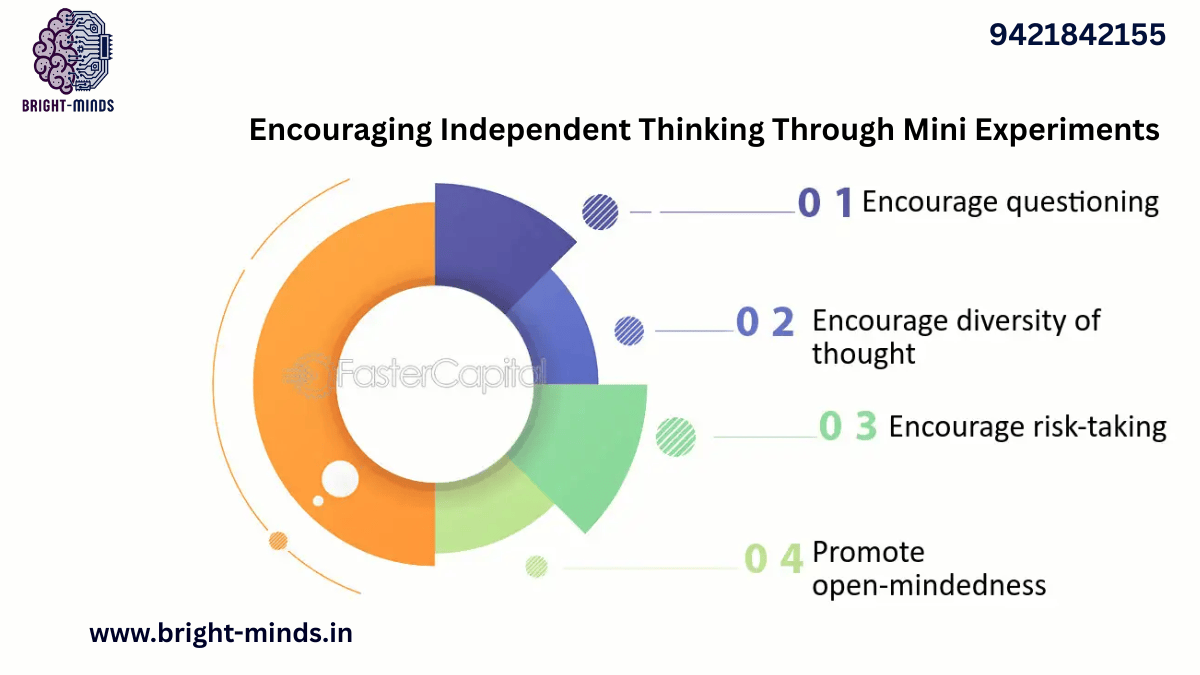
Encouraging Independent Thinking Through Mini Experiments
Independent thinking is one of the most valuable life skills a child or student can develop. In a world where information is everywhere and opinions are constantly shared, the ability to think critically, test ideas, and form personal conclusions sets individuals apart. One of the most effective and enjoyable ways to nurture this skill is through mini experiments. These small, hands on activities spark curiosity, promote problem solving, and encourage learners to discover answers on their own rather than memorizing them. When children explore, test, observe, and reflect, they build confidence in their thinking abilities and become active participants in learning rather than passive receivers of information.
Why Independent Thinking Matters More Than Ever
Independent thinking helps children become confident decision makers. Instead of waiting for instructions or copying others, they learn to evaluate situations and choose wisely. This ability strengthens academic performance, creativity, and emotional resilience. Students who think independently ask better questions, challenge assumptions, and seek deeper understanding. They are more prepared for real world challenges where problems rarely have one correct answer. Encouraging this mindset early creates lifelong learners who adapt quickly and innovate fearlessly.
Mini experiments naturally support this development. They give learners ownership of the learning process. When a child predicts an outcome, tests it, and compares results, the brain forms strong connections. The experience becomes memorable because the learner was involved in discovering the answer.
What Are Mini Experiments
Mini experiments are short, simple, practical activities designed to test an idea or explore a concept. They do not require expensive equipment or advanced labs. Most can be done at home or in classrooms using everyday materials. The goal is not perfection but exploration. These experiments encourage learners to ask questions, make predictions, observe outcomes, and draw conclusions.
A mini experiment can take as little as ten minutes. For example, a child might test which paper airplane design flies farther or which type of soil absorbs more water. These simple activities teach scientific thinking, logical reasoning, and evidence based conclusions.
How Mini Experiments Build Independent Thinking
They Encourage Curiosity
Curiosity is the foundation of independent thinking. Mini experiments begin with a question. What will happen if we change this variable. Why does one object float while another sinks. When children become curious, learning becomes self driven. They seek answers because they genuinely want to know.
They Promote Decision Making
Every experiment involves choices. Learners decide what to test, how to test it, and what tools to use. This builds confidence in making decisions and understanding consequences. Even small decisions strengthen problem solving abilities.
They Develop Analytical Skills
Observation and analysis are key parts of experimentation. Children learn to notice patterns, compare results, and interpret findings. This improves logical reasoning and helps them think beyond surface level information.
They Encourage Learning from Mistakes
Not every experiment works as expected. Sometimes predictions are wrong. Instead of feeling discouraged, learners understand that mistakes are part of discovery. This mindset builds resilience and a growth oriented attitude.
Real Life Examples of Mini Experiments
Kitchen Science Exploration
A simple kitchen experiment can be highly educational. Ask a child which dissolves faster in water, sugar or salt. Let them measure equal amounts, stir, and observe. They learn measurement, observation, and comparison skills while forming their own conclusion.
Plant Growth Observation
Give children two small pots. Place one in sunlight and the other in shade. Ask them to predict which plant will grow better. Over several days, they observe changes and record findings. This teaches patience, responsibility, and evidence based reasoning.
Paper Bridge Challenge
Provide sheets of paper and coins. Challenge learners to design a paper bridge strong enough to hold maximum coins. They test structures, adjust designs, and improve results. This builds creativity, engineering thinking, and persistence.
Memory and Focus Test
Ask students to read a list of ten words for one minute. After five minutes, ask them to recall the words. Then repeat the process using visualization techniques. Comparing results helps them understand how memory strategies work.
Practical Steps to Encourage Mini Experiments
Start With Simple Questions
Independent thinking begins with asking the right questions. Encourage children to ask why, what if, and how. Simple curiosity driven questions often lead to powerful learning experiences.
Use Everyday Materials
Mini experiments should be easy to start. Household items like paper, water, spoons, seeds, rubber bands, and cups are enough. Accessibility removes excuses and keeps learning consistent.
Allow Freedom to Explore
Avoid giving step by step instructions for every activity. Let learners design parts of the process. Freedom encourages creativity and ownership.
Focus on Process Over Results
The goal is not perfect outcomes but meaningful learning. Appreciate effort, curiosity, and reflection rather than only correct answers.
Encourage Reflection
After each experiment, ask what was learned. What surprised them. What would they try differently next time. Reflection strengthens understanding and critical thinking.
Benefits Beyond Academics
Mini experiments shape more than academic intelligence. They nurture essential life skills.
Confidence grows when learners discover answers independently. Communication improves when they explain observations and conclusions. Creativity expands as they design new approaches. Emotional resilience develops as they learn to handle unexpected results calmly.
These skills prepare children for careers, entrepreneurship, and leadership roles where independent thought is highly valued.
Integrating Mini Experiments in Daily Learning
Parents and teachers can easily include mini experiments in routines.
Turn homework topics into small investigations. Convert daily chores into learning moments such as testing which cleaning method works best. Encourage children to design small projects during weekends. Create experiment journals where learners record predictions, methods, and outcomes.
Schools can dedicate weekly exploration time. Learning becomes more engaging when students experience concepts rather than memorize them.
Mini Experiments for Different Age Groups
Young children benefit from sensory experiments like mixing colors or testing floating objects. Middle school learners can explore energy, magnetism, or environmental changes. Teenagers can conduct social behavior studies, coding tests, or financial simulations.
The complexity changes with age, but the thinking process remains the same. Ask, test, observe, conclude.
Common Mistakes to Avoid
Over guiding reduces independent thinking. Let learners struggle a little before helping. Avoid focusing only on textbook outcomes. Real learning often happens through unexpected results. Do not rush experiments. Observation takes time and patience.
Avoid judging incorrect predictions. Instead, discuss why results differed. This builds analytical thinking rather than fear of failure.
Creating a Supportive Learning Environment
A safe and encouraging environment is essential. Celebrate curiosity and effort. Provide tools and time for exploration. Encourage questions without immediate answers. Let learners debate ideas respectfully.
When adults model curiosity and open mindedness, children naturally adopt the same mindset.
Long Term Impact of Independent Thinking
Independent thinkers grow into confident adults who make informed decisions. They adapt to change, evaluate information critically, and innovate solutions. In academic settings, they excel in research, problem solving, and creative projects. In professional life, they become leaders, entrepreneurs, and innovators.
Mini experiments may seem small, but their impact is profound. They teach learners to trust their reasoning, test ideas fearlessly, and learn continuously.
You may also like this:-