
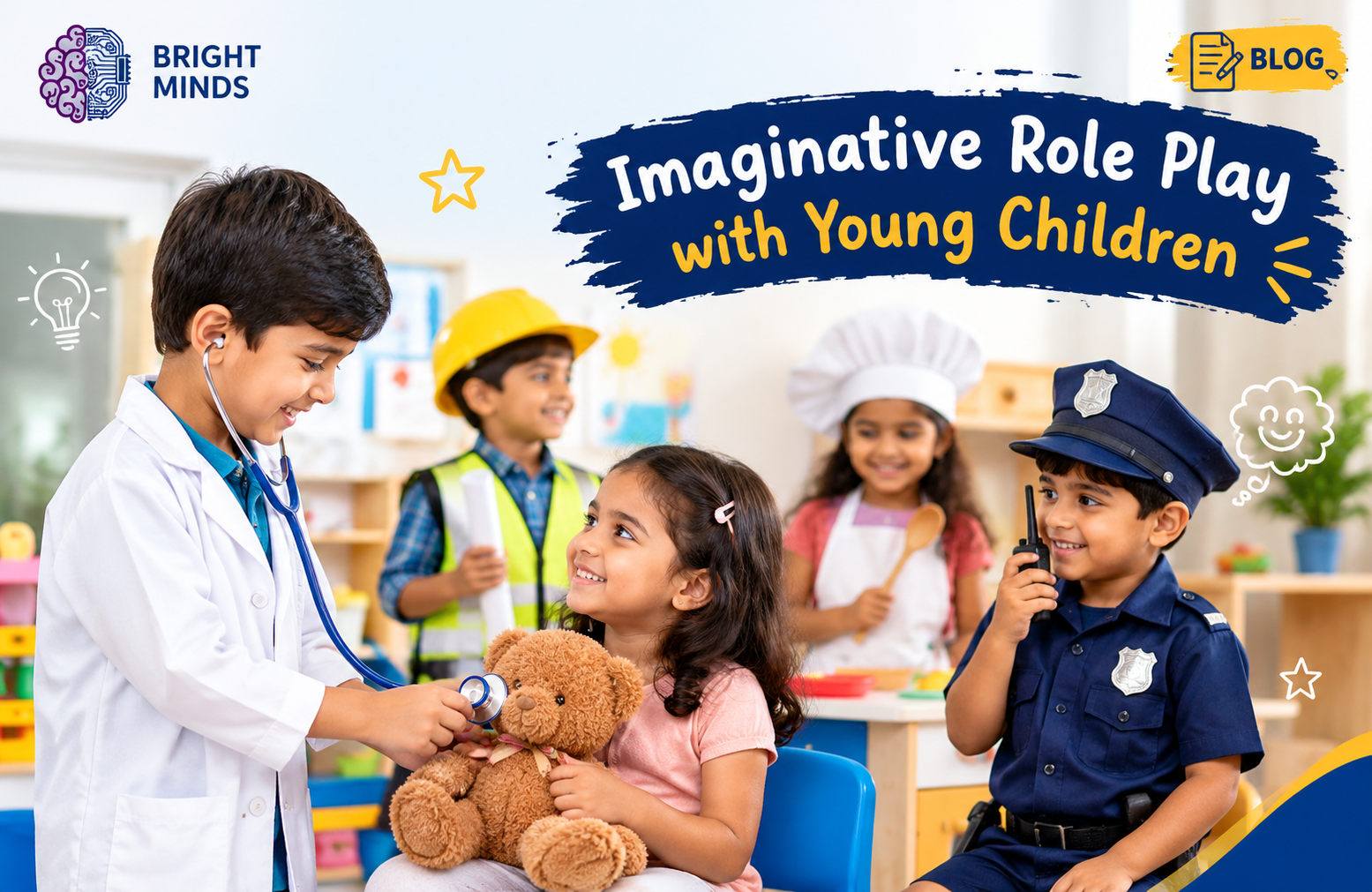
Unlock Your Child’s Creativity with Imaginative Role Play
Why Every Child Should Engage in Imaginative Role Play
Parents, are you looking for ways to spark your child’s imagination and creativity? Look no further! Imaginative role play is an exciting and engaging activity that offers numerous benefits for children of all ages.
What Is Imaginative Role Play?
Imaginative role play is a creative activity where children pretend to be someone or something different. This could be a superhero, an animal, or even a character from a book or movie. Through role play, children use their imaginations to create and explore new worlds.
Why Should Kids Learn Imaginative Role Play?
Imaginative role play is not just fun – it’s essential for child development. By engaging in role play, children develop important skills such as problem-solving, critical thinking, and social interaction.
The Benefits of Imaginative Role Play for Children’s Development
Cognitive Development
Role play helps children develop their cognitive skills by encouraging them to think creatively, make decisions, and solve problems. Through role play, children learn to use language effectively, improve their memory, and develop logical thinking skills.
Social-Emotional Development
Role play helps children develop their social-emotional skills by providing opportunities for them to express themselves, communicate with others, and learn about emotions. Through role play, children can practice empathy, cooperation, and conflict resolution.
Improves Communication Skills
Role play provides a safe and fun environment for children to practice their communication skills. Through role play, children learn to express themselves clearly, listen actively, and respond appropriately.
Boosts Confidence and Self-Esteem
Role play helps children build confidence by giving them the opportunity to try out new roles and take on different challenges. Through role play, children can learn to take risks, make mistakes, and learn from their experiences.
Encourages Creativity
Role play encourages children to think creatively and use their imaginations to create new worlds and characters. Through role play, children can explore different perspectives, ideas, and possibilities.
Builds Social Skills
Role play provides opportunities for children to practice social skills such as cooperation, empathy, and conflict resolution. Through role play, children learn to work together, understand others’ feelings, and negotiate conflicts in a safe and controlled environment.
Unleashing Creativity: Imaginative Role Play with Young Children
Understanding the Power of Role Play
Role play is a powerful tool for young children, fostering creativity, emotional intelligence, and social skills. It allows them to explore different roles, situations, and perspectives in a safe and controlled environment. By engaging in role play activities, children can develop essential life skills that will benefit them in the long run.
Step-by-Step Guide: Beginner to Advanced
- Beginner Level: Start with simple scenarios using everyday objects. For example, a child can pretend to be a doctor using a toy stethoscope and a teddy bear as the patient.
- Intermediate Level: Introduce more complex roles and scenarios. Children can create their own stories or participate in structured role play games, such as school, shop, or family.
- Advanced Level: Encourage children to create their own characters, plots, and props for original role play adventures. This level promotes self-expression, problem-solving, and collaborative skills.
Empowering Your Child with the Right Tools
Providing children with age-appropriate props and resources can enhance their role play experiences. Here’s a list of popular tools and platforms to get your child started:
- LEGO Mindstorms: A building kit that combines construction toys with robotics, allowing children to create and program interactive robots.
- Scratch: An intuitive programming language designed for young people, Scratch enables children to animate stories, design interactive games, and program characters.
- Arduino: A versatile open-source electronics platform used by hobbyists and professionals alike. Arduino can be a bit more complex but offers advanced programming opportunities for older children and teenagers.
- Raspberry Pi: A low-cost, credit card-sized computer that can be used to learn programming, build projects, and even create a personal media center.
- Code.org: An online learning platform offering free coding classes for students from kindergarten through high school.
Age-Appropriate Breakdown: What They Can Do at Different Ages
| 5-8 Years Old | 9-12 Years Old | 13-16 Years Old | |
|---|---|---|---|
| Recommended Activity/Tool/Kit | Simple role play with everyday objects, LEGO Duplo sets, and basic storybooks. | LEGO Mindstorms, Scratch, simple robotics kits, and interactive science projects. | Arduino, Raspberry Pi, advanced coding platforms, and complex engineering projects. |
Connecting Role Play to School Subjects: Maths, Science, Technology
Role play can help children understand and apply concepts from various school subjects in a fun and engaging way. For example:
- Maths: Counting, measuring, and comparing during role play activities can reinforce mathematical skills.
- Science: Exploring science concepts through role play scenarios can make learning enjoyable and memorable.
- Technology: Role play can introduce children to technology-related careers, such as programming, engineering, and design.
Choosing the Right STEM Course or Class
When selecting a robotics or STEM course or class for your child, consider the following factors:
- Age-appropriate curriculum: Ensure that the course content aligns with your child’s developmental level and interests.
- Quality of instruction: Look for experienced teachers who can provide personalized attention and support to students.
- Hands-on activities: Choose courses that offer ample opportunities for hands-on learning, experimentation, and problem-solving.
- Collaborative environment: Encourage your child’s participation in group projects to foster social skills and teamwork.
Comparing STEM Courses and Kits
| Name | Age Group | Price Range | Skill Level |
|---|---|---|---|
| LEGO Mindstorms | 9+ | $200-$300 | Intermediate-Advanced |
| Scratch | 7+ | Free (online platform) | Beginner-Intermediate |
| Arduino Starter Kit | 12+ | $50-$200 | Intermediate-Advanced |
| Raspberry Pi Starter Kit | 10+ | $60-$150 | Intermediate-Advanced |
| Code.org Coding Classes | K-12 | Free (online platform) | Beginner-Advanced |
Imaginative Role Play: A Fun Way to Foster Creativity and Future Success
The Importance of Imaginative Role Play for Young Children
Nurturing a child’s imagination is essential for their overall development.
Promotes Creativity and Problem-Solving Skills
Role play encourages children to think creatively, helping them develop problem-solving skills that are crucial in various aspects of life.
Builds Empathy and Social Awareness
By assuming different roles and perspectives during role play, children learn to empathize with others and understand social dynamics.
Future Career Paths in Robotics, AI, and Tech for Imaginative Thinkers
As technology continues to evolve, the demand for individuals with strong creative and problem-solving skills is on the rise.
Robotics Engineer
Designing and building robots requires a blend of creativity, technical expertise, and critical thinking – all skills that are honed through imaginative role play.
Game Developer
Creating engaging and innovative video games demands creative thinking, storytelling, and an understanding of user experience – skills developed during imaginative role play.
India’s Job Market and Global Demand for Tech Skills
India is rapidly becoming a hub for tech innovation, with numerous opportunities available in the fields of robotics, AI, and gaming.
Growing Job Opportunities in India
With companies like Google, Microsoft, and Amazon establishing their presence in India, the demand for skilled professionals is on the rise.
Global Demand for Tech Talent
The global tech industry continues to expand, offering opportunities for Indian talent to make a significant impact on the world stage.
Encouraging Imaginative Role Play at Home
Promoting imaginative role play doesn’t require expensive equipment or specialized resources – simple activities can foster creativity and learning.
Storytelling and Pretend Play
Encourage your child to create their own stories or engage in pretend play, using everyday items as props.
Active Participation and Discussion
Join your child during role play sessions, asking questions and providing suggestions to stimulate their imagination and critical thinking.
Common Mistakes Parents Make When Introducing Tech to Kids – And How to Avoid Them
While technology can be a valuable learning tool, it’s essential to avoid common pitfalls that may hinder your child’s development.
Over-reliance on Screens
Excessive screen time can lead to attention issues and poor social skills. Limit screen time and encourage a balanced approach to learning and play.
Lack of Parental Engagement
Engage with your child during tech-based activities, asking questions and discussing concepts to deepen their understanding.
Choosing the Right Robotics/STEM Class or Program for Your Child
Selecting the right class or program is crucial for your child’s success in robotics, AI, and tech.
Focus on Hands-On Learning
Look for programs that emphasize hands-on learning, allowing children to build, code, and experiment with technology.
Qualified and Experienced Instructors
Ensure the program has qualified and experienced instructors who can guide your child through the learning process effectively. At Bright Minds, we make robotics and coding fun and accessible for every child, with expert instructors and hands-on learning programs.
The Impact of Role Play on Social Development
Building Communication Skills through Role Play
Understand how role play helps children develop strong communication skills, both verbal and non-verbal.
Encouraging Teamwork and Cooperation through Role Play
Discover how role play can help children work together, share responsibilities, and collaborate effectively.
Role Play Resources for Parents
Role Play Books for Children
Uncover popular children’s books that promote imaginative role play and foster a love for reading in young children.
Role Play Toys and Accessories
Explore various toys and accessories that can help your child immerse themselves in imaginative role play experiences.
Frequently Asked Questions (FAQs)
1. What is imaginative role play?
Imaginative role play refers to a child’s act of pretending to be someone or something else, often involving the creation of a storyline and characters. This form of play encourages creativity, problem-solving skills, and social interaction.
2. How does imaginative role play help my child learn?
Role play helps children learn by providing opportunities to experiment with different roles, ideas, and situations in a safe environment. This form of play can improve memory retention, critical thinking abilities, and emotional intelligence.
3. At what age should I introduce imaginative role play to my child?
Children typically begin engaging in imaginative role play around the age of two or three. However, every child is unique, and some may start earlier or later. It’s essential to create an environment that encourages creativity and imagination for your child.
4. Is my child too young/old for imaginative role play?
There is no age limit for imaginative role play. Children of all ages can benefit from engaging in this form of play, as it promotes cognitive, emotional, and social growth.
5. What are some effective ways to support my child during imaginative role play?
To support your child during imaginative role play, create a welcoming environment that encourages creativity, provide open-ended toys and materials, engage in the play with your child, and offer encouragement and positive feedback.
6. What age group is imaginative role play suitable for?
Imaginative role play is suitable for children of all ages, from toddlers to teenagers. However, the specific activities and level of complexity may vary depending on the child’s age and developmental stage.
7. How can I encourage my child to engage in imaginative role play?
You can encourage your child to engage in imaginative role play by providing them with props, costumes, and story ideas. You can also join in the fun and play along with your child to make it more enjoyable.
8. Is there a specific time of day that is best for imaginative role play?
Imaginative role play can be done at any time of day, but it’s often most effective when children are well-rested and in a good mood. You may find that your child enjoys role play after school or before bedtime.
9. What if my child is shy or reluctant to engage in imaginative role play?
If your child is shy or reluctant, you can start by introducing simple role play activities and gradually increase the complexity as they become more comfortable. You can also involve other children or family members to make it more fun and less intimidating.
10. Where can I find quality robotics and coding programs for my child?
For engaging and accessible robotics and coding programs designed for children of all ages, explore the programs at Bright Minds. Their expert instructors and hands-on approach make learning fun and effective.
Conclusion
Imaginative role play is a fun and effective way to nurture creativity, problem-solving skills, and empathy in young children. By encouraging imaginative play at home and selecting the right STEM programs, you can help your child develop the skills needed for future success in technology-driven careers. In conclusion, imaginative role play is an exciting and engaging activity that offers numerous benefits for children’s cognitive, social-emotional, communication, and creative development. By encouraging your child to engage in imaginative role play, you can help them build confidence, boost their self-esteem, and unlock their imagination. So grab some props, put on a costume, and let the fun begin! Take the first step today – explore the engaging and accessible robotics and coding programs offered by Bright Minds. Together, we can empower your child to build tomorrow. At Bright Minds, we make learning fun and accessible for every child – explore our programs and give your child the skills they need to excel in the future. Let’s inspire the next generation of innovators, one role play session at a time.