
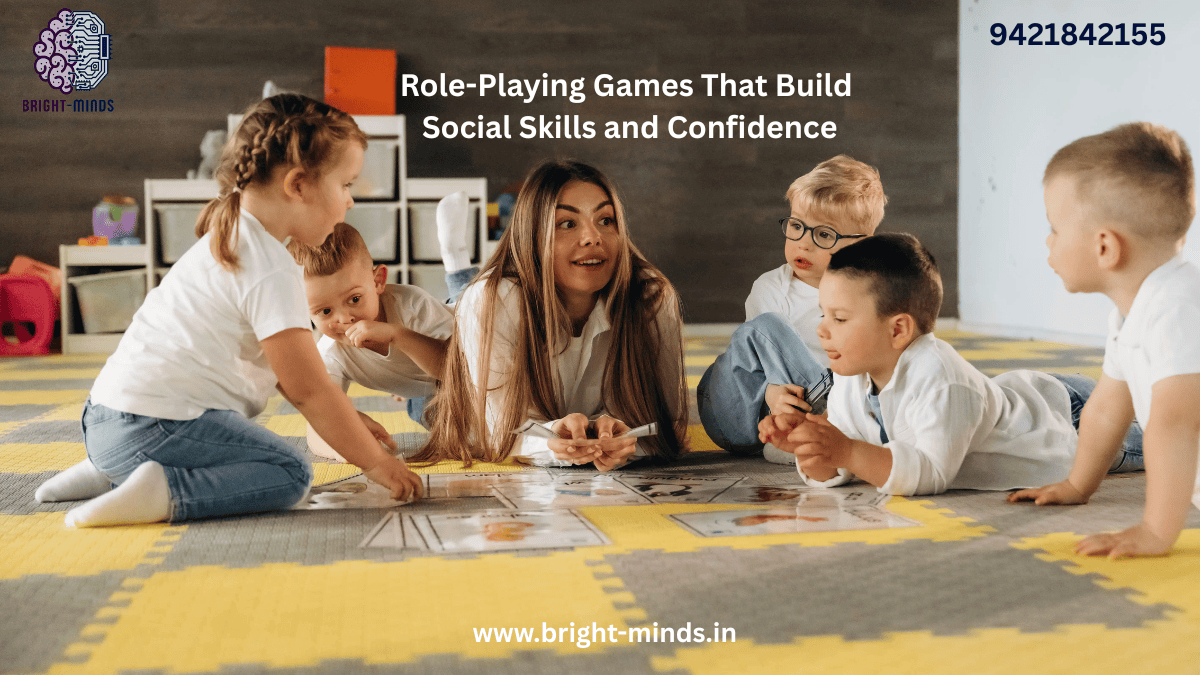
Role Playing Games That Build Social Skills and Confidence
Children learn best through play. Games give them the freedom to explore emotions, experiment with communication, and understand how to interact with others. Among the many types of play, role playing games are especially powerful for helping children develop social skills and confidence. When kids pretend to be different characters, solve imaginary problems, and interact with others in playful scenarios, they naturally practice communication, empathy, and cooperation.
Role playing games allow children to step into someone else’s perspective while expressing their own thoughts and ideas. A child pretending to be a shopkeeper, teacher, doctor, or explorer learns how conversations work, how decisions are made, and how teamwork happens. These playful experiences often translate directly into better social interactions in school and everyday life.
Parents, teachers, and caregivers can use role playing games as a simple yet effective way to help children become more confident communicators. With a little creativity, everyday playtime can turn into a valuable learning experience that strengthens both emotional and social development.
Why Social Skills and Confidence Matter for Children
Social skills are the foundation of healthy relationships and positive self esteem. Children who know how to communicate clearly, listen to others, and express their feelings tend to build stronger friendships and adapt better to new environments. Confidence plays an equally important role. A confident child is more likely to participate in class, share ideas, try new activities, and handle challenges calmly.
However many children struggle with shyness, fear of speaking, or difficulty understanding social cues. These challenges are normal, especially in early childhood when communication skills are still developing. Role playing games provide a safe space where children can practice social interactions without pressure or judgment.
During role play, mistakes are simply part of the game. Kids feel comfortable experimenting with different responses and behaviors, which gradually improves their confidence in real situations.
How Role Playing Games Support Social Development
Role playing games encourage children to think about how people behave in different situations. When a child pretends to be a doctor speaking to a patient or a teacher guiding a class, they begin to understand how conversations and responsibilities work.
This type of imaginative play strengthens several important abilities. Children practice listening, responding, asking questions, and expressing emotions. They also learn cooperation when playing with friends or siblings.
Another key benefit is empathy. When kids take on roles such as a customer, firefighter, or parent, they start to understand different perspectives. This helps them become more thoughtful and supportive in real life interactions.
Role playing also reduces fear of social situations because children become familiar with conversations and problem solving through repeated practice.
Pretend Store Game
One of the simplest and most effective role playing games is the pretend store. In this activity children take turns being the shopkeeper and the customer. You can set up a small store at home using toys, books, or household items as products.
The shopkeeper greets customers, answers questions, and handles pretend payments. The customer practices asking for items, making choices, and expressing gratitude.
This activity teaches polite communication, turn taking, and basic decision making. Children also learn how conversations naturally flow between people in everyday situations.
Parents can add more excitement by introducing simple challenges such as a customer looking for a specific item or asking for recommendations.
Doctor and Patient Role Play
Playing doctor and patient is another popular role playing game that builds empathy and communication skills. Children can use toy medical kits or simple household objects to create a pretend clinic.
One child plays the doctor who asks questions about symptoms while the other acts as the patient describing how they feel. This interaction encourages kids to practice listening carefully and responding thoughtfully.
The doctor role also helps children develop leadership and problem solving abilities. They must decide how to help the patient and explain their actions clearly.
Switching roles allows both children to experience different perspectives and improves understanding of how conversations work in caring professions.
Teacher and Classroom Game
Many children enjoy pretending to be a teacher. In this role playing game a child becomes the teacher while siblings or friends act as students. The teacher explains lessons, asks questions, and guides activities.
This game helps children build confidence in speaking and leadership. Explaining ideas to others encourages them to organize their thoughts and communicate clearly.
For shy children this activity can be especially helpful. Being in the teacher role allows them to practice speaking in a supportive environment where mistakes are part of the fun.
Parents can participate by acting as students and asking questions, giving children the opportunity to respond and guide the conversation.
Restaurant Role Play
Restaurant themed role playing is both entertaining and educational. Children can pretend to run a restaurant where one person is the chef, another is the waiter, and others are customers.
The waiter greets guests, takes orders, and delivers food. Customers ask questions about the menu and give feedback about their meals.
This activity encourages polite language, patience, and teamwork. Kids learn how to listen carefully, remember details, and respond appropriately during conversations.
It also introduces responsibility as each role contributes to making the restaurant experience enjoyable for everyone involved.
Adventure and Explorer Games
Adventure based role playing games spark creativity while encouraging collaboration. Children can pretend to be explorers searching for treasure, scientists discovering new lands, or astronauts traveling through space.
In these games children work together to solve problems, make decisions, and communicate ideas. For example they might discuss which path to take on a pretend map or how to overcome obstacles during their adventure.
These scenarios build teamwork and leadership skills while strengthening imagination. Children feel proud when they contribute ideas that help the group succeed.
Emotion Acting Game
Understanding emotions is an essential part of social development. The emotion acting game helps children recognize and express feelings through role play.
Write different emotions such as happiness, sadness, excitement, or frustration on small cards. Each child picks a card and acts out that emotion without saying the word.
Other players guess the emotion and discuss situations where someone might feel that way.
This activity improves emotional awareness and empathy. Children learn that everyone experiences different feelings and that understanding those emotions helps build stronger relationships.
Problem Solving Scenarios
Role playing can also be used to practice handling real life challenges. Parents can create simple scenarios such as meeting a new friend, resolving a disagreement, or asking for help from a teacher.
Children act out these situations and explore different ways to respond. For example a child might practice introducing themselves to a new classmate or calmly discussing a conflict with a friend.
These practice sessions prepare children for real world interactions and reduce anxiety about unfamiliar situations.
Tips for Making Role Playing Games More Effective
Role playing games become even more valuable when adults guide the experience in a supportive way. Parents and teachers should encourage creativity while gently helping children develop communication skills.
One helpful approach is to ask open ended questions during the game. For example ask what the customer would like to buy or how the explorer plans to solve a challenge. These questions prompt children to think and respond thoughtfully.
Another tip is to allow children to create their own scenarios. When kids design the story or setting themselves, they feel more engaged and confident during the activity.
Providing simple props such as costumes, toy tools, or handmade signs can also make role play more immersive and exciting.
Helping Shy Children Gain Confidence
Some children may feel hesitant to participate in role playing at first. Gentle encouragement and patience are important. Start with simple scenarios that involve familiar roles such as family members or favorite characters.
Parents can join the game and model friendly conversations, showing children how to ask questions and respond politely. As children become more comfortable, they gradually begin to take the lead in the activity.
Celebrating small successes such as speaking clearly or sharing an idea helps build confidence over time.
Encouraging Group Role Play
Group role playing activities are excellent for developing teamwork and cooperation. When multiple children participate, they must communicate, share responsibilities, and support each other’s ideas.
For example a pretend town scenario might include roles such as shopkeepers, firefighters, teachers, and community helpers. Each child contributes to the story while interacting with others.
These group activities teach children how to collaborate and respect different perspectives.
Bringing Role Playing into Everyday Life
Role playing does not always require special planning. Everyday situations can easily become opportunities for imaginative play.
During grocery shopping a child can pretend to manage the store or help customers find items. At home they can act as a chef preparing dinner or a travel guide planning a family adventure.
These playful moments naturally strengthen communication and problem solving skills.
Long Term Benefits of Role Playing Games
The benefits of role playing extend far beyond childhood. Children who regularly engage in imaginative social play develop stronger communication abilities and greater emotional intelligence.
They become more comfortable expressing ideas, asking questions, and interacting with new people. These skills contribute to academic success, leadership abilities, and positive relationships later in life.
Role playing games also nurture creativity and adaptability. Children learn to think on their feet, consider different perspectives, and approach challenges with confidence.
Creating a Supportive Play Environment
A supportive environment makes role playing games more enjoyable and effective. Parents and teachers should focus on encouragement rather than perfection. The goal is not to perform perfectly but to explore ideas and interactions freely.
Allow children to make mistakes, change storylines, and express themselves in their own unique way. When kids feel safe and supported, their confidence grows naturally.
Providing regular opportunities for imaginative play helps children strengthen their social skills while having fun.
You may also like this:-